
Match the following and choose the correct answer. Newspaper I. Free Hindustan II. Indian Opinion III. Voice of India IV. Bengalee Editor a. Mahatma Gandhi b. Dadabhai Nauroji c. Surendranath Banerjee d. Taraknath Das
- (a)I – d, II – a, III – b, IV – c
- (b)I – c, II – d, III – a, IV – b
- (c)I – d, II – c, III – b, IV – a
- (d)I – c, II – a, III – d, IV – b
Answer
Why
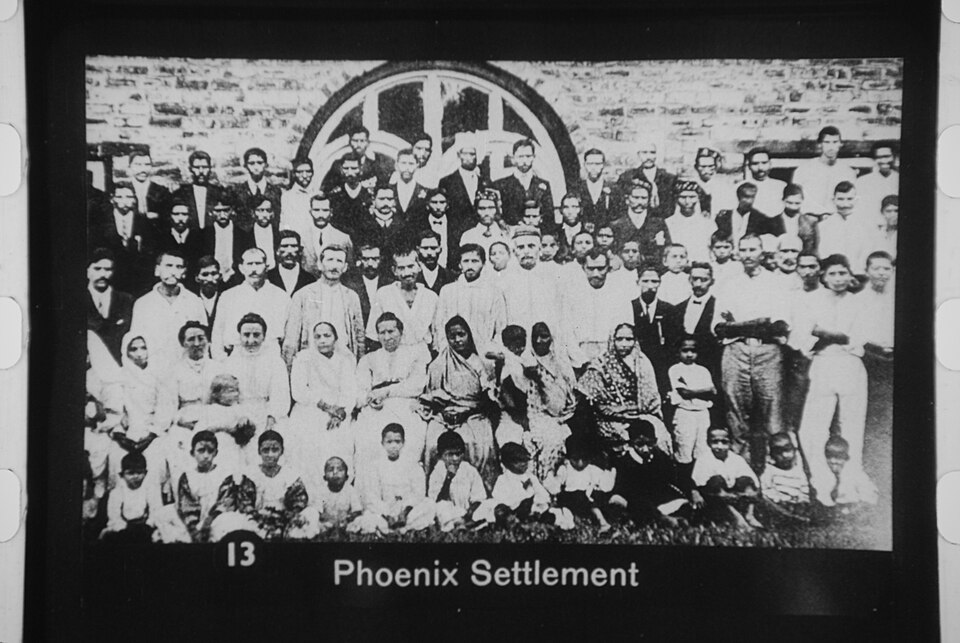
Correct: A, I – d, II – a, III – b, IV – c. Take the pairs one at a time. Free Hindustan was Taraknath Das's paper: funds sent from Calcutta by Jatindranath Mukherjee, 'Bagha Jatin', let him start the English journal in Vancouver, alongside a Gurmukhi edition, Swadesh Sevak; it has been described as the first South Asian publication in Canada, and after Das was expelled from Canada in 1908 it continued from Seattle, then from New York, with his own motto on the masthead: 'To protest against all tyranny is a service to humanity and the duty of civilization.' Tolstoy, Hyndman, Shyamji Krishnavarma and Madame Cama corresponded with him about it. Indian Opinion was established by Gandhi in South Africa; the first issue appeared on 4 June 1903, it was published in Gujarati, Hindi, Tamil and English, and in 1904 the press moved to his settlement at Phoenix near Durban. Gandhi's own verdict on it was that 'Satyagraha would have been impossible without Indian Opinion.' The Voice of India was published by Dadabhai Naoroji, the Parsi economist who had earlier founded the Gujarati fortnightly Rast Goftar in 1854, later became Congress President in 1886 and wrote Poverty and Un-British Rule in India in 1901. The Bengalee was founded in Calcutta in 1862 by Girish Chandra Ghosh, and Surendranath Banerjee served as its editor; it became the highest-circulating weekly of the late nineteenth and early twentieth century, took the Moderate side after the Surat split, and declined after Banerjee's death in 1925. So the sequence is I-d, II-a, III-b, IV-c. Only option (a) carries it; each of the other three strings breaks at least two of these well-attested pairs.
Why the others are wrong
- (b)I – c, II – d, III – a, IV – b: Breaks every pair. It puts Surendranath Banerjee, a Calcutta moderate who never left India for revolutionary journalism abroad, in charge of an émigré paper printed in Vancouver and Seattle, and hands Gandhi's South African weekly to Taraknath Das. Nothing in it survives contact with a single known fact about any of the four men.
- (c)I – d, II – c, III – b, IV – a: The most dangerous option, because it gets two of the four right (Free Hindustan to Taraknath Das and Voice of India to Dadabhai Naoroji) and then simply swaps Gandhi and Surendranath Banerjee between the remaining two. A candidate who checks only the first pair and the pair he is surest of will stop here.
- (d)I – c, II – a, III – d, IV – b: Gets Indian Opinion right and everything else wrong, which is the mirror image of the previous trap. It assigns Free Hindustan to Surendranath Banerjee and, more absurdly, The Bengalee (a Calcutta weekly of the 1860s onward) to Dadabhai Naoroji, and it strands Taraknath Das with Voice of India, a paper of an entirely different generation and purpose.
Concept
The nationalist press was not one thing but three, and this question quietly samples all three. There was the constitutional press inside India, published in Calcutta and Bombay and aimed at educated Indian opinion and at sympathetic Englishmen: The Bengalee under Surendranath Banerjee is the model, moderate in tone, enormous in circulation, and closely tied to the Indian National Association he had founded before the Congress existed. There was the propaganda press aimed at Britain, of which Dadabhai Naoroji's Voice of India is an example: Naoroji spent much of his life in London, sat in the House of Commons, and worked on the theory that British opinion could be turned if it were shown what Indian rule actually cost, the argument he set out in Poverty and Un-British Rule in India. And there was the diaspora and revolutionary press abroad (Free Hindustan in Vancouver, Seattle and New York, the Indian Sociologist in London, Bande Mataram in Geneva) beyond the reach of Indian press law and consequently far more open in its language. Gandhi's Indian Opinion sits slightly apart from all three: it was published in South Africa for an Indian community abroad and was a working instrument of a campaign rather than a channel of opinion.
Matching questions are not answered by knowing all four pairs; they are answered by knowing the two that eliminate fastest. The strategy is to find the pair you are certain of, strike every option that contradicts it, and repeat. Here the surest pair for most candidates is Indian Opinion with Gandhi, and applying it alone removes options (b) and (c) at once, leaving only (a) and (d). Those two differ on Free Hindustan: (a) gives it to Taraknath Das and (d) to Surendranath Banerjee. A single geographical fact settles it: Free Hindustan was published on the Pacific coast of North America, and Surendranath Banerjee's whole career was in Calcutta, so (a) survives. Notice how little of the full grid that required. A second habit worth building is to check plausibility by period and place before checking by name. Taraknath Das belongs to the Ghadar generation of the 1900s and 1910s abroad; Surendranath Banerjee to the 1870s and 1880s in Bengal; Dadabhai Naoroji to the London-facing campaign of the same era; Gandhi in this instance to South Africa. Any pairing that puts a man on the wrong continent or in the wrong decade can be discarded before you try to recall a masthead.
Key facts
- Free Hindustan was started in English by Taraknath Das in Vancouver with funds sent by Jatindranath Mukherjee ('Bagha Jatin'), alongside a Gurmukhi edition, Swadesh Sevak; it continued from Seattle from July 1908 and later from New York
- Indian Opinion was established by Gandhi in South Africa, first issue 4 June 1903, published in Gujarati, Hindi, Tamil and English, with the press moved to the Phoenix settlement near Durban in 1904 and publication continuing until 1961
- Gandhi wrote of it: 'Satyagraha would have been impossible without Indian Opinion'; in India he later published Young India, Harijan and Navjivan
- Dadabhai Naoroji published The Voice of India; he had founded the Gujarati fortnightly Rast Goftar in 1854, was elected Congress President in 1886, and published Poverty and Un-British Rule in India in 1901
- The Bengalee was founded in Calcutta in 1862 by Girish Chandra Ghosh and edited by Surendranath Banerjee; it was the highest-circulated weekly of the late nineteenth and early twentieth century and declined after his death in 1925
- Taraknath Das also helped found the Hindi Association of the Pacific Ocean with Lala Hardayal, the organisation from which the Ghadar Party grew
Study next
Common traps
- Assuming a famous Indian editor must have edited an overseas paper; Free Hindustan belongs to the North American diaspora, not to Calcutta journalism
- Confusing Gandhi's South African paper Indian Opinion with his later Indian papers, Young India, Navjivan and Harijan
- Attributing The Bengalee's founding to Surendranath Banerjee; it was founded by Girish Chandra Ghosh in 1862, and Banerjee was its editor
BPSC sets newspaper–editor pairings as four-item matching grids with codes, and the option strings are constructed so that getting two pairs right still leaves two options standing, which is why the elimination has to be done pair by pair rather than by recognising a familiar-looking string. UPSC asks the same material as person-to-journal matching or as a single identification, and it reaches further into the revolutionary and émigré press (the Indian Sociologist, The Talwar, Vanguard) so the overseas titles matter as much as the Indian ones.
Related PYQs
Match List I with List II and select the correct answer using the codes given below the Lists: List I (Persons) I. Shyamji Krishna Varma II. Madame Bhikaji Cama III. Annie Besant IV. Aurobindo Ghosh List II (Journals) A. Bande Mataram B. Indian Sociologist C. The Talwar D. Commonweal Codes:
- (a) I-B, II-C, III-D, IV-A
- (b) I-C, II-B, III-A, IV-D
- (c) I-B, II-C, III-A, IV-D
- (d) I-C, II-B, III-D, IV-A
Answer(a) I-B, II-C, III-D, IV-A
The identical grid in the other direction (persons to journals rather than newspapers to editors) and drawn from the same overseas revolutionary press that produced Free Hindustan.
Which one of the following was an émigré Communist Journal of M. N. Roy?
- (a) Kisan Sabha
- (b) The Worker
- (c) Vanguard
- (d) Anushilan
Answer(c) Vanguard
Another title from the exile press, and the same test in single-answer form: a paper published abroad by an Indian revolutionary belongs to a different world from the Calcutta weeklies, and mixing the two is what the wrong options here rely on.
Among the following Newspapers of Bihar, which was the first one to get published?
- (a) Bihar Bandhu
- (b) Patna Harkara
- (c) Akhbar-E-Bihar
- (d) Bihar Herald
Answer(b) Patna Harkara
The press theme carried into the next edition and localised: BPSC expects the national newspaper–editor grid and the chronology of Bihar's own newspapers, so this area has to be revised on both scales.
Practice
- practice, not a real PYQ
The newspaper ‘Indian Opinion’ was started by Mahatma Gandhi in which country ?
- (a)India
- (b)England
- (c)South Africa
- (d)Kenya
Answer(c) South Africa: the first issue appeared on 4 June 1903 and the press moved to the Phoenix settlement near Durban in 1904. - practice, not a real PYQ
‘The Bengalee’, edited by Surendranath Banerjee, was originally founded in 1862 by
- (a)Girish Chandra Ghosh
- (b)Sisir Kumar Ghosh
- (c)Motilal Ghosh
- (d)Krishna Das Pal
Answer(a) Girish Chandra Ghosh: Banerjee took over as editor later and made it the highest-circulated weekly of the period.