
Which country took over the chairmanship of BRICS on January 1, 2024 ?
- (a)Russia
- (b)India
- (c)Brazil
- (d)South Africa
Answer
Why
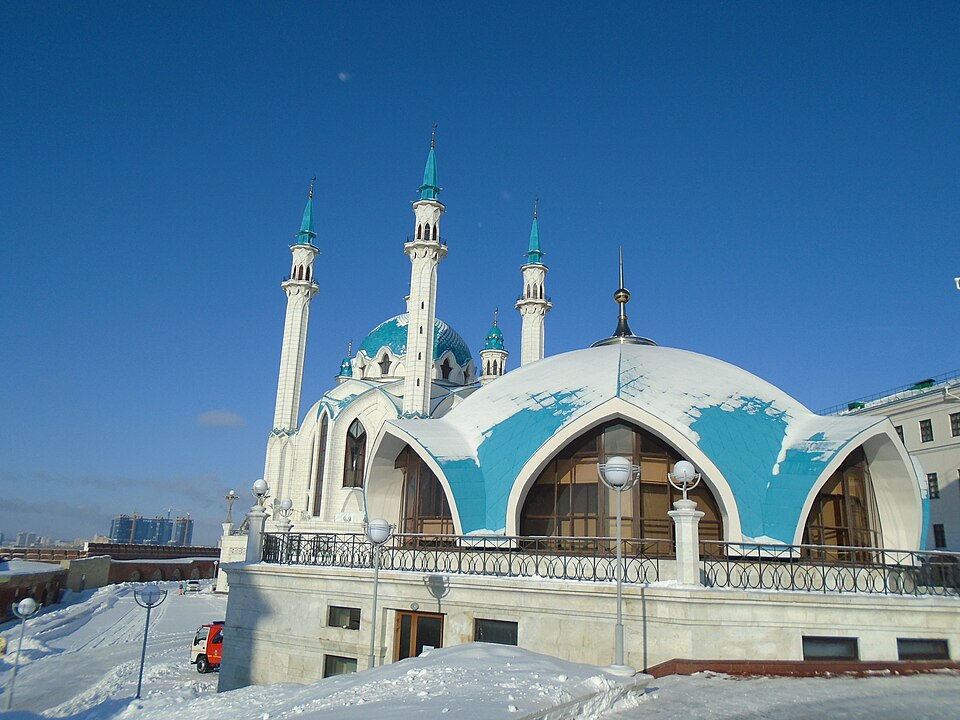
Correct: A, Russia. The BRICS chair rotates on a calendar-year basis, and 2024 was Russia's year: the chairmanship ran under the banner of the Russian chairmanship with its own official site, brics-russia2024.ru, and it culminated in the 16th BRICS summit at Kazan from 22 to 24 October 2024, chaired by President Vladimir Putin under the theme 'Strengthening Multilateralism for Fair Global Development and Security'. The year matters because 1 January 2024 was a double turning point for the grouping. It was the date on which the chairmanship passed to Russia, and it was also the date on which the expansion agreed at the previous summit took effect: at the 15th summit in Johannesburg in August 2023, South Africa's President Cyril Ramaphosa had announced invitations to Argentina, Egypt, Ethiopia, Iran, Saudi Arabia and the United Arab Emirates, with membership scheduled from 1 January 2024. Argentina declined by letter on 29 December 2023 and Saudi Arabia held back, so BRICS entered Russia's chairmanship year with nine members rather than eleven: Egypt, Ethiopia, Iran and the UAE having joined the original five. Kazan was therefore the first summit those four attended as members, and it produced the Kazan Declaration, the BRICS Pay initiative for cross-border settlement outside the Western interbank system, and a new category of thirteen partner countries including Indonesia, Malaysia, Thailand, Vietnam, Nigeria and Turkey. Indonesia went on to become the tenth full member on 6 January 2025, the first Southeast Asian state in the bloc, announced during Brazil's chairmanship year.
Why the others are wrong
- (b)India: India chaired BRICS in 2021 and hosted the 13th summit on 9 September 2021, held by video conference under Prime Minister Narendra Modi, with more than 150 events and meetings through that year. It is the most tempting option for an Indian candidate, and it becomes right again later (India holds the chairmanship in 2026) but not in 2024.
- (c)Brazil: Brazil took the chair the year after Russia, in 2025, and it was Brazil's presidency that announced Indonesia's accession as the tenth member on 6 January 2025. Being adjacent in the rotation is precisely what makes it a good distractor: a candidate who knows the order but not the year has a fifty per cent chance of picking the wrong side of it.
- (d)South Africa: South Africa held the chair in 2023 and hosted the 15th summit at Johannesburg from 22 to 24 August 2023: the summit that agreed the expansion taking effect on 1 January 2024. That is the trap: the decision most closely associated with 1 January 2024 was taken under South Africa's chairmanship, but the chairmanship itself passed to Russia on that date.
Concept
BRICS is an intergovernmental grouping without a charter, a treaty or a permanent secretariat; it runs on an annually rotating chairmanship, and the chair sets the year's calendar of ministerial and working-group meetings and hosts the leaders' summit. Its origins are twofold: the acronym BRIC was coined by the economist Jim O'Neill at Goldman Sachs in 2001 as a label for four large emerging markets, while the diplomatic grouping grew out of earlier formats such as RIC and IBSA and held its first leaders' summit in 2009. South Africa was admitted in September 2010 and attended as a full member from the third summit in 2011, which is when BRIC became BRICS. The expansion of 2024 nearly doubled the membership, and Indonesia's accession in January 2025 took it to ten. The bloc's institutional creations are worth knowing alongside the summits: the New Development Bank and the Contingent Reserve Arrangement, both set out in the Fortaleza Declaration of 2014. On the numbers usually quoted, the enlarged grouping accounts for roughly 46 per cent of the world's population and about a quarter of its land area, and its share of world GDP measured at purchasing power parity was around 35.6 per cent in 2022.
Rotation questions are answered by anchoring one year and counting, not by trying to memorise a list. Anchor 2024 to Kazan (the summit was widely covered, and the city is distinctive enough to stick) and the rest follows: 2023 was South Africa at Johannesburg, 2024 Russia at Kazan, 2025 Brazil, 2026 India. The pattern also has a logic worth noticing, since the founding members take their turns in the alphabetical order of the acronym, Brazil, Russia, India, China, South Africa, and then begin again; India's 2021 chairmanship and India's 2026 chairmanship are five years apart for that reason. The specific hazard in this question is the date. Because 1 January 2024 is also the date on which the new members formally joined, a candidate who remembers that expansion was announced by South Africa may associate the whole moment with South Africa. Keep the two events apart: the announcement was made at Johannesburg in August 2023 under the South African chair, and both the accession and the handover of the chair took effect on 1 January 2024. A last practical note is that a chairmanship year is a calendar year, not a financial year and not summit-to-summit, so the chair changes on 1 January even though the summit may fall in October.
Key facts
- Russia held the BRICS chairmanship for 2024 and hosted the 16th summit at Kazan from 22 to 24 October 2024, chaired by Vladimir Putin, under the theme 'Strengthening Multilateralism for Fair Global Development and Security'
- Membership for Egypt, Ethiopia, Iran and the United Arab Emirates took effect on 1 January 2024; Argentina declined by letter on 29 December 2023 and Saudi Arabia held back, so Kazan was the first summit the four new members attended
- The Kazan summit adopted the Kazan Declaration, introduced BRICS Pay as an alternative cross-border settlement system, and created a partner-country category of thirteen states including Indonesia, Malaysia, Thailand, Vietnam, Nigeria and Turkey
- Recent chairmanships: South Africa 2023 (15th summit, Johannesburg, 22–24 August 2023), Russia 2024, Brazil 2025, India 2026; India previously chaired in 2021 and hosted the 13th summit by video conference on 9 September 2021
- Indonesia joined as the tenth full member on 6 January 2025, the first Southeast Asian state in the grouping
- The enlarged bloc accounts for about 46 per cent of world population and roughly 25 per cent of world land area, with a share of world GDP at purchasing power parity of about 35.6 per cent in 2022
Study next
Common traps
- Attributing the chairmanship to the country that announced the expansion; South Africa chaired in 2023, Russia from 1 January 2024
- Assuming Saudi Arabia became a member on 1 January 2024: it was invited but did not join then, and Argentina declined outright
- Confusing the chairmanship year with the summit date; the chair changes on 1 January, while the summit may fall late in the year
BPSC's international-affairs block asks who chaired, who hosted and who won in a named year, with the other three options drawn from adjacent years of the same rotation, so a year-anchored list is the only defence. UPSC asks the institution rather than the calendar (whether a statement about the first summit or the last member to join is correct, or which grouping a named declaration belongs to) so BRICS has to be learnt as a history and a structure, not as a schedule.
Related PYQs
With reference to a grouping of countries known as BRICS, consider the following statements : 1. The First Summit of BRICS was held in Rio de Janeiro in 2009. 2. South Africa was the last to join the BRICS grouping. Which of the statements given above is/are correct?
- (a) 1 only
- (b) 2 only
- (c) Both 1 and 2
- (d) Neither 1 nor 2
Answer(b) 2 only
The same grouping tested on its own chronology (first summit and last member) and a reminder of how much has changed since, because South Africa stopped being the newest member on 1 January 2024, the very date this question asks about.
The ‘Fortaleza Declaration’, recently in the news, is related to the affairs of
- (a) ASEAN
- (b) BRICS
- (c) OECD
- (d) WTO
Answer(b) BRICS
Summit declarations as the examinable output of a chairmanship year: Fortaleza in 2014 gave BRICS the New Development Bank, as Kazan in 2024 gave it BRICS Pay and the partner-country category.
What is true of the 18th G20 Summit?
- (a) It was held in Rio de Janeiro
- (b) Its theme was : Building a Just World and a Sustainable Planet
- (c) The Rio de Janeiro Declaration emphasised the taxation of billionaires
- (d) None of the above
Answer(d) None of the above
The identical hazard on the next paper, in a different grouping: every statement there is true of the 19th G20 summit and none of the 18th, which is exactly the off-by-one-year error this BRICS question sets up with South Africa and Brazil.
Practice
- practice, not a real PYQ
The 16th BRICS summit, held in October 2024, took place in which city ?
- (a)Johannesburg
- (b)Kazan
- (c)Rio de Janeiro
- (d)Xiamen
Answer(b) Kazan: held from 22 to 24 October 2024 under Russia's chairmanship; Johannesburg hosted the 15th summit in 2023. - practice, not a real PYQ
Which of the following countries was invited to join BRICS in 2023 but formally declined the invitation ?
- (a)Ethiopia
- (b)Iran
- (c)Argentina
- (d)United Arab Emirates
Answer(c) Argentina: it sent a letter to BRICS leaders on 29 December 2023 declining the invitation; Ethiopia, Iran and the UAE joined with effect from 1 January 2024.