
Among the following Newspapers of Bihar, which was the first one to get published?
- (a)Bihar Bandhu
- (b)Patna Harkara
- (c)Akhbar-E-Bihar
- (d)Bihar Herald
Answer
Why
Correct — B, Patna Harkara. This is one of the few items on the paper where the Commission had to defend its key in writing, and the defence is worth reading because it tells you what kind of evidence settles a question like this. Candidates objected, and BPSC answered in the Remarks column of the final revised key published on 31 October 2025 with a named scholarly citation: Syed Ahmad Qadri, 'Urdu Sahafat Bihar mein' (Patna, 2005), at page 65, which records Patna Harkara as the first newspaper published from Bihar. The Commission then dealt with the specific objection that had been raised — that Patna Harkara was a JOURNAL rather than a NEWSPAPER, a distinction that would disqualify it — by pointing to Qazi Abdul Wadood, who reproduced scanned copies of some of its issues; the Commission's position is that those issues show on their face that it was a newspaper. So the key rests on a history of Urdu journalism in Bihar plus physical evidence of the paper itself, not on a textbook assertion. Two things a careful student should hold alongside that. FIRST, and this is the whole trap of the question: Bihar Bandhu, launched in 1872 by Keshav Ram Bhatta, is very widely described as the beginning of Bihar's press — but the claim, correctly stated, is that it was the first HINDI newspaper published in Bihar. Drop the word 'Hindi' and a true statement becomes a false one, and that single missing adjective is what makes option (a) the wrong answer this item is designed to attract. Patna Harkara belongs to the Urdu press, which in Bihar preceded the Hindi press, and the two claims sit together without contradiction. SECOND, an honest warning about revision: no founding year for Patna Harkara can be traced to any primary or scholarly source, and the Commission's own remark gives none. A launch year of 1830 circulates widely on coaching sites; it is not sourced anywhere that can be checked, and you should not commit it to memory or write it in an answer. What is defensible is the ranking the Commission gives and the citation behind it.
Why the others are wrong
- (a)Bihar Bandhu — The designed trap, and a half-truth rather than a falsehood. Bihar Bandhu was launched in 1872 by Keshav Ram Bhatta, a Maharashtrian Brahmin settled at Biharsharif, and it is genuinely a landmark — but as the first HINDI newspaper of Bihar. The qualifier is the whole answer. Coaching material routinely quotes the claim with 'Hindi' deleted, which converts an accurate statement about one language's press into a false statement about Bihar's press as a whole.
- (c)Akhbar-E-Bihar — A real Urdu title from Bihar's press, and plausible for exactly that reason — a candidate who has correctly worked out that Bihar's earliest papers were Urdu may pick it on language alone. But the Commission's key and its cited authority place Patna Harkara first, and no primary or scholarly source could be found giving a founding year for Akhbar-e-Bihar. Reason from the key here, and do not memorise a date for this title from any secondary list.
- (d)Bihar Herald — An English-language title, and the option a candidate reaches for on the assumption that colonial-era journalism must have begun in English — as it did in Calcutta, where Hicky's Bengal Gazette appeared in 1780. Bihar's own sequence does not follow Calcutta's. As with Akhbar-e-Bihar, no verifiable founding date could be established for the Bihar Herald, so treat the Commission's ordering as the answer and carry no invented year with it.
Concept
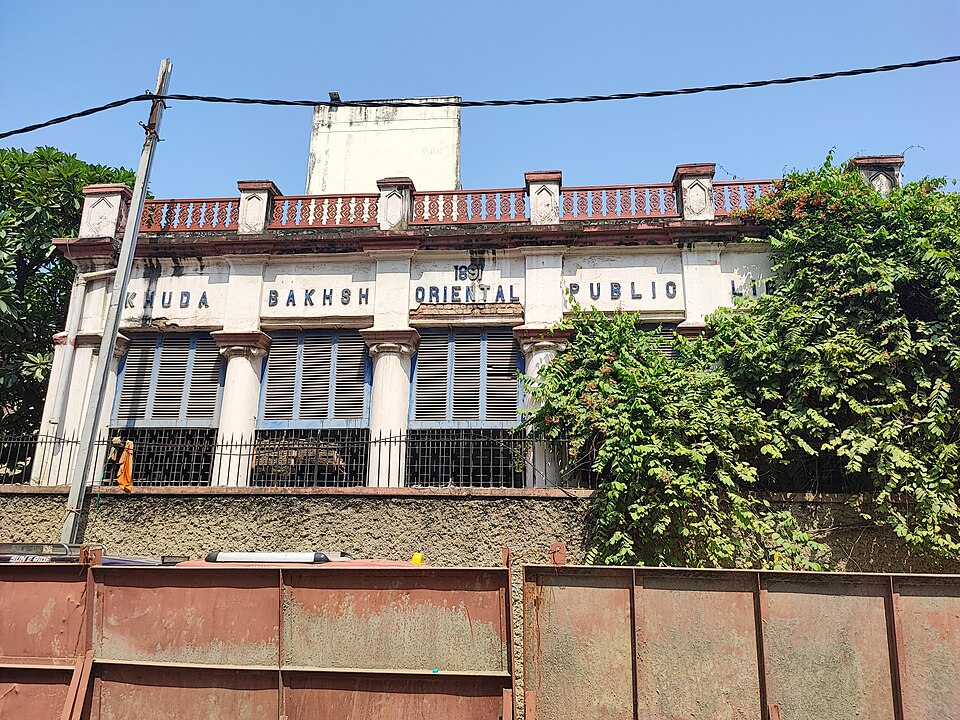
Bihar's print history has to be read against two facts about the province. First, Bihar had no separate administration for most of the nineteenth century — it was part of the Bengal Presidency until it was carved out as Bihar and Orissa in 1912 — so its early papers grew up inside an information world whose capital was Calcutta, where India's first newspaper, Hicky's Bengal Gazette, had appeared in 1780. Second, the working language of administration, courts and the educated public in Bihar through that period was Urdu and Persian, not Hindi. Hindi's rise as a print and administrative language in Bihar is a later, deliberately fought campaign — the movement for Devanagari in the courts, in which Bihar was a leading theatre, belongs to the closing decades of the nineteenth century. Put those two facts together and the shape of the answer follows: an Urdu newspaper from Patna precedes a Hindi one, and a Hindi paper of 1872 can be a genuine first without being THE first. That is why the scholarly authority the Commission cites is a history of URDU journalism in Bihar, and why Patna is the place — the city held the province's Urdu-Persian learned establishment, the tradition that produced the Khuda Bakhsh Oriental Public Library, opened to the public on 29 October 1891 with 4,000 manuscripts and made an Institution of National Importance by Act of Parliament on 26 December 1969.
The discriminating skill here is not recall, it is reading a claim for its qualifiers. Almost every 'first newspaper' fact in Indian history carries a hidden adjective — first newspaper, first newspaper in an Indian language, first Hindi newspaper, first Marathi newspaper, first newspaper of a province, first daily. Bihar Bandhu is a true 'first' with the qualifier HINDI attached; strip the qualifier and it becomes the wrong answer to this question. Train yourself to store the qualifier with the fact, because BPSC and UPSC both build questions out of stripped qualifiers. The second skill is knowing what to do when a question is genuinely contested. This one was objected to, and the Commission's reply is unusually informative: it names a book, a page and a scholar who reproduced the issues. When an examining body defends a key with a citation, the citation is the answer for exam purposes even if a general reader would find the literature thin. The third point is discipline about dates. It is tempting to attach a year to every title in a list, and lists circulating online do supply one for Patna Harkara. That year cannot be traced to a source you could cite; the honest position is to know the ORDER the Commission gives and the one date that is genuinely attested in the option set — 1872 for Bihar Bandhu — and to leave the rest blank rather than fill it with something unverifiable.
Key facts
- BPSC's final revised key of 31 October 2025 marks (b) Patna Harkara and defends it by citing Syed Ahmad Qadri, 'Urdu Sahafat Bihar mein' (Patna, 2005), p. 65.
- The objection the Commission was answering was that Patna Harkara was a journal, not a newspaper; it replied that Qazi Abdul Wadood reproduced scanned copies of issues showing it was a newspaper.
- Bihar Bandhu was launched in 1872 by Keshav Ram Bhatta and is the first HINDI newspaper published in Bihar — a language-qualified first, not the first newspaper of the province.
- No founding year for Patna Harkara appears in the Commission's remark or in any traceable scholarly source; the 1830 that circulates on coaching sites is unsourced and should not be memorised, and the same caution applies to Akhbar-e-Bihar and the Bihar Herald.
- Context anchors: India's first newspaper was Hicky's Bengal Gazette, Calcutta, 1780; Bihar remained part of the Bengal Presidency until it was separated as Bihar and Orissa in 1912; Patna's Khuda Bakhsh Oriental Public Library opened on 29 October 1891 and became an Institution of National Importance by Act of Parliament on 26 December 1969.
Study next
Common traps
- Quoting Bihar Bandhu as 'the first newspaper of Bihar' — the sourced claim is 'the first HINDI newspaper of Bihar', and the missing adjective is the entire question
- Attaching a founding year to Patna Harkara from a coaching list — the Commission gives none and no scholarly source could be traced for the 1830 that circulates
- Assuming Bihar's press must have begun in English because Calcutta's did; the province's earliest journalism belongs to its Urdu establishment
BPSC asks the Bihar press as a bare ordering — four titles, no dates, no statements — because the whole item is a test of whether the candidate carries the qualifier along with the fact; and when candidates objected, the Commission answered with a book and a page number rather than a rephrasing. UPSC prefers to name the qualifier out loud in the stem, as in 'the first Marathi newspaper for the depressed classes', and then ask who was behind it — so it tests founder-to-title attribution where BPSC tests chronology.
Related PYQs
Who among the following was associated with the publication of the first Marathi newspaper for the depressed classes, ‘Din Bandhu’?
- (a) Gopal Baba Walangkar
- (b) Jyotiba Phule
- (c) Mahatma Gandhi
- (d) B. R. Ambedkar
Answer(a) Gopal Baba Walangkar
The same fact-shape with the qualifier stated out loud — a 'first newspaper' claim that is only true once you specify the language and the readership. BPSC hid that qualifier and made the whole mark depend on the candidate supplying it; UPSC prints it and asks for the name instead.
Which one of the following was a journal brought out by Abul Kalam Azad?
- (a) Al-Hilal
- (b) Comrade
- (c) The Indian Sociologist
- (d) Zamindar
Answer(a) Al-Hilal
Tests the Urdu press of the nationalist period, the same body of publications Patna Harkara belongs to, and turns on the journal-versus-newspaper wording that the Commission had to address here when candidates objected that Patna Harkara was a journal.
Practice
- practice — not a real PYQ
Bihar Bandhu, launched in 1872 by Keshav Ram Bhatta, is regarded as
- (a)the first newspaper published from Bihar
- (b)the first Hindi newspaper published in Bihar
- (c)the first Urdu daily of Patna
- (d)the first English weekly of Bihar and Orissa
Answer(b) the first Hindi newspaper published in Bihar — the language qualifier is essential. BPSC's own key for the 71st CCE places Patna Harkara first among Bihar's newspapers, so Bihar Bandhu's 'first' is a first in Hindi, not a first outright. - practice — not a real PYQ
Which of the following was the first newspaper published in India ?
- (a)Sambad Kaumudi
- (b)Samachar Darpan
- (c)Hicky's Bengal Gazette
- (d)Bombay Samachar
Answer(c) Hicky's Bengal Gazette — started by James Augustus Hicky at Calcutta in 1780 and also called the Original Calcutta General Advertiser. Sambad Kaumudi and Samachar Darpan belong to the 1820s Bengali press and Bombay Samachar, a Gujarati paper, to 1822.