
When did the new province Bihar came into force during British rule ?
- (a)April 1912
- (b)April 1911
- (c)March 1912
- (d)More than one of the above
Answer
Why
Correct: A, April 1912. The whole question turns on the difference between the date an order is issued and the date it takes effect, and the contemporary authority separates the two in consecutive sentences. Courtenay Ilbert's The Government of India (1915) records first the order: 'By a proclamation notified on March 22, 1912, a new province was carved out of the previous lieutenant-governorship of Bengal, was called Bihar and Orissa, and was placed under a lieutenant-governor.' Then it records the effect: 'The territorial redistributions made by the proclamations of March 22 took effect on the following April 1.' The stem's verb is 'came into force', which is the second sentence, not the first. The administrative record agrees: Sir Charles Stuart Bayley held office as Lieutenant-Governor of Bihar and Orissa from 1 April 1912 to 19 November 1915, so the province had a government from the first of April and not from the twenty-second of March. The background to the proclamation is the Delhi Durbar of 12 December 1911, at which George V announced 'the creation at as early a date as possible of a Governorship for the Presidency of Bengal, of a new Lieutenant-Governorship in Council administering the areas of Bihar, Chota Nagpur, and Orissa, and of a Chief Commissionership of Assam': the package that annulled Curzon's 1905 partition of Bengal and simultaneously separated Bihar. The power to constitute the province came from section 46 of the Indian Councils Act, 1861, and the Government of India Act, 1912, which received royal assent on 25 June 1912, tidied up the consequences. The new province of Bihar and Orissa covered roughly 113,000 square miles with about 35 million people and had its capital at Patna. One honest caution: Bihar Diwas is observed every year on 22 March, so the March date is the one Bihar itself commemorates. That is addressed below.
Why the others are wrong
- (b)April 1911: Chronologically impossible, and the one option that can be eliminated with certainty. The creation of the province was announced only at the Delhi Durbar on 12 December 1911, so nothing could have come into force eight months before it was announced. Any candidate who fixes the Durbar date in memory disposes of this option instantly.
- (c)March 1912: The strongest wrong answer, and not a foolish one: 22 March 1912 is the date of the proclamation, and it is the date Bihar itself celebrates as Bihar Diwas, a public holiday observed every year since it was revived on a large scale in 2010. But a proclamation notified on 22 March is an instrument of creation, not the moment of operation, and Ilbert states plainly that the redistributions took effect on the following 1 April. The stem asks when the province came into force.
- (d)More than one of the above: Requires two of the three dates to answer the stem, and only one can. March 1912 and April 1912 are not two coming-into-force dates; they are two different acts (the notification of the proclamation and the taking effect of the redistribution) and the stem asks for the second. April 1911 is not a candidate at all, since the announcement itself came only in December 1911.
Concept
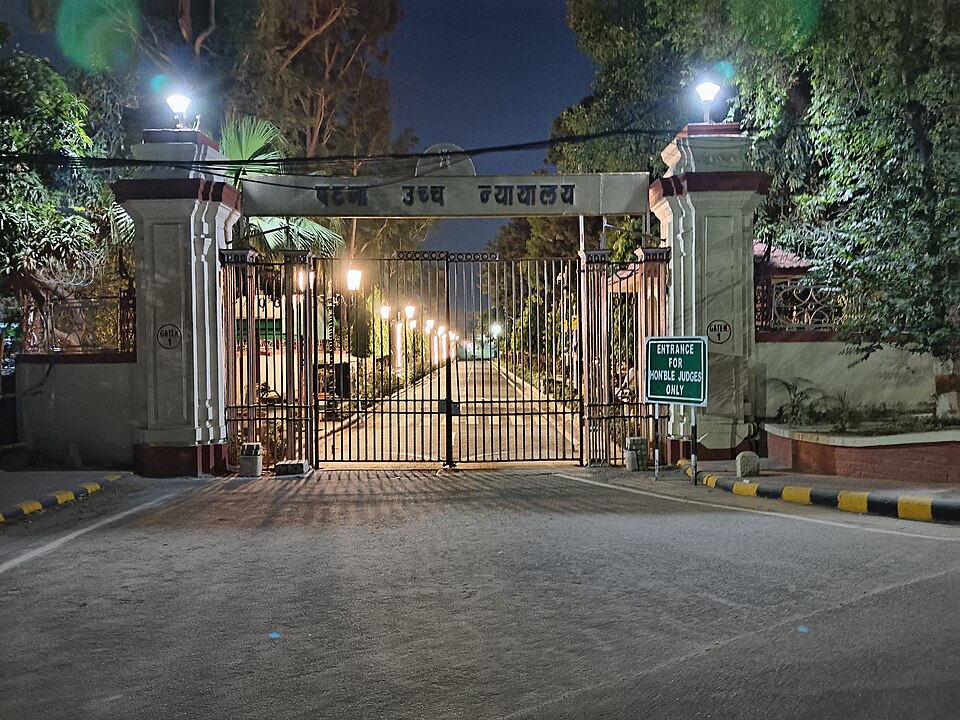
Bihar's separate existence is a by-product of the reversal of a much bigger decision. Lord Curzon partitioned Bengal in 1905, the Swadeshi agitation followed, and at the Delhi Durbar of 12 December 1911 George V announced both the annulment of that partition and a wholesale redrawing of the eastern provinces: Bengal proper was reconstituted under a Governor in Council, Assam went back to a Chief Commissionership, and the Bihar, Chota Nagpur and Orissa divisions were taken out of Bengal to form a new lieutenant-governorship. The proclamations followed on 22 March 1912 and took effect on 1 April 1912, with Patna as the capital of a province of some 113,000 square miles and about 35 million people. The province created in 1912 was Bihar and Orissa, not Bihar alone: a distinction the question's phrasing glosses over. It lasted twenty-four years: section 289 of the Government of India Act, 1935 created the separate province of Orissa and provided that 'the Province formerly known as Bihar and Orissa shall be known as the Province of Bihar', with effect from 1 April 1936. Bihar's institutional apparatus dates from the same moment as the province: the proclamation setting up the Patna High Court was issued on 22 March 1912, the foundation stone was laid on 1 December 1913, and the court was opened on 3 February 1916.
Two habits solve dated questions of this kind. The first is to read the verb. Indian constitutional history is full of pairs in which an instrument is dated one day and commences on another (an Act receives assent and then commences, a proclamation is notified and then takes effect, a province is announced and then constituted) and examiners set questions precisely on the gap. 'Came into force' is the language of commencement, so the answer is the later date. The second habit is to check the options against a fixed anchor before weighing them against each other. The anchor here is the Delhi Durbar of 12 December 1911, and it eliminates April 1911 outright. Now the honest part. This is a derived answer of medium confidence, and the reason for the residual doubt is that Bihar Diwas falls on 22 March, so the March date is the one every Bihari school and government office marks: a Bihar-set paper could have keyed it. The answer rests entirely on the stem's phrase 'came into force'. Read strictly, that phrase points to 1 April 1912, and both the contemporary authority and the record of the Lieutenant-Governor's tenure support it; read loosely as 'when was Bihar created', a candidate would answer 22 March. Learn both dates and what each one is, rather than one date and a label.
Key facts
- Delhi Durbar, 12 December 1911: George V announced 'the creation at as early a date as possible of a Governorship for the Presidency of Bengal, of a new Lieutenant-Governorship in Council administering the areas of Bihar, Chota Nagpur, and Orissa, and of a Chief Commissionership of Assam'
- Ilbert, The Government of India (1915): 'By a proclamation notified on March 22, 1912, a new province was carved out of the previous lieutenant-governorship of Bengal, was called Bihar and Orissa, and was placed under a lieutenant-governor'
- The same source: 'The territorial redistributions made by the proclamations of March 22 took effect on the following April 1'; the enabling power came from section 46 of the Indian Councils Act, 1861
- Sir Charles Stuart Bayley served as Lieutenant-Governor of Bihar and Orissa from 1 April 1912 to 19 November 1915; the province covered about 113,000 square miles with roughly 35 million people, capital Patna
- Bihar Diwas is observed on 22 March every year, a public holiday marking the separation from the Bengal Presidency, celebrated on a large scale since 22 March 2010
- Section 289 of the Government of India Act, 1935 created the separate province of Orissa and renamed the remainder simply Bihar, with effect from 1 April 1936
Study next
Common traps
- Confusing the date a proclamation is notified with the date it takes effect; 22 March 1912 is the first and 1 April 1912 the second
- Treating Bihar Diwas as the date the province came into force: the celebration marks the proclamation of 22 March
- Forgetting that the province created in 1912 was Bihar and Orissa; Bihar alone dates from 1 April 1936
BPSC's Bihar-history block returns to 1912 almost every edition and varies the verb (separated, created, came into force, established) which is exactly why the March and April dates both have to be held with their meanings attached. UPSC comes at the same episode from the Bengal side: when Curzon's partition took effect, when it was annulled, and what the Durbar of 1911 decided, so the two states' papers meet in the same year from opposite directions.
Related PYQs
The Partition of Bengal made by Lord Curzon in 1905 lasted until
- (a) the First World War when Indian leaders decided to support the British and demanded its annulment as a quid pro quo
- (b) King George V abrogated Curzon's Act at the Royal Durbar in Delhi in 1911
- (c) Gandhiji launched his Civil Disobedience Movement
- (d) the Partition of India in 1947
Answer(b) King George V abrogated Curzon's Act at the Royal Durbar in Delhi in 1911
The other half of the same decision: the Durbar that annulled Curzon's partition is the Durbar that ordered Bihar's separation, so the 1911 announcement and the 1912 commencement belong to one act of policy.
In the context of the Indian freedom struggle, 16th October 1905 is well known for which one of the following reasons?
- (a) The formal proclamation of Swadeshi Movement was made in Calcutta town hall
- (b) Partition of Bengal took effect
- (c) Dadabhai Naoroji declared that the goal of Indian National Congress was Swaraj
- (d) Lokmanya Tilak started Swadeshi Movement in Poona
Answer(b) Partition of Bengal took effect
The identical distinction tested seven years earlier and on the same province: UPSC keys the date the partition 'took effect' rather than the date it was ordered, which is exactly the reading that gives April rather than March here.
When was Bihar first separated from the Bengal Presidency under the British-ruled India?
- (a) 1912
- (b) 1936
- (c) 1947
- (d) None of the above
Answer(a) 1912
The same event on the previous paper, asked only to the year and therefore easy: the 70th sharpens it to the month and thereby turns a recall question into a test of whether you know which month did what.
Practice
- practice, not a real PYQ
The creation of a new province of Bihar and Orissa was announced at which event ?
- (a)The Delhi Durbar of 1911
- (b)The Imperial Durbar of 1903
- (c)The Simla Conference of 1906
- (d)The Lucknow session of the Congress, 1916
Answer(a) The Delhi Durbar of 1911: on 12 December 1911 George V announced the reconstitution of Bengal, a new lieutenant-governorship for Bihar, Chota Nagpur and Orissa, and a chief commissionership for Assam. - practice, not a real PYQ
Bihar and Orissa were separated into two distinct provinces with effect from
- (a)1 April 1912
- (b)1 April 1936
- (c)26 January 1950
- (d)15 November 2000
Answer(b) 1 April 1936: under section 289 of the Government of India Act, 1935, which created Orissa and provided that the remainder should be known simply as the Province of Bihar; 15 November 2000 is the date Jharkhand was separated.