
Where did the former President of the USA give his interview recently?
- (a)Rome
- (b)Sarajevo
- (c)Athens
- (d)Amsterdam
Answer
Why
Correct: C, Athens. The event the stem is reaching for is Barack Obama's exclusive interview with CNN's chief international anchor Christiane Amanpour, recorded and broadcast from Athens on 22 June 2023, three months before this paper was written. CNN's own announcement of 16 June 2023 states it plainly: the special programme 'Obama & Amanpour: Will Democracy Win?' would air at 10 pm ET on Thursday 22 June, 'anchored live by Christiane Amanpour from Athens, Greece, the cradle of democracy, where the former President will be visiting with his Obama Foundation'. The conversation covered threats to democracy in the United States as the 2024 presidential campaign opened, and the wider contest between democratic and autocratic government while Russia's war in Ukraine continued; a second segment brought in three young leaders from the Obama Foundation. The interview was repeated internationally on 23 June on Amanpour on CNN International and on Amanpour & Company on PBS. The visit is independently documented from the other side. Obama also appeared in Athens in a public conversation with Andreas Dracopoulos at the Stavros Niarchos Foundation's Nostos Conference, and published the transcript himself on 23 June 2023 under the title 'My Remarks at the 2023 SNF Nostos Conference', noting in it that 'there's a reason I gave my last official speech here in Athens': a reference to November 2016, when the city was the first stop of his final foreign tour as President. Two independent records, a broadcaster's press release and the speaker's own transcript, put the same former President in the same city in the same week. None of the other three cities carries a comparable, widely reported interview by a former US President in the months before this examination, and Athens is also the only one of the four that fits the framing a setter would have had in mind, since the whole point of the CNN programme was to discuss the future of democracy from the place where the word was born. One caution belongs in the answer rather than beneath it: this is our reasoned answer, not a published one. There is no official key for the 69th CCE. Athens is where the evidence points, and both independent readings of the question reached it, but the stem itself does not name the President, the date or the interviewer, and a candidate in the hall had nothing to go on except recall of that one news cycle.
Why the others are wrong
- (a)Rome: A plausible-sounding capital with no matching event. Rome's standing in general studies comes from elsewhere: the Treaty of Rome of 1957 that created the European Economic Community, the Vatican City enclave that is the world's smallest sovereign state, and the three United Nations food agencies headquartered there, the Food and Agriculture Organization, the World Food Programme and the International Fund for Agricultural Development. None of that has anything to do with a former US President's interview in mid-2023, and Rome earns its place in the option set only because it is a European capital of similar weight.
- (b)Sarajevo: The most historically loaded of the four, which is exactly why it is offered. Sarajevo is where Archduke Franz Ferdinand of Austria was assassinated by Gavrilo Princip on 28 June 1914, the trigger of the First World War; it hosted the Winter Olympics of 1984 and then endured the longest siege of a capital city in modern warfare, from 1992 to 1996 during the break-up of Yugoslavia. A candidate who associates the city with democracy and conflict can talk himself into it. But no interview of a former US President took place there in the run-up to this paper.
- (d)Amsterdam: The trap of familiarity, and it also hides a standard general-studies error. Amsterdam is the constitutional capital of the Netherlands, but the seat of government, the Parliament and the royal residence are at The Hague, which is where the international institutions sit too: the International Court of Justice at the Peace Palace, the Permanent Court of Arbitration and the International Criminal Court. So a candidate reaching for 'the Dutch city where world affairs happen' has usually picked the wrong Dutch city to begin with. Nothing links Amsterdam to a former US President's interview in 2023.
Concept
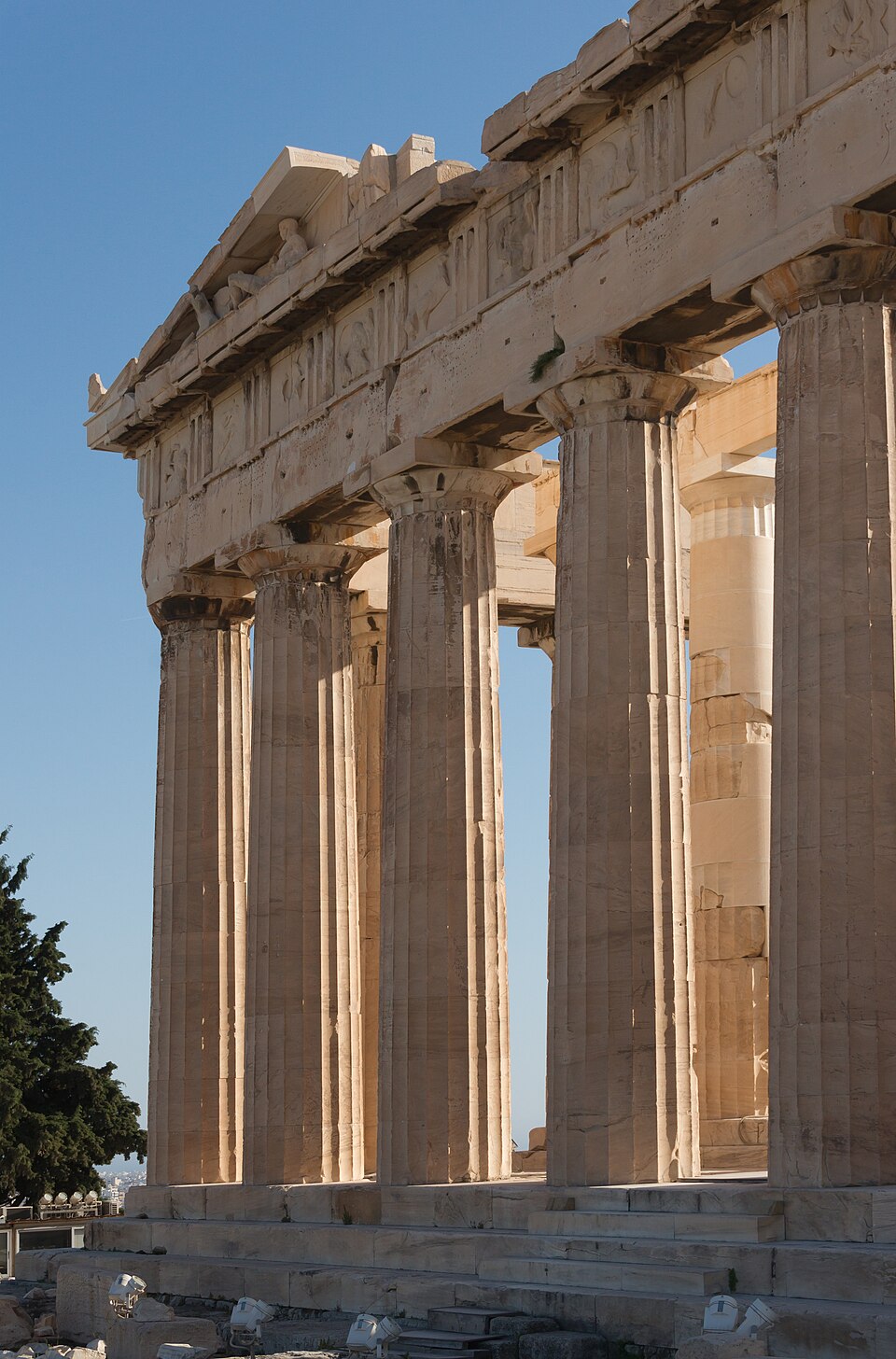
Athens is called the cradle of democracy because the word and the first working system both come from it: demos, the people, and kratos, power. Solon's reforms of about 594 BCE cancelled debt bondage and broke the aristocracy's monopoly on office by grading political rights by property rather than birth, and Cleisthenes went much further in 508–507 BCE, redistributing the citizen body into ten artificial tribes drawn from across the city, coast and inland so that old clan loyalties were diluted. The machinery that followed is what the term describes. The ekklesia, the assembly of all adult male citizens, met on the Pnyx hill and decided war, treaties and legislation directly; a boule or council of 500, fifty from each tribe chosen by lot for a year, prepared its agenda; magistrates and jurors were largely selected by lot rather than election, on the principle that any citizen was fit to govern; and ostracism allowed the assembly to exile a man for ten years without charge. Under Pericles in the fifth century BCE, pay for public service made office practicable for poorer citizens. Two qualifications matter for an examination. First, this was direct, not representative, democracy: citizens voted on measures themselves rather than electing legislators to do it, which is workable only in a small polity. Second, the citizen body excluded women, slaves and resident foreigners, so a large majority of the people of Attica had no political rights at all. And Athens was not alone in experimenting with collective rule: in India the gana-sanghas or republics of the sixth century BCE, the Vajji or Vrijji confederacy under the Licchavis with its capital at Vaishali in present-day Bihar foremost among them, governed through assemblies of their leading families rather than a king.
Start by admitting what the stem does not say, because that is the honest reading of this question. It names neither the President nor the date nor the interviewer. There are several living former Presidents of the United States, all of whom give interviews, and 'recently' floats free of any anchor except the date of the paper itself. Judged as a piece of drafting the item is under-specified: a candidate cannot reason to the answer from the words on the page, only from having followed the news. What makes it answerable at all is the option set. All four are European cities, which narrows the field to a former President's appearance abroad; and in the months before a September 2023 examination exactly one such appearance was heavily covered: Barack Obama in Athens in the third week of June 2023, both in the CNN special with Christiane Amanpour and at the Stavros Niarchos Foundation's Nostos Conference. The single discriminating fact is that pairing of Obama with Athens in June 2023. There is a second route, and it is the one a well-prepared candidate should use when a current-affairs stem is vague: ask which option the setter is likeliest to have had in mind, given how the story was framed. Every report of that interview carried the phrase 'the cradle of democracy' and the subject was the survival of democratic government, so Athens is the city that fits the theme as well as the calendar. That is reasoning about the question rather than about the world, and it is a legitimate tool when a stem is loose. Be clear about the standing of the answer. This paper has no published key, so Athens is the best-supported answer rather than a certified one, and the residual doubt sits precisely where the stem is silent: on who the President was. If a setter had some other former President and some other city in view, nothing in the printed question would tell you so.
Key facts
- CNN announced on 16 June 2023 that its special 'Obama & Amanpour: Will Democracy Win?' would air on 22 June 2023 at 10 pm ET, anchored live by Christiane Amanpour from Athens, Greece, 'the cradle of democracy', where the former President was visiting with his Obama Foundation.
- On the same Athens visit Obama took part in a public conversation with Andreas Dracopoulos at the Stavros Niarchos Foundation Nostos Conference; he published the transcript on 23 June 2023 and noted that he had given his last official speech as President in Athens, in November 2016.
- Athenian democracy: Solon's reforms about 594 BCE, Cleisthenes' reorganisation of the citizen body into ten tribes in 508–507 BCE, the ekklesia or assembly of adult male citizens, a boule of 500 chosen by lot, selection of most officials by lot, and ostracism for up to ten years.
- Athenian democracy was direct rather than representative, and its citizen body excluded women, slaves and resident foreigners (metics).
- In India, the gana-sanghas of the sixth century BCE governed by assembly rather than by king: the Vajji or Vrijji confederacy of the Licchavis, capital Vaishali in present-day Bihar, is the best known.
- The Netherlands distinction that option (d) tests: Amsterdam is the constitutional capital, but the government, Parliament and the international courts (the International Court of Justice at the Peace Palace, the Permanent Court of Arbitration and the International Criminal Court) are at The Hague.
Study next
Common traps
- Assuming the stem must mean the President currently in the news; it says 'former President' and, in mid-2023, the documented European interview was Barack Obama's in Athens
- Treating Amsterdam as the seat of the International Court of Justice: the Court sits at The Hague, as do the Permanent Court of Arbitration and the International Criminal Court
- Trying to reason a vague current-affairs stem out from first principles; when a question names neither a person nor a date, the only reliable routes are recall of the news cycle and the thematic fit of the options
BPSC current affairs is city-and-name recall: where a summit was held, where an interview was given, which city hosted an award. The 69th and the 71st both do it, and both accept that the item is unanswerable for a candidate who did not read the papers that year. UPSC will not ask where an interview took place. It converts the same material into an institution or a concept (which body sits in which city, what a summit agreed, what the difference is between direct and representative democracy) so that the question survives past the news cycle that produced it.
Related PYQs
Who of the following is the author of the book "The Audacity of Hope" ?
- (a) Al Gore
- (b) Barack Obama
- (c) Bill Clinton
- (d) Hillary Clinton
Answer(b) Barack Obama
The same public figure, tested the way UPSC prefers to test him: through a durable fact, the authorship of a 2006 book, rather than through a news event with a shelf life of one exam cycle. Both items reward a candidate who keeps track of who the American former Presidents are and what they are associated with.
In which city was the AI Action Summit held in February 2025?
- (a) Bengaluru
- (b) Paris
- (c) Rome
- (d) More than one of the above
Answer(b) Paris
Exactly the same concept two years later, and better drafted: name the European city where an internationally covered event took place. The 71st names the event and asks for the city; the 69th names neither the person nor the event and asks for the city anyway, which is why this pair is worth studying together.
Practice
- practice, not a real PYQ
The Athenian statesman whose reforms of 508–507 BCE reorganised the citizen body into ten tribes and is therefore regarded as the founder of Athenian democracy was
- (a)Solon
- (b)Draco
- (c)Cleisthenes
- (d)Pericles
Answer(c) Cleisthenes: Draco codified a famously harsh law, Solon's reforms of about 594 BCE ended debt bondage and graded rights by property, and Pericles later paid citizens for public service; but the reorganisation into ten tribes that created the machinery of Athenian democracy was Cleisthenes' work. - practice, not a real PYQ
The International Court of Justice, the principal judicial organ of the United Nations, has its seat at
- (a)Amsterdam
- (b)The Hague
- (c)Geneva
- (d)Brussels
Answer(b) The Hague: the Court sits at the Peace Palace there, alongside the Permanent Court of Arbitration; Amsterdam is the constitutional capital of the Netherlands but not the seat of government or of the international courts.