
Match List–I with List–II : List—I (Footwear/Fashion Accessory) a. Beret b. Stilettos c. Aviators d. Chignon e. Brogue List—II (Description) 1. A type of men’s footwear 2. A type of sunglasses 3. A type of hat 4. A type of women’s footwear 5. A type of hairstyle Select the correct answer using the codes given below.
- (a)a b c d e 3 2 1 4 5
- (b)a b c d e 3 4 2 5 1
- (c)a b c d e 5 3 2 4 1
- (d)a b c d e 1 2 3 4 5
Answer
Why
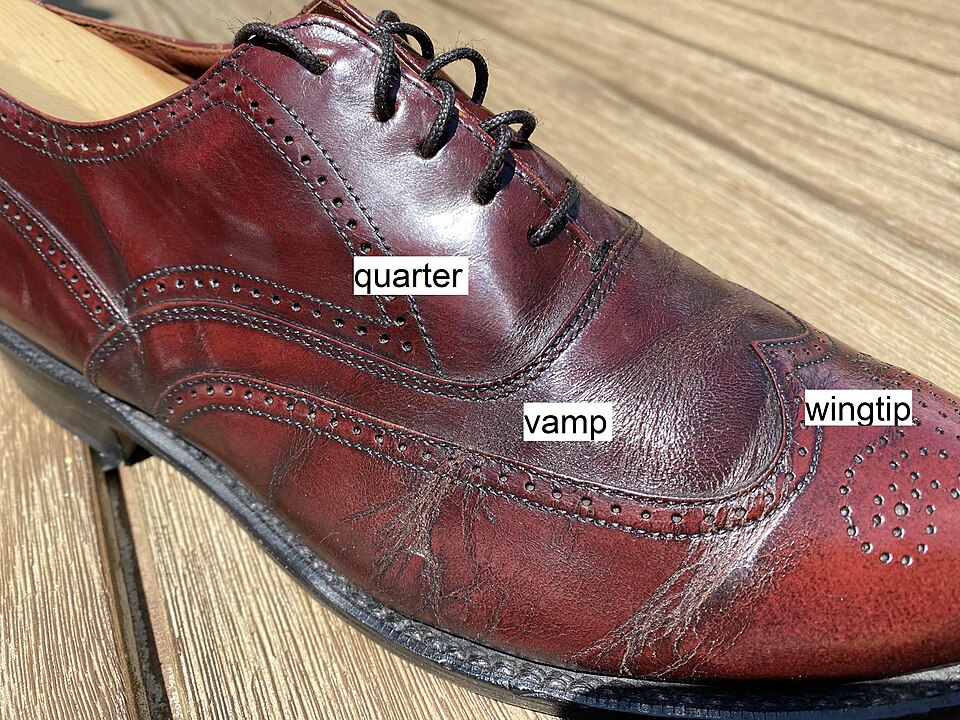
Correct: B, a b c d e / 3 4 2 5 1. Take the five items one at a time and the code assembles itself. A beret is a hat: a soft, brimless cap with a flat crown, traditionally made by felting knitted wool so that it holds its shape without a stiffener, worn for centuries by shepherds in the Basque country of the western Pyrenees and adopted through the twentieth century as military headgear across the world, the Indian Army included, where the colour of the beret marks the arm or the regiment. So a matches 3. Stilettos are women's footwear: a shoe defined not by its upper but by its heel, which is very high and so slender that it is named after the stiletto, the narrow needle-pointed Italian dagger; the style came into fashion in the early 1950s through the Paris houses, Roger Vivier working for Christian Dior among them. So b matches 4. Aviators are sunglasses: the teardrop-lensed glasses designed in the 1930s for pilots of the United States Army Air Corps, whose unusually large lens was a functional requirement rather than a style, since it had to cover the whole range of movement of the eye so that a pilot glancing up towards the sun in an open or glazed cockpit was still shaded; they went on public sale from 1937 under the Ray-Ban name. So c matches 2. A chignon is a hairstyle: the hair gathered, twisted and coiled into a knot pinned at the nape of the neck, from the French chignon du cou, literally 'nape of the neck'; it is the same arrangement Indian usage calls a juda, and it is old enough to appear on Greek statuary. So d matches 5. A brogue is men's footwear: a sturdy low-heeled leather shoe identified by broguing, the rows of punched perforations that run along its seams and across its toe cap. Those holes are a fossil of a function: they began as drainage on the untanned shoes worn over the wet ground and peat bogs of Ireland and the Scottish Highlands, and the word itself is simply the Irish bróg and Scottish Gaelic bròg, meaning shoe. Modern brogues are graded by how far the perforated toe cap runs (full or wingtip, semi, quarter) and although the style is now worn by everyone, the classification the setter has used, men's footwear, is the standard one. So e matches 1. The sequence a-3, b-4, c-2, d-5, e-1 is precisely option (b), and no other code on the paper produces it.
Why the others are wrong
- (a)a b c d e 3 2 1 4 5: The dangerous one, because it opens correctly. It reads beret as 3, a type of hat, which is right, and a candidate who checks only the first pair before marking will lose the mark here. Everything after that is displaced: it makes stilettos 2, a type of sun-glasses, aviators 1, a type of men's footwear, chignon 4, a type of women's footwear, and brogue 5, a type of hairstyle. Four of the five pairs are wrong, and the pattern is instructive: the three descriptions 1, 2 and 3 have simply been rotated among the first three items, which is how a setter builds a decoy that looks orderly. Check a second pair before you commit to any matching code.
- (c)a b c d e 5 3 2 4 1: Gets two pairs right: aviators as 2, a type of sun-glasses, and brogue as 1, a type of men's footwear, and wrecks the other three. It makes the beret 5, a type of hairstyle, the stilettos 3, a type of hat, and the chignon 4, a type of women's footwear. A candidate who knows only that a beret is something worn on the head rather than something done with the hair eliminates this option in a second, which is why beret is the right pair to anchor on.
- (d)a b c d e 1 2 3 4 5: The identity code, 1-2-3-4-5, that almost every matching item carries in the hope that a candidate short of time will take the tidy-looking answer. Read as printed it makes a beret a type of men's footwear, stilettos a type of sun-glasses and aviators a type of hat, all plainly wrong; only the fourth and fifth positions would need checking, and chignon as women's footwear fails too. A serial code is a prompt to verify rather than to assume, and its presence is a prompt to verify the very first pair and move on.
Concept
Every one of these five words is a common noun of international English that has entered Indian usage through clothing, the armed services and the cinema, and each is defined by one distinguishing feature rather than by a brand or a maker. A beret is defined by its flat crown and the absence of a brim; a stiletto by the height and thinness of its heel, not by the rest of the shoe; aviators by the teardrop lens shape that grew out of a functional need in the cockpit; a chignon by where the hair is gathered, at the nape rather than on the crown; a brogue by the perforated decoration called broguing. Two of the five are footwear, one is worn on the head, one over the eyes, and one is not an object at all but an arrangement of hair, and that deliberate spread across categories is the design of the question. Notice also how often the origin of such a word is functional and only later decorative: broguing began as drainage holes, the aviator's oversized lens began as glare protection for military pilots, the beret's felted wool began as weatherproofing for shepherds. There is a physics footnote worth carrying out of this question, because the same idea is examined directly in general science. Pressure is force divided by area, so the thinner the heel the larger the pressure it delivers. A stiletto heel may end in a tip of about one square centimetre; a person of 60 kg resting weight on that single tip loads it at roughly 60 kilograms per square centimetre. An elephant of five tonnes spreads its weight over four broad pads of perhaps a thousand square centimetres each, giving barely more than one kilogram per square centimetre, so the heel presses some forty to fifty times harder than the elephant does. That is exactly why stiletto heels are barred from certain museum galleries, aircraft cabins and old timber floors.
Read the printed layout before you read the question. The booklet sets List-I in the left column and List-II in the right, so the two lists interleave when the page is scanned straight across, and the first job is to separate them back out: a. Beret, b. Stilettos, c. Aviators, d. Chignon, e. Brogue against 1. A type of men's footwear, 2. A type of sun-glasses, 3. A type of hat, 4. A type of women's footwear, 5. A type of hairstyle. Candidates lose this mark to the layout more often than to the vocabulary. Once the two lists are laid out, do not try to match all five. Match only what you are certain of and let the codes eliminate the rest. Beret = hat is the first anchor: it is 3, and that one pairing destroys option (c), which makes the beret a hairstyle, and option (d), which makes it men's footwear. Only (a) and (b) survive, and they differ at exactly one point: (a) reads stilettos as 2, sun-glasses, while (b) reads stilettos as 4, women's footwear. So the whole question reduces to a single fact, that a stiletto is a shoe, and a candidate who knows it never has to form an opinion about chignons or brogues at all. That is the general method for a five-by-five matching item, and it is worth internalising because BPSC prefers the five-item form precisely to stop candidates guessing a code from one pair: identify the pairing you are surest of, strike every code that contradicts it, then find the single position on which the survivors disagree and decide only that. A useful cross-check, when you have picked a code, is category consistency: in the right answer both footwear descriptions (1 and 4) go to the two shoes in the list, stilettos and brogue, and no wrong option manages that.
Key facts
- Beret: a soft, brimless cap with a flat crown, made by felting knitted wool, long associated with the Basque country on the France–Spain border and adopted worldwide as military headgear, where the colour of the beret identifies the arm or unit.
- Stiletto: a woman's shoe with a very high, very slender heel, named after the narrow Italian dagger of that name and brought into fashion in the early 1950s through the Paris couture houses, Roger Vivier working for Christian Dior among them.
- Aviators: sunglasses with large teardrop lenses developed in the 1930s for United States Army Air Corps pilots, the lens sized to cover the full sweep of the eye against glare, marketed publicly from 1937 under the Ray-Ban name.
- Chignon: a hairstyle in which the hair is gathered and coiled into a knot pinned at the nape of the neck; the name comes from the French chignon du cou, 'nape of the neck', and the Indian equivalent is the juda.
- Brogue: a low-heeled leather shoe recognised by broguing: punched perforations along the seams and toe cap that began as drainage holes on Irish and Scottish country footwear; graded as full or wingtip, semi and quarter brogues by the extent of the toe-cap perforation. The word is from Irish bróg / Scottish Gaelic bròg, meaning shoe.
- Pressure is force per unit area: a 60 kg person on a stiletto tip of about 1 cm² presses at roughly 60 kg per cm², some forty to fifty times the pressure exerted by a five-tonne elephant spreading its weight over four broad feet.
Study next
Common traps
- Reading a two-column match-list straight across the page and pairing the wrong item with the wrong description: always rebuild the two lists separately before matching
- Picking the serial code 1-2-3-4-5 because it looks tidy, instead of checking the one or two pairs that decide it
- Trying to match all five pairs when only one or two need to be known: here the whole question is settled by beret = hat and stiletto = women's footwear
BPSC uses the match-list as a vocabulary test as much as a knowledge test, and unlike the standard four-by-four it often runs five items against five descriptions so that the code cannot be guessed from a single pair; the 69th paper carries several such items and expects general reading rather than syllabus study. UPSC very rarely asks for the meaning of a lifestyle word on its own: when this vocabulary appears it is attached to a person or an industry, as in its Sabyasachi Mukherjee item, where the candidate must place a named designer in the field of fashion rather than define a garment.
Related PYQs
Match List-I with List-II and select the correct answer using the code given below the Lists: List-I (Person) A. Sabyasachi Mukherjee B. Aniruddha Bahal C. Vikram Akula D. Yusuf Hamied List-II (Area) 1. Microfinance loans 2. Pharmaceuticals 3. Fashion designing 4. Investigative journalism
- (a) A-1 B-2 C-3 D-4
- (b) A-3 B-4 C-1 D-2
- (c) A-1 B-4 C-3 D-2
- (d) A-3 B-2 C-1 D-4
Answer(b) A-3 B-4 C-1 D-2
The same drill in UPSC's idiom: assign each item in one list to the category it belongs to, with fashion as one of the categories, and solve it by anchoring on the pairing you are surest of rather than by working out all four.
Practice
- practice, not a real PYQ
The 'stiletto', as a style of women's footwear, takes its name from
- (a)A slender Italian dagger
- (b)A Spanish court dance
- (c)An Italian town famous for shoemaking
- (d)A cobbler's nail used to fix heels
Answer(a) A slender Italian dagger: the stiletto is a narrow, needle-pointed Italian blade, and the shoe's very thin high heel was named for its resemblance to it. - practice, not a real PYQ
Consider the following pairs : 1. Fedora : A type of hat 2. Espadrille : A type of footwear 3. Cravat : A type of hairstyle Which of the pairs given above is/are correctly matched?
- (a)1 only
- (b)1 and 2 only
- (c)2 and 3 only
- (d)1, 2 and 3
Answer(b) 1 and 2 only: a fedora is a soft felt hat with a creased crown and a brim, and an espadrille is a light canvas shoe with a braided jute or esparto sole. A cravat is neckwear, the ancestor of the modern necktie, not a hairstyle.