
In the context of sports, which of the following pairs are correctly matched? 1. Flushing Meadows : French Open 2. Venus Rosewater Dish : Wimbledon Trophy (Women) 3. Roland Garros : US Open 4. Australian Open (Women) : Daphne Akhurst Memorial Cup Select the correct answer using the codes given below.
- (a)1 and 2
- (b)2 and 3
- (c)3 and 4
- (d)2 and 4
Answer
Why
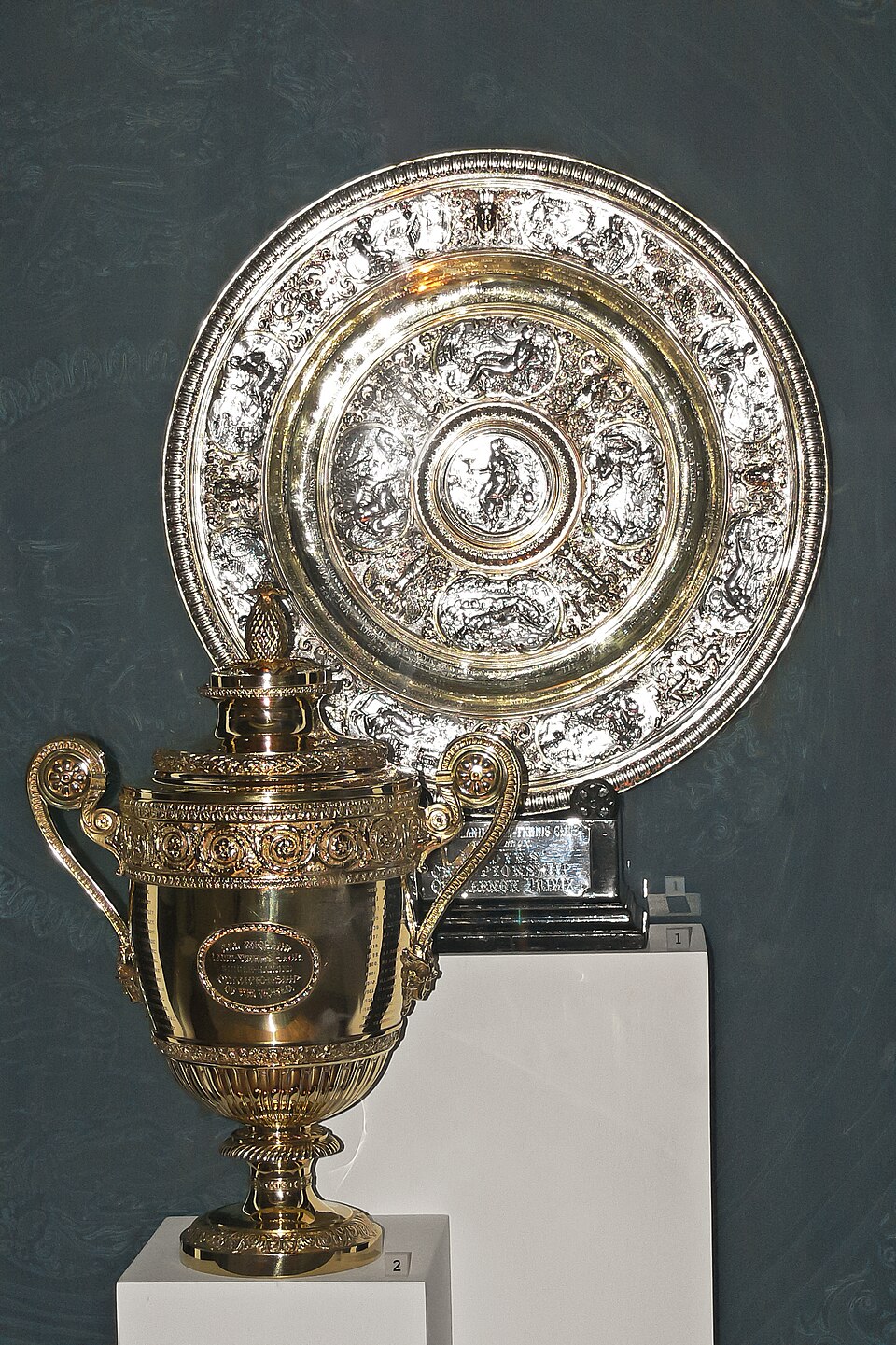
Correct: D, 2 and 4. Test the four pairs one by one and the structure of the question gives itself away. Pair 1, Flushing Meadows : French Open, is wrong. Flushing Meadows is in New York: the USTA Billie Jean King National Tennis Center stands inside Flushing Meadows–Corona Park in the borough of Queens, and it has been the home of the US Open since 1978. Its main court, the Arthur Ashe Stadium, seats about 23,200 and is the largest tennis stadium in the world; the courts are hard courts, acrylic over concrete. Pair 3, Roland Garros : US Open, is wrong for the mirror-image reason. Stade Roland Garros in Paris was built in 1928 so that France could defend the Davis Cup at home, and it is named after Roland Garros (1888–1918), the pioneering French aviator, not after a tennis player. It hosts the French Open, played on red clay in late May and early June, and the tournament is so completely identified with the ground that it is now officially called Roland-Garros. The setter has simply swapped the two venues between statements 1 and 3, which is the key to the whole item. Pair 2, Venus Rosewater Dish : Wimbledon Trophy (Women), is correct. The Venus Rosewater Dish is the trophy presented to the Wimbledon ladies' singles champion, and it is a partially gilded sterling silver salver about 18¾ inches (47.6 cm) across, made in 1864 by Elkington & Co. of Birmingham and first presented in 1886 to Blanche Bingley. Its decoration has nothing to do with tennis: the central boss shows Sophrosyne, the personification of temperance (not Venus, despite the name) and the rim shows Minerva presiding over the seven liberal arts. The champion holds it for the photographs and keeps a three-quarter-size replica; the dish itself stays in the All England Club museum. Pair 4, Australian Open (Women) : Daphne Akhurst Memorial Cup, is also correct. The Australian Open women's singles trophy has been named the Daphne Akhurst Memorial Cup since 1934, in memory of Daphne Akhurst Cozens (22 April 1903 – 9 January 1933), who won the Australian singles title five times (1925, 1926, 1928, 1929 and 1930) and died at twenty-nine. The men's champion at Melbourne receives the Norman Brookes Challenge Cup. Only pairs 2 and 4 stand, which is option (d).
Why the others are wrong
- (a)1 and 2: Right about the Venus Rosewater Dish and wrong about the venue. It accepts Flushing Meadows as the home of the French Open, when Flushing Meadows is a park in Queens, New York and hosts the US Open on hard courts; the French Open is played on the clay of Stade Roland Garros in Paris. A candidate who has heard both names without attaching either to a city is exactly who this option is written for.
- (b)2 and 3: Again correct on the Wimbledon trophy, and again taken in by the venue swap: this time in the other direction, accepting Roland Garros as the home of the US Open. Roland Garros is the Paris clay-court complex that gives the French Open its official name. Note that (a) and (b) fail on opposite halves of the same swap, so a candidate who knows the location of either venue can strike both options at once.
- (c)3 and 4: Correctly pairs the Daphne Akhurst Memorial Cup with the Australian Open women's singles but keeps statement 3, Roland Garros : US Open, which is false. This is the most instructive wrong answer on the question: it shows that knowing the trophies is not enough, because two of the four statements test venues and the venues are the ones that have been tampered with.
Concept
The four Grand Slam or major championships are, in the order they are played each year, the Australian Open, the French Open, Wimbledon and the US Open. Each has a fixed home, a fixed surface and, in three cases, named singles trophies, and BPSC and UPSC both mine that grid for pairs. The Australian Open is played at Melbourne Park in January on hard courts; its women's champion receives the Daphne Akhurst Memorial Cup and its men's champion the Norman Brookes Challenge Cup, both named for Australian players of the inter-war years. The French Open is played at Stade Roland Garros in Paris in late May and early June on crushed-brick red clay, the slowest of the surfaces; the trophies are the Coupe Suzanne Lenglen for the women and the Coupe des Mousquetaires for the men. Wimbledon, at the All England Lawn Tennis and Croquet Club in south-west London, is the oldest tennis tournament in the world, first held in 1877, and the only major still played on grass; the ladies' champion receives the Venus Rosewater Dish and the gentlemen's champion a silver-gilt cup. The US Open, at Flushing Meadows in New York from late August into September, is played on hard courts and is the one major whose singles trophies carry no personal name. Two conventions explain most of the confusion candidates have here. The venues are named after places or people connected with the ground (Roland Garros the aviator, Wimbledon the district, Flushing Meadows the park) while the trophies are named after champions or after the object itself. And 'winning the Grand Slam', strictly used, means taking all four titles in the same calendar year, not merely holding four majors at once.
Do not start with the trophies. Two of the four statements are about venues, and the venues are where the question has been rigged: Flushing Meadows and Roland Garros have been swapped between statements 1 and 3, so both are false together. That single observation decides everything, because every option except (d) contains statement 1 or statement 3. Know that Flushing Meadows is in New York (or, equivalently, that Roland Garros is in Paris) and you can mark (d) without any view at all on silver salvers or Australian champions of the 1920s. The discriminating fact, if you want it in one line, is that the French Open is Roland-Garros and the US Open is Flushing Meadows. Everything else in this item is confirmation. It is still worth checking the two trophy statements, because a well-made pairs question sometimes plants an error in the part you were about to take on trust, and here neither is planted. The Venus Rosewater Dish really is the Wimbledon ladies' trophy (a curiosity worth remembering is that the figure on it is Sophrosyne, temperance, and not Venus at all) and the Daphne Akhurst Memorial Cup really is the Australian Open women's trophy, named for a five-time champion who died at twenty-nine in 1933. One general habit for this question type: in a 'which pairs are correctly matched' item with four statements and four options, count how many options each statement appears in. Statement 3 appears in two options here, statement 2 in three. Attacking the statement that appears most often, or the one you are surest about, collapses the option set fastest.
Key facts
- Flushing Meadows: the USTA Billie Jean King National Tennis Center in Flushing Meadows–Corona Park, Queens, New York has hosted the US Open since 1978; Arthur Ashe Stadium, capacity about 23,200, is the largest tennis stadium in the world, and the surface is hard court.
- Stade Roland Garros, Paris, was built in 1928 for France's first defence of the Davis Cup and is named after the French aviation pioneer Roland Garros (1888–1918); it hosts the French Open on red clay, and the tournament is officially called Roland-Garros.
- The Venus Rosewater Dish, the Wimbledon ladies' singles trophy, is a partially gilded sterling silver salver 18¾ inches (47.6 cm) in diameter, made in 1864 by Elkington & Co. of Birmingham and first presented in 1886 to Blanche Bingley; its central boss depicts Sophrosyne, the personification of temperance, and the champion keeps a three-quarter-size replica while the original remains at the All England Club.
- The Daphne Akhurst Memorial Cup has been the Australian Open women's singles trophy since 1934, named for Daphne Akhurst Cozens (1903–1933), winner of the Australian singles title in 1925, 1926, 1928, 1929 and 1930, who died at the age of 29; the men's trophy is the Norman Brookes Challenge Cup.
- French Open trophies: the Coupe Suzanne Lenglen for the women's singles champion and the Coupe des Mousquetaires for the men's; the US Open singles trophies carry no personal name.
- Order and surfaces of the majors in a season: Australian Open (January, hard), French Open (late May to early June, clay), Wimbledon (late June to July, grass, first held 1877), US Open (late August to September, hard). A calendar-year Grand Slam means winning all four in the same year.
Study next
Common traps
- Swapping Flushing Meadows and Roland Garros: Flushing Meadows in New York hosts the US Open, Roland Garros in Paris hosts the French Open
- Assuming the Venus Rosewater Dish depicts Venus: the central figure is Sophrosyne, temperance; and assuming the champion keeps it, when she keeps only a three-quarter replica
- Confusing the two Australian Open trophies: Daphne Akhurst Memorial Cup for the women's singles, Norman Brookes Challenge Cup for the men's
BPSC asks sport as pair-matching and one-line recall (a venue against a tournament, a trophy against an event) with the error usually planted in the venue rather than the trophy, exactly as here. UPSC asked the same body of fact in its general-knowledge years but preferred the oblique route: a place-and-country pairs item in 2009 that turned on Roland Garros being in France, a 1999 item on which four tournaments make up the Grand Slam, and questions on who won which major in a given season.
Related PYQs
Consider the following pairs: Famous place : Country 1. Cannes : France 2. Davos : Denmark 3. Roland Garros : The Netherlands Which of the pairs given above is/are correctly matched ?
- (a) 1 only
- (b) 1 and 2 only
- (c) 2 and 3 only
- (d) 1, 2 and 3
Answer(a) 1 only
The same misconception, tested the same way. UPSC's third pair puts Roland Garros in the Netherlands; BPSC's third pair puts it at the US Open. Both fail for one reason (Roland Garros is the clay-court stadium in Paris that hosts the French Open) and in both questions that single fact decides the answer.
In order to win the Grand Slam in Tennis, a player must win which one of the following groups of tournaments?
- (a) Australian Open, Wimbledon, French Open, US Open
- (b) Wimbledon, French Open, US Open
- (c) Wimbledon, French Open, Paegas Czech Open, US Open
- (d) Davis Cup, Wimbledon, French Open
Answer(a) Australian Open, Wimbledon, French Open, US Open
The foundation the BPSC question builds on: which four tournaments are the majors. Fix that set of four with its venues and surfaces and every later pairs question about Flushing Meadows, Roland Garros or a named trophy becomes a matter of reading rather than recall.
Practice
- practice, not a real PYQ
The men's singles champion of the Australian Open is awarded which of the following trophies?
- (a)Norman Brookes Challenge Cup
- (b)Daphne Akhurst Memorial Cup
- (c)Coupe des Mousquetaires
- (d)Venus Rosewater Dish
Answer(a) Norman Brookes Challenge Cup: the Daphne Akhurst Memorial Cup goes to the Australian Open women's champion, the Coupe des Mousquetaires to the French Open men's champion and the Venus Rosewater Dish to the Wimbledon ladies' champion. - practice, not a real PYQ
Consider the following pairs : 1. Coupe des Mousquetaires : French Open (Men) 2. All England Lawn Tennis and Croquet Club : Wimbledon 3. Melbourne Park : US Open Which of the pairs given above is/are correctly matched?
- (a)1 only
- (b)1 and 2 only
- (c)2 and 3 only
- (d)1, 2 and 3
Answer(b) 1 and 2 only: the Coupe des Mousquetaires is the French Open men's singles trophy and Wimbledon is played at the All England Lawn Tennis and Croquet Club, but Melbourne Park hosts the Australian Open; the US Open is played at Flushing Meadows in New York.