
Match List–I with List–II : List—I (Space Mission) a. Cassini-Huygens b. Juno c. Artemis d. VERITAS List—II (Exploration) 1. Jupiter 2. Saturn and its rings 3. Venus 4. Human Space-flight—Moon to Mars Select the correct answer using the codes given below.
- (a)a b c d 2 1 4 3
- (b)a b c d 3 1 4 2
- (c)a b c d 2 3 4 1
- (d)a b c d 3 1 2 4
Answer
Why
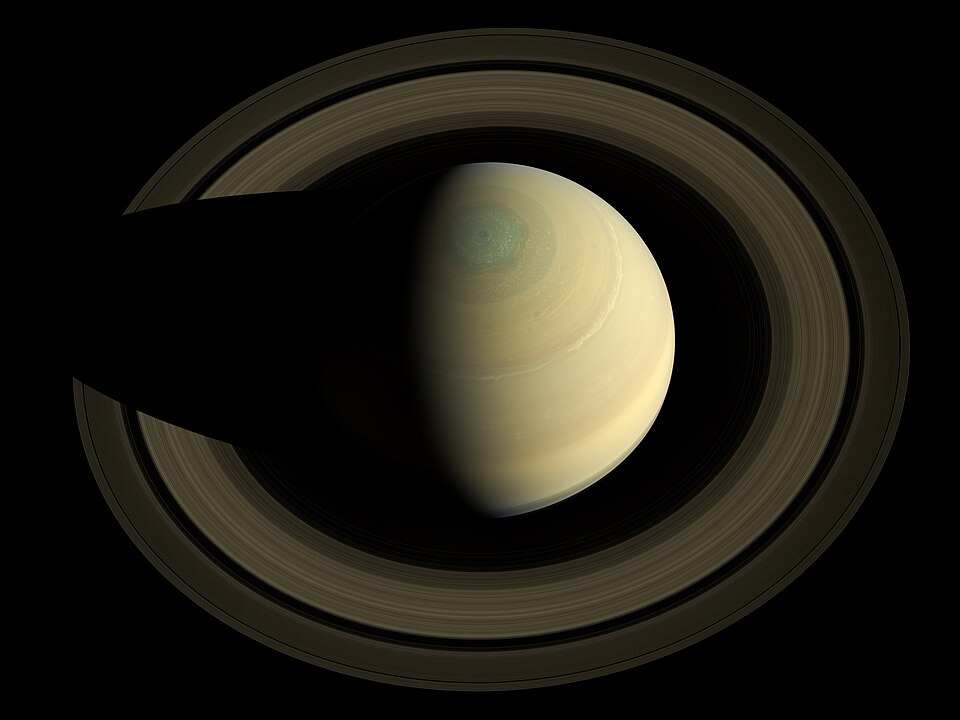
Correct: A, a b c d 2 1 4 3. Take the four missions in turn and each one carries its own date, its own target and its own status. Cassini-Huygens goes with Saturn and its rings: a joint NASA / European Space Agency / Italian Space Agency mission launched on 15 October 1997, which NASA's own mission page lists with target "The Saturn System" and status "Successful". It arrived on 1 July 2004 as the first spacecraft ever to orbit Saturn, released the ESA-built Huygens probe on 24 December 2004, and that probe descended to the surface of Titan on 14 January 2005: still the only landing ever made in the outer solar system. Across 294 Saturn orbits, 127 targeted Titan flybys and 23 Enceladus flybys it found subsurface oceans on two moons; the Saturn system was its home for thirteen years, and it was deliberately plunged into the planet in 2017 so that those moons could not be contaminated. Juno goes with Jupiter: launched on 5 August 2011 from Cape Canaveral aboard an Atlas V, it entered orbit around Jupiter on 4 July 2016 after a five-year, 1.7-billion-mile (2.8-billion-kilometre) cruise, and its first orbit alone stretched across 53 days from the cloud tops to the edge of the planet's magnetic field. It found networks of vast storms at Jupiter's poles, active volcanoes and lakes of lava on Io, and winds reaching hundreds of miles into the interior. Artemis goes with Human Spaceflight: Moon to Mars: it is NASA's crewed programme, not a probe. Artemis I flew in 2022, when the Space Launch System sent an uncrewed Orion capsule on a 1.4-million-mile journey beyond the Moon and back; Artemis II is the programme's first flight with astronauts aboard. VERITAS goes with Venus: "Venus Emissivity, Radio Science, InSAR, Topography and Spectroscopy", a solar-powered orbiter led by Principal Investigator Sue Smrekar and managed by NASA's Jet Propulsion Laboratory, which will aerobrake into a near-polar orbit at a science altitude of about 250 miles (400 km) and return the first new data on the Venusian surface in more than three decades. Hence a-2, b-1, c-4, d-3.
Why the others are wrong
- (b)a b c d 3 1 4 2: Sends Cassini-Huygens to Venus and VERITAS to Saturn: it gets Juno and Artemis right and swaps only the outer pair, which makes it the trap for a candidate who knows two of the four names. This is also the classic error on this topic in Indian exams: UPSC planted precisely this mis-pairing in 2014, offering "Cassini-Huygens : Orbiting the Venus and transmitting data to the Earth" and marking it incorrect. Cassini's target is listed by NASA as the Saturn system and its status as successful; no part of the mission ever went near Venus except as a gravity-assist flyby on the way out.
- (c)a b c d 2 3 4 1: Opens correctly with Cassini-Huygens at Saturn but then sends Juno to Venus and VERITAS to Jupiter, so it dies on the second pairing, the easiest one on the list to fix. Juno is named after the Roman goddess who was Jupiter's wife, and NASA tells the story deliberately: Jupiter hid his misbehaviour in a veil of clouds and Juno swooped down and saw through it, which is exactly what the spacecraft does to the planet's cloud deck. It has been in Jupiter orbit since 4 July 2016, and its extended mission ran through September 2025 across Ganymede, Europa and Io.
- (d)a b c d 3 1 2 4: Only Juno is placed correctly. It sends Cassini-Huygens to Venus, makes Artemis a mission to Saturn's rings and turns VERITAS into a human spaceflight programme. Two structural clues kill it without any recall of dates: Artemis is the only crewed item in List-I, and List-II entry 4 is the only entry that names human spaceflight rather than a planet, so those two must pair. VERITAS is an uncrewed radar-and-spectroscopy orbiter whose whole purpose is to improve on the Magellan radar maps of Venus by orders of magnitude; it carries no astronauts and never will.
Concept
Planetary missions are easiest to hold in memory by their class, their agency and their name. Cassini-Huygens was a Flagship-class mission: the largest and costliest tier, about USD 3.9 billion, built with two partner agencies and designed to live at one destination for years rather than fly past it. Juno belongs to the medium New Frontiers tier: a hexagonal body about 11.5 feet (3.5 m) across with three huge solar arrays that give it a span of more than 66 feet (20 m), spinning twice a minute so that its fixed instruments each get a turn at the target during a two-hour pole-to-pole pass. VERITAS belongs to the small, competitively selected Discovery tier, and its team proposed it three times (twice to Discovery and once to New Frontiers) before it was picked, which is why it flies with a compact payload and leans on international contributions from Italy, Germany and France. Artemis is not a robotic probe at all but NASA's human spaceflight programme, which is why List-II describes it in terms of astronauts rather than a planet. And the names themselves encode the targets: Juno was Jupiter's wife in Roman mythology, Artemis was Apollo's twin sister and a Moon goddess (so the programme that follows Apollo back to the Moon carries her name) and veritas is Latin for "truth", the mission being built to reveal the truth of how Venus and Earth diverged.
Two facts settle this question and the rest is arithmetic. First, Cassini-Huygens is a Saturn mission, so position (a) must be 2; that alone leaves only options (a) and (c) standing. Second, Juno is at Jupiter, so position (b) must be 1; option (c) puts Juno at Venus and dies there. Option (a) survives, and the last two pairings confirm rather than decide it. That is the discipline a codes-based match rewards: fix the pairing you are surest of, strike every option that contradicts it, and stop as soon as one option is left, instead of trying to verify all four pairs. If you knew only the mythology you could still get there: Juno points to Jupiter, Artemis points to the Moon, and "truth" points to the mission built to unmask Venus. The one item that genuinely trips candidates is VERITAS, which was still unflown when this paper was set and is easily confused with the Very Energetic Radiation Imaging Telescope Array System, a ground-based gamma-ray observatory in Arizona that shares the acronym exactly. The list also had current-affairs pull in September 2023: India had signed the Artemis Accords as the 27th country only three months earlier, on 21 June 2023, and NASA had run VERITAS instrument field trials in Iceland that August, so all four names had been in the Indian press within the year.
Key facts
- Cassini-Huygens: launched 15 October 1997 on a Titan IVB/Centaur, Saturn arrival 1 July 2004 as the first spacecraft ever to orbit the planet, Huygens released 24 December 2004 and landed on Titan 14 January 2005: the only landing ever made in the outer solar system. A NASA-ESA-ASI mission costing about USD 3.9 billion.
- Cassini completed 294 Saturn orbits, 127 targeted Titan flybys and 23 Enceladus flybys over thirteen years in the Saturn system, discovered subsurface oceans on both moons, and ended in a deliberate plunge into Saturn in 2017 to avoid contaminating them.
- Juno launched 5 August 2011 from Cape Canaveral on an Atlas V and entered Jupiter orbit on 4 July 2016 after a five-year, 1.7-billion-mile (2.8-billion-km) cruise; its first orbit spanned 53 days, it completed its primary mission by mid-2021, and the extended mission ran through September 2025 across Jupiter's rings, Ganymede, Europa and Io.
- Juno's findings include previously unseen networks of storms circling Jupiter's poles, active volcanoes and lava lakes on Io, winds extending hundreds of miles into the planet's interior, and (from a microwave-radiometer pass on 29 September 2022) new measurements of the thickness of Europa's ice shell.
- VERITAS stands for Venus Emissivity, Radio Science, InSAR, Topography and Spectroscopy. It is a solar-powered, JPL-managed Venus orbiter led by Principal Investigator Sue Smrekar, with major contributions from the Italian, German and French space agencies; it will aerobrake into a near-polar orbit at about 250 miles (400 km) and improve on the Magellan radar maps by orders of magnitude.
- Artemis is NASA's Moon-to-Mars human spaceflight programme. Artemis I launched in 2022, sending an uncrewed Orion capsule 1.4 million miles beyond the Moon and back atop the Space Launch System; Artemis II is the first Artemis flight to carry astronauts, and NASA is targeting the late 2020s for the first Artemis crewed lunar landing.
- The Artemis Accords were established in 2020 by NASA with the US Department of State and seven other founding signatories; India became the 27th signatory on 21 June 2023, three months before this paper was held.
Study next
Common traps
- Pairing Cassini-Huygens with Venus: the exact mis-pairing UPSC used in 2014
- Confusing the VERITAS Venus orbiter with VERITAS the ground-based gamma-ray telescope array in Arizona
- Treating Artemis as a robotic planetary probe when it is a crewed Moon-to-Mars programme, which is why its List-II entry names human spaceflight rather than a planet
BPSC asks space missions as a straight List-I/List-II match with a codes answer, drawn from the previous year's headlines, so recognising four names is enough and no statement has to be judged true or false; the 71st in 2025 kept the same seam open with a single-line item on the Lunar Trailblazer mission's objective. UPSC asks the same content as "which of the following pairs is/are correctly matched", deliberately mis-pairing one well-known mission with a plausible wrong destination (it used Cassini and Venus in 2014) so there a single misremembered pair flips the entire answer rather than costing one pair's worth of certainty. Learn mission-to-target for BPSC and mission-to-target-plus-purpose for UPSC.
Related PYQs
Which of the following pairs is/are correctly matched? Spacecraft : Purpose 1. Cassini-Huygens : Orbiting the Venus and transmitting data to the Earth 2. Messenger : Mapping and investigating the Mercury 3. Voyager 1 and 2 : Exploring the outer solar system Select the correct answer using the code given below.
- (a) 1 only
- (b) 2 and 3 only
- (c) 1 and 3 only
- (d) 1, 2 and 3
Answer(b) 2 and 3 only
The same mission-to-target pairing, and the same trap: UPSC's incorrect pair is Cassini-Huygens with Venus, which is exactly what options (b) and (d) do here. Knowing that Cassini went to Saturn answers both questions.
Which one of the following is a spacecraft?
- (a) Apophis
- (b) Cassini
- (c) Spitzer
- (d) TechSar
Answer(b) Cassini
The same name tested at its simplest: separating a deep-space probe from an asteroid and from Earth-orbiting satellites, the recognition step that any mission-matching question is built on.
What is the primary objective of the Lunar Trailblazer mission?
- (a) To detect and map water on the Moon’s surface
- (b) To create a 3D model of the entire Moon
- (c) To test new lunar rovers
- (d) More than one of the above
Answer(a) To detect and map water on the Moon’s surface
Two years later the Commission asked the same thing in single-question form: take a named space mission from the year's news and say what it was sent to do. Mission name to mission purpose is a standing BPSC current-affairs habit.
Practice
- practice, not a real PYQ
The Huygens probe, which descended to the surface of Titan in January 2005, was built and contributed by which agency?
- (a)NASA
- (b)European Space Agency
- (c)Japan Aerospace Exploration Agency
- (d)Roscosmos
Answer(b) European Space Agency: Cassini was NASA's orbiter, while the Huygens lander was ESA's contribution, with the Italian Space Agency providing the high-gain antenna. - practice, not a real PYQ
VERITAS and DAVINCI are NASA missions selected to explore which planet?
- (a)Mercury
- (b)Venus
- (c)Mars
- (d)Jupiter
Answer(b) Venus: together they will be NASA's first spacecraft to explore Venus since the 1990s, VERITAS as a radar and spectroscopy orbiter and DAVINCI with flybys and an atmospheric descent probe.