
Match List–I with List–II : List—I (Cloth) a. Linen b. Coir c. Mohair d. Down List—II (Origin) 1. Coconut plant 2. Flax plant 3. Feathers of duck and geese 4. Angora goat Select the correct answer using the codes given below.
- (a)a b c d 1 3 2 4
- (b)a b c d 4 3 1 2
- (c)a b c d 2 1 4 3
- (d)a b c d 4 1 3 2
Answer
Why
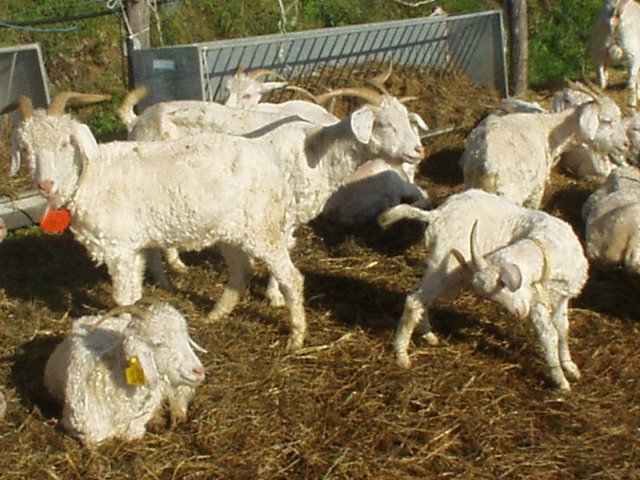
Correct: C, a b c d 2 1 4 3. Each pairing has a physical process behind it, and knowing the process is what makes the pairing stick. Linen belongs with the flax plant. It is woven from the bast fibres running down the stem of flax, Linum usitatissimum, and the crop is not cut but pulled out of the ground with its roots so that the entire length of the stem fibre can be used: harvested about 100 days after sowing, a month after flowering. The stalks are then retted, a controlled rot in dew, pond or tank water in which enzymes or microbes digest the pectins gluing the fibre to the woody straw, and then dressed in three steps: breaking, scutching and heckling. What survives is a cellulose fibre, cool and highly absorbent, and among the oldest textiles known: Egyptian temple walls carry paintings of flowering flax, and mummies were wrapped in linen. Coir belongs with the coconut plant. It is the coarse fibre of the husk (the mesocarp lying between the outer skin and the hard shell of Cocos nucifera) retted, beaten out and spun for mats, matting, ropes, geotextiles and coir pith for horticulture. Note the anatomy, because BPSC has tested it separately: the coconut's edible part is the endosperm, while the fibre is the mesocarp, the same layer that is the pulp in a mango. Mohair belongs with the Angora goat. The goat is a single-coat breed, sheared twice a year in spring and autumn, and its fleece is a keratin hair that is lustrous, springy, exceptionally dye-receptive, naturally elastic, flame-resistant and crease-resistant; the world clip is tiny (about 4.55 million kilograms in 2022) which is why it is priced as a luxury fibre alongside cashmere, alpaca and silk. Down belongs with the feathers of duck and geese. Down is the layer of fine, fluffy feathers lying beneath a bird's tough outer contour feathers, and because those clusters trap still air instead of lying flat they are the best natural thermal insulator per unit of weight: the trade measures exactly that as "fill power", on which eiderdown scores the maximum 1200. So a-2, b-1, c-4, d-3, which is exactly option (c).
Why the others are wrong
- (a)a b c d 1 3 2 4: Every pairing is wrong. It makes linen a coconut product, coir a bird feather, mohair a flax textile and down a goat hair: a straight rotation of the correct sequence, which is what a candidate produces when the four items are shuffled by guesswork rather than reasoned one at a time. The quickest way to see it fail is the plant-animal test: this option assigns a plant origin to down and an animal origin to coir, and down is by definition plumage while coir is by definition husk. Any option that crosses that line can be struck before a single fibre name is recalled.
- (b)a b c d 4 3 1 2: Also wrong in all four places. It reads linen as an Angora goat fibre and mohair as a coconut product, inverting the basic plant-versus-animal division: linen and coir are cellulose fibres from plants, while mohair and down are protein fibres from animals: keratin in the case of hair, and hair and plumage are chemically the same family. That single distinction eliminates this option in one pass, and it is worth carrying into the exam hall because it decides fibre questions far more often than any memorised list does.
- (d)a b c d 4 1 3 2: The most tempting wrong option, because it gets coir right (the one pairing almost every candidate knows) and then fails on the other three, sending linen to the Angora goat, mohair to duck and goose feathers and down to the flax plant. Coir alone cannot decide this question, since coir at 1 is common to both (c) and (d); the pair that separates them is linen, and linen has been a plant textile since antiquity. This is the standard architecture of a four-by-four match: one easy pairing narrows the field to two options, and a second, slightly harder pairing decides between them.
Concept
Natural fibres divide first by chemistry. Plant fibres are cellulose; animal fibres are protein (hair and wool are keratin, silk is fibroin) which is why animal fibres burn with the smell of hair and are damaged by alkalis while plant fibres are not. Plant fibres then divide by the part of the plant they come from: bast fibres are taken from the stem (flax for linen, plus jute, hemp and ramie), seed fibres from the seed hair (cotton, kapok), leaf fibres from leaves (sisal, abaca) and fruit or husk fibres from the fruit wall: coir is the classic example, taken from the coconut's mesocarp. Animal fibres divide by the animal and by the kind of covering: sheep give wool, several goats give speciality hairs, camelids give alpaca and vicuña, silkworms secrete silk, and birds give down. Two consequences of that grid explain most exam questions on the subject. First, the extraction method follows the anatomy: a stem fibre and a husk fibre both have to be retted, because in both cases the useful fibre is glued into surrounding tissue, whereas a seed fibre such as cotton is simply ginned off. Second, an animal fibre is described by the animal, never by the covering, which is why "Angora" is ambiguous and dangerous, since two different animals carry the name. Place each of the four items on this grid and the pairings fall out without having memorised the list.
Work the question from the pairing you are surest of. Coir and the coconut is that pairing for almost everyone, and it survives in only two options, (c) and (d). Now take linen: option (d) makes it an Angora goat product, and linen has been a plant textile since antiquity, so (d) falls and (c) is left. That is the whole solution, and it needs two facts rather than four. If you would rather come at it from the animal side, mohair is the discriminator, and it is worth fixing three near-identical names in memory once and for all: the Angora GOAT gives mohair, the Angora RABBIT gives angora wool, and the Cashmere or Changthangi goat gives cashmere and pashmina. Two of the three are named after Ankara (formerly Angora) in Turkey, which is exactly why they are confused, and the confusion is not idle: Turkey is still the source of the world's longest mohair because its goats are shorn once a year, while South Africa, which shears twice, is the largest producer. The last pairing is the one candidates over-think. Down is not a synonym for feathers in general but specifically the soft under-plumage that lies beneath the outer contour feathers, and because the commercial supply is waterfowl, "feathers of duck and geese" is a fair description of it: regulators treat the two words as distinct, with US labelling rules requiring that anything sold as "Goose Down" be at least 90 per cent down and no more than 10 per cent feather.
Key facts
- Linen is made from the bast fibres in the stem of flax (Linum usitatissimum). The plant is pulled out with its roots rather than cut, so the full stem length is usable, and the fibre is freed by retting (dew, pond or tank) followed by breaking, scutching and heckling; jute, hemp and ramie are the other major bast fibres.
- Coir comes from the husk (mesocarp) of the coconut, Cocos nucifera: white coir is retted from immature green husks and is finer, brown coir comes from mature husks and is stronger; the by-product coir pith is used as a horticultural growing medium.
- The Coir Board, a statutory body under the Ministry of Micro, Small and Medium Enterprises with its headquarters at Kochi, regulates and promotes the industry. It runs the Central Coir Research Institute at Alleppey and the Central Institute of Coir Technology at Bengaluru, and operates schemes such as the Mahila Coir Yojana.
- Mohair is the fleece of the Angora goat, a single-coat breed sheared twice a year. The fibre is keratin (lustrous, naturally elastic, flame-resistant and crease-resistant) and is classed as a luxury fibre with cashmere, alpaca and silk. Angora wool, by contrast, comes from the Angora rabbit.
- The world mohair clip in 2022 was only about 4.55 million kilograms, of which South Africa produced 51 per cent and Lesotho 16 per cent, southern Africa together supplying roughly two-thirds; Turkey, the goat's homeland, shears once a year and so produces the world's longest mohair.
- Down is the layer of fine feathers found beneath a bird's tougher outer contour feathers; very young birds are clad only in down. Its air-trapping structure makes it a superior thermal insulator, measured in the trade as "fill power", on which eiderdown scores the maximum 1200 while ordinary down at 550 still insulates well.
- Plant fibres are cellulose while animal fibres are protein: wool and hair are alpha-keratin (a fact UPSC itself asked in 1997) and silk is fibroin.
Study next
Common traps
- Reading "Angora" as the rabbit: the Angora goat gives mohair, the Angora rabbit gives angora wool, and pashmina comes from neither
- Assuming coir comes from the coconut shell or the leaf when it is taken from the husk, the fibrous mesocarp
- Treating linen as a synonym for cotton: both are plant fibres, but linen is a bast fibre from flax stems while cotton is a seed fibre
BPSC sets this as a four-by-four List-I/List-II match in which every item is a household word, so the marks turn purely on whether the four sources are separately known: no statement has to be judged true or false, and there is no negative-sounding distractor to reason around. UPSC almost never matches fibres directly. It comes at the same knowledge sideways, through the community that rears the animal (the Changpa and pashmina, 2014) or through a single plant offered as a new fibre source (Himalayan nettle, 2019), so the fact arrives embedded in ecology, tribal geography or sustainability rather than asked plainly. The BPSC version rewards a memorised list; the UPSC version rewards knowing where the fibre sits in the plant or the animal.
Related PYQs
With reference to ‘Changpa’ community of India, consider the following statements : 1. They live mainly in the State of Uttarakhand. 2. They rear the Pashmina goats that yield a fine wool. 3. They are kept in the category of Scheduled Tribes. Which of the statements given above is/are correct?
- (a) 1 only
- (b) 2 and 3 only
- (c) 3 only
- (d) 1, 2 and 3
Answer(b) 2 and 3 only
The same animal-fibre-to-source link, asked through the herders instead of the fabric: pashmina comes from the Changthangi goat of Ladakh, the goat most often confused with the Angora goat that gives mohair.
Recently, there was a growing awareness in our country about the importance of Himalayan nettle (Girardinia diversifolia) because it is found to be a sustainable source of
- (a) anti-malarial drug
- (b) biodiesel
- (c) pulp for paper industry
- (d) textile fibre
Answer(d) textile fibre
The plant half of the same idea: recognising that a named plant is the source of a textile fibre. Himalayan nettle, like flax, yields a bast fibre taken from the stem.
Practice
- practice, not a real PYQ
Mohair, a luxury textile fibre, is obtained from which of the following animals?
- (a)Angora rabbit
- (b)Angora goat
- (c)Changthangi goat
- (d)Merino sheep
Answer(b) Angora goat: the Angora rabbit yields angora wool, the Changthangi goat yields pashmina, and the Merino sheep yields fine sheep's wool. - practice, not a real PYQ
Which one of the following is a bast fibre, that is, a fibre obtained from the stem of the plant?
- (a)Cotton
- (b)Coir
- (c)Flax
- (d)Sisal
Answer(c) Flax: flax is a stem or bast fibre and yields linen; cotton is a seed fibre, coir a husk or fruit fibre, and sisal a leaf fibre.