
Which one of the following crops is generally benefitted by the rain caused by western disturbances in India ?
- (a)Rice
- (b)Wheat
- (c)Bajra
- (d)Cotton
Answer
Why
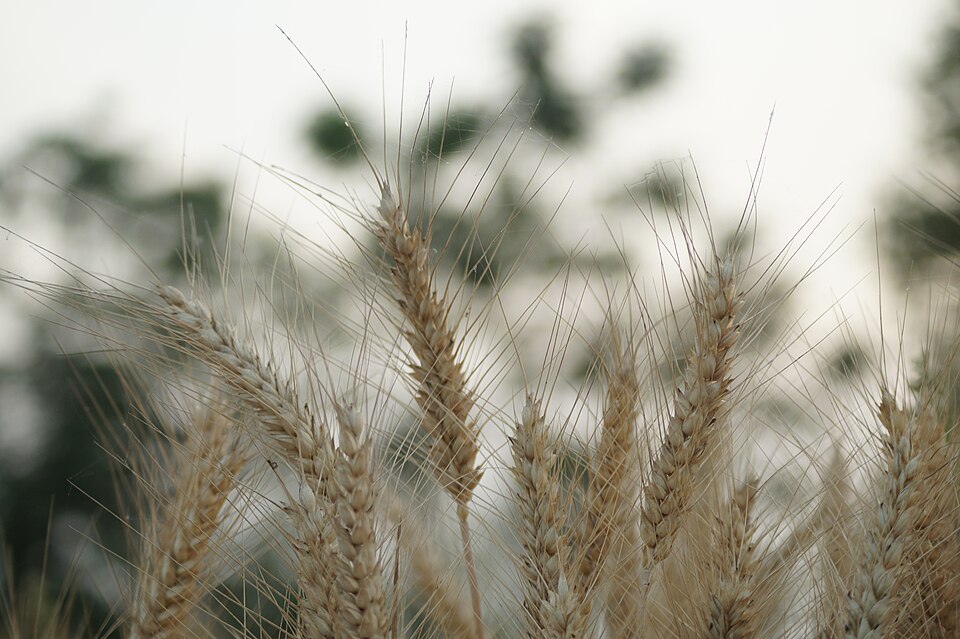
Correct — B, Wheat. A western disturbance is an extratropical storm that forms over the Mediterranean region and travels east, bringing sudden winter rain to the north-western parts of the Indian subcontinent. Four or five of them arrive in an average winter, picking up moisture over the Mediterranean, Caspian and Black Seas until the Himalaya weakens them. That is precisely the season in which the rabi crop is standing in the fields of Punjab, Haryana, western Uttar Pradesh and Rajasthan, and wheat is the rabi staple. Winter precipitation is described as being of great importance for the rabi crops, wheat among them being one of the most important for India's food security. A well-timed spell of western-disturbance rain in December or January waters the crop when it needs it and can save an irrigation.
Why the others are wrong
- (a)Rice — Rice in most of India is a kharif crop, sown with the onset of the south-west monsoon and harvested before winter. By the time western disturbances arrive the crop is off the field, so their rain cannot help it.
- (c)Bajra — Bajra is a kharif millet of the drier north-west, grown on monsoon rain and harvested in autumn. It is also a crop chosen for low water need, so winter showers are irrelevant to it.
- (d)Cotton — Cotton is mostly a kharif crop, sown with the south-west monsoon and picked from October onwards. Late rain is in fact a hazard to it rather than a benefit, because water on opening bolls stains and weakens the fibre.
Concept
India's agricultural year has two main seasons. Kharif crops are sown with the south-west monsoon in June and harvested in autumn — rice, bajra, jowar, maize, cotton, groundnut and jute. Rabi crops are sown after the monsoon withdraws and harvested in spring — wheat, barley, gram, mustard and peas. The monsoon waters the first season. The second depends on residual soil moisture, on irrigation, and on the winter rain delivered by western disturbances travelling in from the Mediterranean.
The route to the answer is to convert the meteorology into a calendar. Western disturbances are a winter phenomenon over north-west India, so the crop that benefits must be one that is growing in winter in the north-west. Of the four names, only wheat fits; the other three are monsoon-season crops. This is also why a weak western-disturbance season makes news for wheat prices, and why an unusually strong one late in the season can hurt instead of help, flattening a standing crop just before harvest. As of the September 2023 exam this was already the settled textbook position, and it remains so — what has changed since is only the sharpening public attention on how variable these winter systems have become.
Key facts
- A western disturbance is an extratropical storm originating in the Mediterranean region that brings sudden winter rain to north-western India.
- Its moisture is drawn from the Mediterranean, Caspian and Black Seas, and the Himalaya finally weakens the system.
- About four to five western disturbances form in an average winter season.
- Winter precipitation matters most for the rabi crops, of which wheat is the most important for India's food security.
Study next
Common traps
- Picking rice because it is the crop most associated with rain, without checking the season.
- Assuming that any rain is good for any crop; late rain damages cotton and can flatten a ripening wheat crop.
- Confusing western disturbances with the retreating monsoon, which brings winter rain to Tamil Nadu instead.
Asked as a two-step item — identify the season the weather system belongs to, then the crop that is standing in that season.
Related PYQs
Which one of the following sets of conditions is necessary for a good cultivation of wheat?
- (a) Moderate temperature and moderate rainfall
- (b) High temperature and heavy rainfall
- (c) High temperature and moderate rainfall
- (d) Low temperature and low rainfall
Answer(a) Moderate temperature and moderate rainfall
The same crop from the requirements side. Wheat wants a cool growing season and moderate water — which is exactly why a winter system that delivers a modest amount of rain to the north-west suits it so well.
Which one of the following is a Rabi crop in the Northern States of India?
- (a) Rice
- (b) Bajra
- (c) Barley
- (d) Ragi
Answer(c) Barley
The same kharif-versus-rabi sorting, with rice and bajra offered as decoys in both papers. Getting the seasonal calendar straight answers this question and that one at the same time.
Practice
- practice — not a real PYQ
Western disturbances that bring winter rain to north-west India originate over the
- (a)Bay of Bengal
- (b)Mediterranean region
- (c)South China Sea
- (d)Southern Indian Ocean
Answer(b) Mediterranean region — they travel east as extratropical storms, gathering moisture on the way. - practice — not a real PYQ
Which one of the following is a rabi crop?
- (a)Jowar
- (b)Groundnut
- (c)Mustard
- (d)Jute
Answer(c) Mustard — sown after the monsoon withdraws and harvested in spring, like wheat, barley and gram.