
How many of the following pairs of specialized agriculture and its products are correctly matched ? 1. Apiculture : Honey 2. Sericulture : Silk 3. Silviculture : Forestry 4. Viticulture : Grapes Select the correct answer using the code given below :
- (a)4
- (b)3
- (c)2
- (d)1
Answer
Why
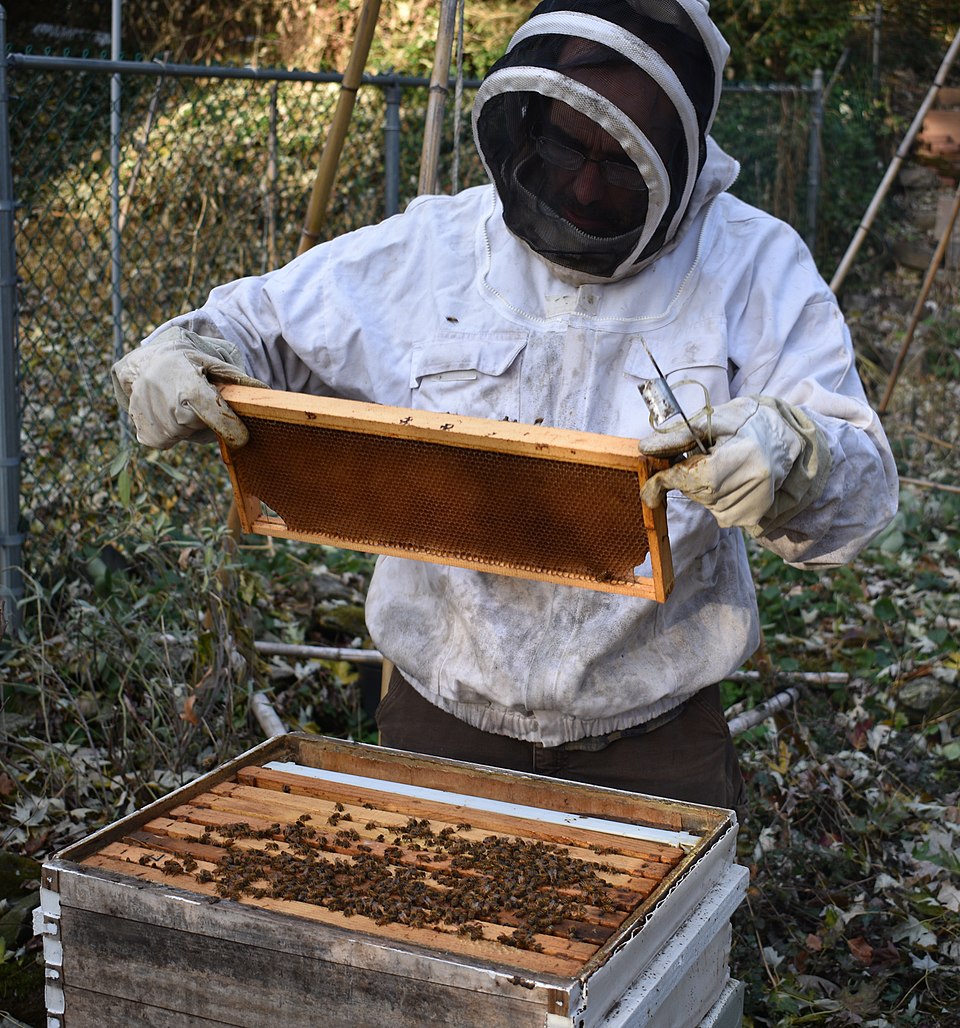
Correct — A, 4. All four pairs stand. Apiculture is beekeeping, the maintenance of bee colonies in hives, and honey is the product it is named for, along with beeswax, propolis, pollen and royal jelly. Sericulture is the rearing of silkworms and the reeling of their cocoons, which yields silk. Silviculture is the practice of controlling the growth, composition, structure and quality of forests, and forestry is the field it belongs to. Viticulture is the cultivation of grapevines, and grapes are its produce. The Latin roots settle each one — apis for bee, sericum for silk, silva for wood, and vitis for vine — so the count is four.
Why the others are wrong
- (b)3 — To answer three you must find one pair that fails, and none does. The pair most often struck out is the third, because silviculture is strictly a branch of forestry rather than a synonym for it — silviculture works at the level of the individual forest stand while forestry is the broader discipline. The paper is pairing a practice with its field, as it does throughout, so the pair holds.
- (c)2 — Answering two usually means rejecting both silviculture and viticulture. Viticulture is unambiguous, from the Latin vitis for vine, and it is grape growing everywhere it is used; only the making of wine from those grapes goes by a different name.
- (d)1 — Only one correct pair would require three of these long-settled definitions to be wrong at once. Apiculture and sericulture in particular are the two that appear in school textbooks by name, so the count cannot be that low.
Concept
A family of terms built on Latin roots names the specialised branches of cultivation and rearing. Apiculture is beekeeping, sericulture is silkworm rearing, silviculture is the tending of forest stands, viticulture is grape growing, pisciculture is fish rearing, horticulture covers fruit, vegetables and ornamentals, and floriculture is the growing of flowers. Each carries a root that gives the answer away once you know to look for it, which is why examiners test the set as a matching exercise rather than as recall of any single term.
Questions like this are decided by the roots, not by memory. Read each pair backwards from its Latin stem and the answer resolves itself. The one that gives candidates pause is silviculture matched with forestry, because it looks like a pairing of two words that mean the same thing rather than a practice matched with a product. That hesitation is what the four-three-two-one option ladder is there to catch. In this format there is no partial credit for spotting three, so it is worth being deliberate about the pair you are tempted to drop and asking whether it is actually false or merely differently phrased from the others.
Key facts
- Apiculture is the maintenance of bee colonies, commonly in artificial beehives, for honey, beeswax, propolis, bee pollen and royal jelly, and also for crop pollination.
- Silviculture is the practice of controlling the growth, composition, structure and quality of forests; it is applied at the stand level, while forestry is the broader concept.
- Sericulture is the rearing of silkworms for raw silk; India's commercial silks include mulberry, tasar, eri and muga.
- Viticulture is the cultivation of grapevines, from the Latin vitis for vine.
Study next
Common traps
- Rejecting silviculture matched with forestry because the two words look like synonyms.
- Confusing viticulture with the making of wine, which is a separate branch.
- Mixing up pisciculture for fish with apiculture for bees when the terms are read quickly.
Asked as a count-the-correct-pairs item, where the answer options are simply the numbers four, three, two and one.
Related PYQs
The discovery of Oak flora in 1966 added a new chapter to the history of Indian sericulture. Which one of the following states is the leading producer of Oak tasar silk?
- (a) Assam
- (b) Bihar
- (c) Manipur
- (d) Orissa
Answer(c) Manipur
Takes one of the four terms in this pairing exercise and pushes it a step further, from what sericulture is to where a particular Indian silk comes from. Knowing the term is the entry ticket; the state-wise detail is the next layer.
Which one of the following terms describes the practice of growing two or more crops simultaneously on the same piece of land?
- (a) Crop rotation
- (b) Mixed cropping
- (c) Intercropping
- (d) Mixed farming
Answer(b) Mixed cropping
The same skill on the neighbouring vocabulary set — four agricultural terms that sound alike, decided by the precise definition of each. There the confusion is between mixed cropping and intercropping; here it is between silviculture and forestry.
Practice
- practice — not a real PYQ
The rearing of fish on a commercial scale is called
- (a)apiculture
- (b)pisciculture
- (c)sericulture
- (d)olericulture
Answer(b) pisciculture — from the Latin piscis for fish; olericulture is vegetable growing. - practice — not a real PYQ
Muga, eri and tasar are varieties associated with
- (a)viticulture
- (b)apiculture
- (c)sericulture
- (d)floriculture
Answer(c) sericulture — they are non-mulberry silks reared in India alongside mulberry silk.