
Which one of the following is an organic soil ?
- (a)Aridisols
- (b)Histosols
- (c)Oxisols
- (d)Vertisols
Answer
Why
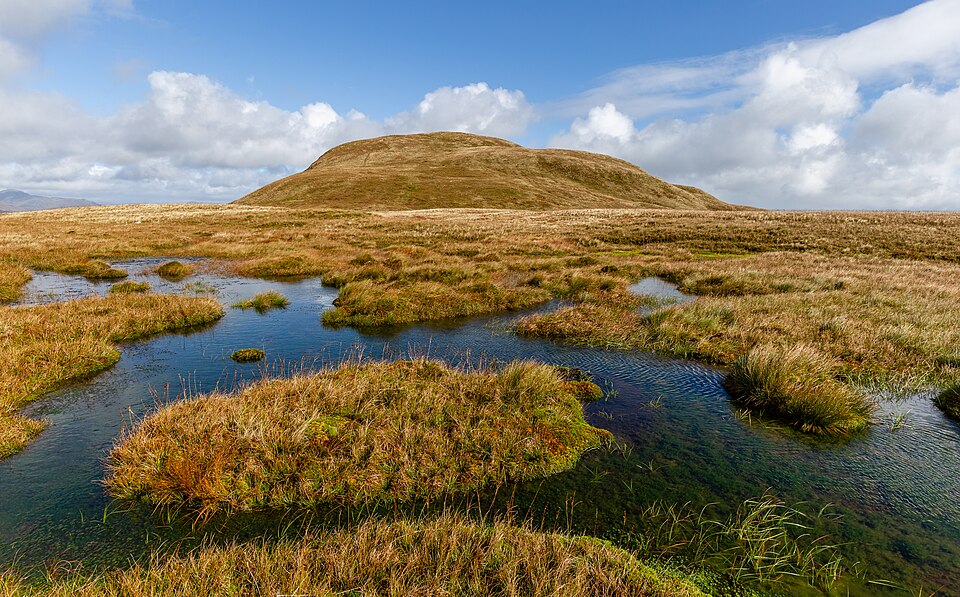
Correct — B, Histosols. A Histosol is defined as a soil consisting primarily of organic materials, and the formal test is thickness — 40 cm or more of organic soil material starting within 40 cm of the surface. The organic carbon threshold is 12 per cent or more under the USDA Soil Taxonomy, or 20 per cent or more under the World Reference Base. These are the peat and bog soils. They form where drainage is blocked and the ground stays waterlogged, so oxygen is scarce, decay runs far slower than plant growth, and dead plant matter piles up instead of breaking down. They are the peatlands of Canada, Scandinavia and the West Siberian Plain, and the swamp soils of Sumatra, Borneo and New Guinea. The name itself carries the clue, from the Greek histos for tissue.
Why the others are wrong
- (a)Aridisols — Aridisols are dry soils formed under desert conditions, with fewer than 90 consecutive days of moisture in the growing season. Sparse vegetation means little litter reaches the ground, so these are among the most organic-poor soils there are — the opposite of the answer.
- (c)Oxisols — Oxisols are the heavily weathered soils of the humid tropics, rich in iron and aluminium oxides or kaolin and low in silica. Warmth and moisture there destroy organic matter very fast, so despite the luxuriant forest above them the soils hold little humus.
- (d)Vertisols — Vertisols are the inverting soils — clay-rich, swelling when wet and shrinking when dry, so that deep cracks open in the surface. India's black cotton or regur soil is the familiar example. They are defined by their clay behaviour, not by organic content.
Concept
The USDA Soil Taxonomy sorts the world's soils into twelve orders — Alfisols, Andisols, Aridisols, Entisols, Gelisols, Histosols, Inceptisols, Mollisols, Oxisols, Spodosols, Ultisols and Vertisols. Each order is defined by a diagnostic property rather than by where it is found. Histosols are the one order defined by organic matter itself; every other order is a mineral soil in which organic matter is only a minor component. Histosols are a small share of the world's soils, roughly one per cent, but they lock up an outsized store of carbon, which is why draining or burning peatland releases so much of it.
The reasoning shortcut is to read the four names as descriptions rather than as labels to be memorised. Arid points to dryness, ox to oxides, verti to inversion by swelling and shrinking, and hist to tissue. Only the last describes the material of the soil rather than its climate or its chemistry, and organic soil means a soil made of plant material. The other trap is to reason that the wettest, most luxuriant forests must give the most organic soils; they do not, because high temperature and moisture speed decomposition. Organic soils need cold or waterlogging — something that slows the decay, not something that speeds the growth.
Key facts
- A Histosol is a soil consisting primarily of organic materials, with 40 cm or more of organic soil material starting within 40 cm of the surface.
- The organic carbon threshold is 12 per cent or more under the USDA Soil Taxonomy and 20 per cent or more under the World Reference Base.
- Histosols occur in Canada, Scandinavia, the West Siberian Plain, and in Sumatra, Borneo and New Guinea, and were formerly called bog soils.
- Aridisols are desert soils with fewer than 90 consecutive moist days in the growing season, and Vertisols are clay soils that swell when wet and crack when dry.
Study next
Common traps
- Assuming tropical rainforest soils are the richest in organic matter; rapid decay leaves them poor in humus.
- Confusing organic content with fertility — Histosols are organic but often acidic and hard to farm without drainage.
- Mixing up Vertisols and Oxisols, both tropical but defined by swelling clay and by oxide enrichment respectively.
Asked as a straight recall of one soil order's defining property, with three other orders as decoys.
Related PYQs
The black cotton soil of India has been formed due to the weathering of
- (a) brown forest soil
- (b) fissure volcanic rock
- (c) granite and achist
- (d) shale and limestone
Answer(b) fissure volcanic rock
Takes the Vertisol decoy from this question and asks where it comes from — the black cotton soil of the Deccan is a Vertisol weathered out of basaltic lava flows, a mineral soil defined by its clay, not by organic matter.
When you travel in certain parts of India, you will notice red soil. What is the main reason for this colour?
- (a) Abundance of magnesium
- (b) Accumulated humus
- (c) Presence of ferric oxides
- (d) Abundance of phosphates
Answer(c) Presence of ferric oxides
The same habit of reading a soil by its diagnostic material. Iron oxide colouring is what defines the Oxisol family in this question's option list, and the wrong option there — accumulated humus — is precisely the organic-matter idea that belongs to Histosols instead.
Which one of the following is not a soil forming factor?
- (a) Parent material
- (b) Topography
- (c) Climate
- (d) Human habitation
Answer(d) Human habitation
Sets up the same chapter from the other end — the factors that make a soil what it is. Waterlogged topography and a cool or humid climate are exactly the conditions that produce the organic Histosol this question asks about.
In the soil-forming regime, which one of the following occurs in a region where evapotranspiration exceeds precipitation significantly?
- (a) Calcification
- (b) Laterization
- (c) Podsolization
- (d) Gleization
Answer(a) Calcification
The regime question behind the Aridisol decoy. Where evaporation beats rainfall you get calcification and dry desert soils; where water sits and cannot drain you get gleization and, at the extreme, the organic accumulation that defines Histosols.
Practice
- practice — not a real PYQ
The black cotton soil of peninsular India belongs to which soil order?
- (a)Histosols
- (b)Aridisols
- (c)Vertisols
- (d)Spodosols
Answer(c) Vertisols — clay-rich soils that swell when wet and crack deeply when dry, which is exactly how regur behaves. - practice — not a real PYQ
Waterlogging favours the formation of organic soils because it
- (a)increases the rate of plant growth
- (b)limits oxygen and so slows down decomposition
- (c)washes down iron and aluminium oxides
- (d)raises soil temperature and speeds up humus formation
Answer(b) limits oxygen and so slows down decomposition — plant remains then accumulate faster than they decay, building peat.