
Which one of the following is not a soil forming factor?
- (a)Parent material
- (b)Topography
- (c)Climate
- (d)Human habitation
Answer
Why
Correct — D, Human habitation. The classic soil-forming factors are parent material, climate, relief or topography, living organisms and time. Parent material supplies the mineral base, climate drives weathering, and topography controls drainage and erosion — so options (a), (b) and (c) are all genuine factors. Human habitation is a human activity that can alter or degrade existing soil, but it is not counted among the natural factors that form soil.
Why the others are wrong
- (a)Parent material — Parent material — the rock or deposit a soil develops from — is a fundamental soil-forming factor, so it cannot be the exception.
- (b)Topography — Topography, or relief, shapes drainage, run-off and erosion and is a recognised soil-forming factor.
- (c)Climate — Climate, through temperature and rainfall, drives the weathering and biological activity that form soil, so it is a core factor.
Concept
Soil forms through the interaction of five natural factors identified in soil science — parent material, climate, relief or topography, living organisms and time. Together they weather rock and organise it into horizons over long periods. Human activity influences existing soils but is not one of these formative factors.
Three options are textbook soil-forming factors, so the odd one out is whichever is a human action rather than a natural process. Human habitation is that outlier, because people use and change soil rather than form it.
Key facts
- The five natural soil-forming factors are parent material, climate, relief, organisms and time.
- Parent material determines the initial mineral and chemical make-up of a soil.
- Climate and organisms drive the weathering and humus formation that develop soil horizons.
- Soil formation is slow — a few centimetres of soil can take hundreds to thousands of years to develop.
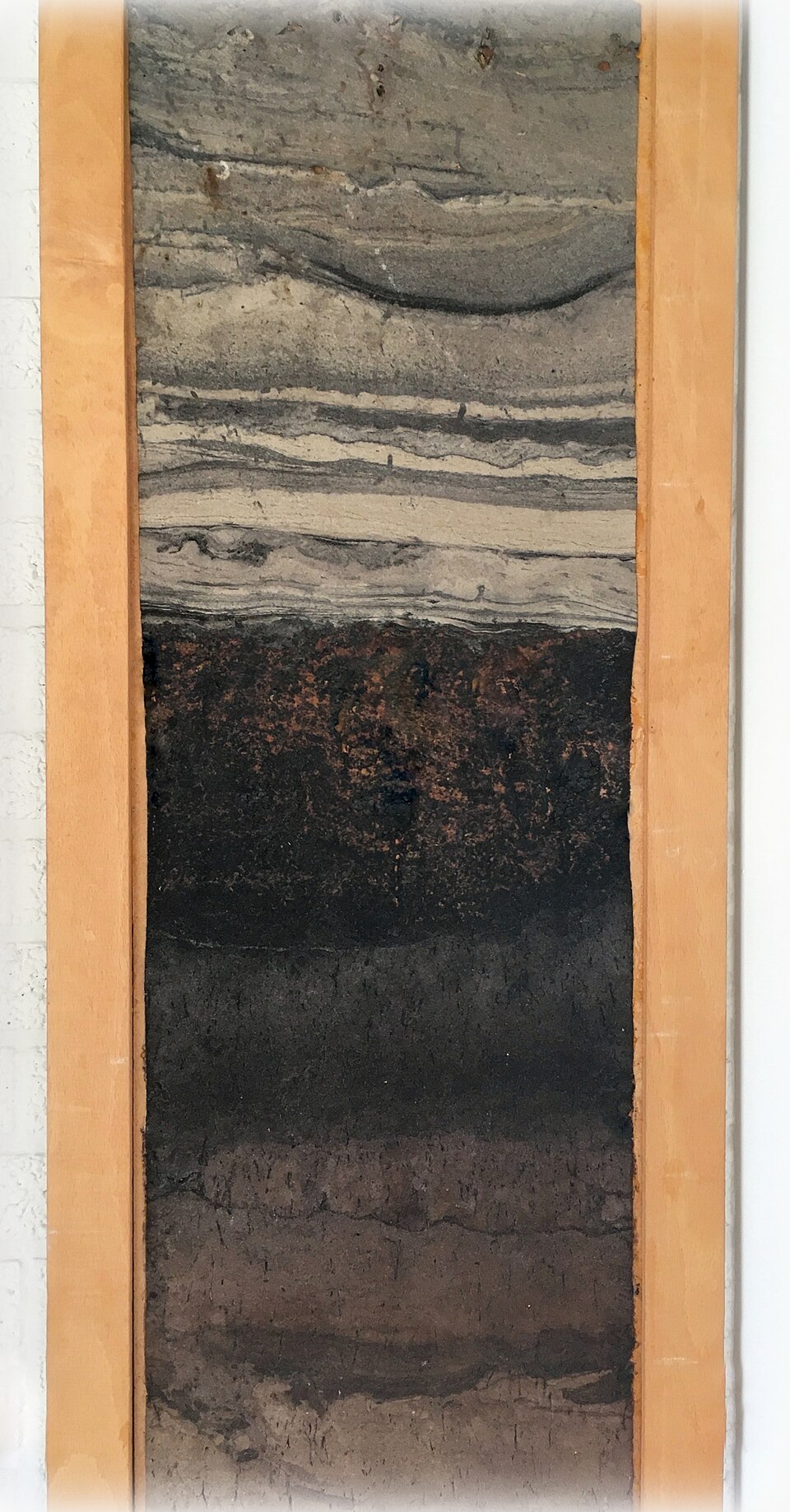
Study next
Common traps
- Treating any human influence as a factor of soil formation — human habitation modifies soil but does not form it.
- Forgetting that time and living organisms are also formative factors.
Asked as an odd-one-out where three natural factors are listed with one human activity.
Related PYQs
Which of the following statements with reference to soil forming processes is/are correct? 1. Translocation, enrichment, removal and transformation are different classes of soil forming processes 2. In translocation, fine particles are transported downward by eluviation and accumulate in lower horizons by illuviation Select the answer using the code given below:
- (a) 1 only
- (b) 2 only
- (c) Both 1 and 2
- (d) Neither 1 nor 2
Answer(c) Both 1 and 2
Same area — how soils form. That NDA item tests soil-forming processes such as translocation; this one asks which is not a soil-forming factor.
Practice
- practice — not a real PYQ
Which one of the following is a natural soil-forming factor?
- (a)Irrigation canals
- (b)Parent rock material
- (c)Urban construction
- (d)Chemical fertilisers
Answer(b) Parent rock material — it supplies the mineral base of a soil. - practice — not a real PYQ
The uppermost, humus-rich layer of a soil profile is the
- (a)C horizon
- (b)bedrock
- (c)A horizon (topsoil)
- (d)parent material
Answer(c) A horizon (topsoil).