
Which one of the following statements about the Quit India Movement is not correct ?
- (a)It broke out in August 1942.
- (b)Ahmedabad Textile Mills went on strike for more than three months.
- (c)Muslim League and Hindu Mahasabha actively participated in the movement.
- (d)Communist Party did not support the movement.
Answer
Why
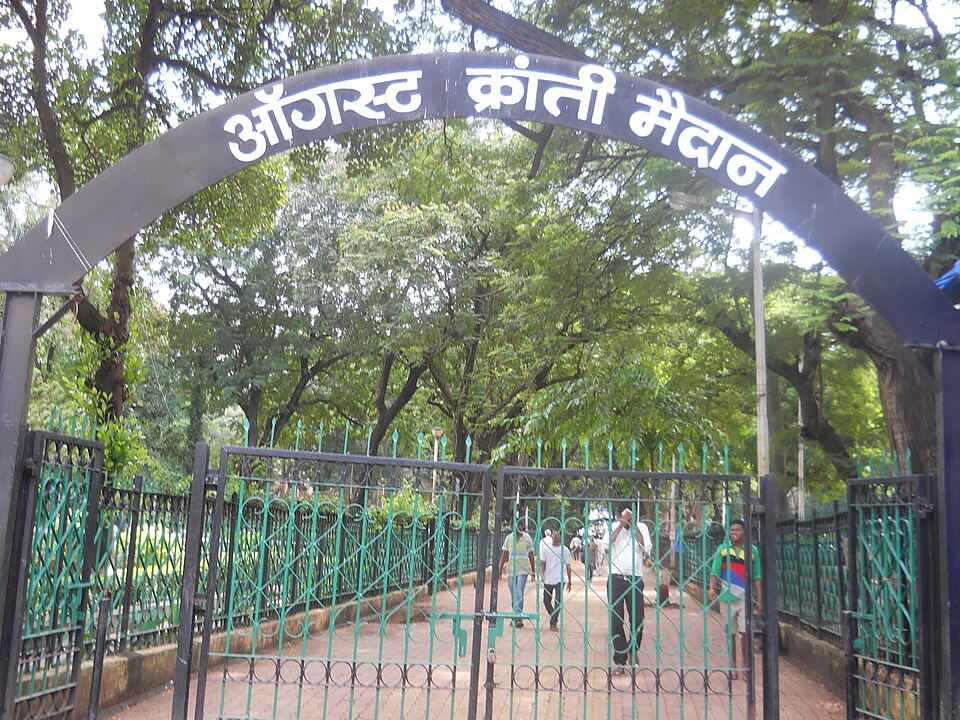
Correct: C, Muslim League and Hindu Mahasabha actively participated in the movement. Both stood outside it. The Muslim League and Jinnah opposed the movement and backed the British war effort, and the Hindu Mahasabha openly opposed the call and boycotted the movement officially. Since the question asks for the statement that is not correct, this is the one to mark. The other three all hold. The movement did break out in August 1942, after the All India Congress Committee adopted the Quit India Resolution at Gowalia Tank Maidan in Bombay on 8 August and the entire Congress leadership was arrested in the small hours of 9 August. And the Communist Party of India did not support it, having taken the line that the war became a people's war once the Soviet Union was attacked in June 1941.
Why the others are wrong
- (a)It broke out in August 1942.: This statement is correct, so it cannot be the answer to a question asking for the one that is not. The resolution was passed on 8 August 1942 and the arrests that set off the countrywide upheaval followed at once.
- (b)Ahmedabad Textile Mills went on strike for more than three months.: This statement is treated as correct in the standard accounts of the movement, which record the Ahmedabad textile mills staying shut for over three months as one of the longest industrial actions of 1942. It is therefore not the answer here.
- (d)Communist Party did not support the movement.: This statement is also correct. After Germany attacked the Soviet Union in June 1941 the Communist Party of India recast the conflict as a people's war and supported the British war effort, so it stayed out of the 1942 upsurge; the ban on the party had been lifted in July 1942.
Concept
The Quit India Movement followed the failure of the Cripps Mission of March 1942. With the Japanese advance reaching Burma and British collapse looking possible, the Congress moved from bargaining to demanding immediate withdrawal. The resolution declared that the immediate ending of British rule in India was an urgent necessity, and Gandhi's call the same night was to do or die. The government arrested the leadership before the movement could be organised, and what followed was a largely spontaneous rising directed at railways, telegraph lines, police stations and other symbols of authority.
The pattern of who joined and who stayed away is what this question is really testing. The Congress leadership was in jail throughout, so the movement was carried by students, peasants and workers and by an underground led by figures such as Jayaprakash Narayan, Aruna Asaf Ali, who hoisted the flag at the Gowalia Tank session, and Usha Mehta, who ran the clandestine Congress Radio. Parallel governments appeared at Tamluk and Contai in Midnapore, at Ballia in eastern Uttar Pradesh and at Satara in Maharashtra. Against that, the Muslim League, the Hindu Mahasabha and the Communist Party all kept out, and some princely rulers funded the opposition.
Key facts
- The All India Congress Committee adopted the Quit India Resolution at Gowalia Tank Maidan, Bombay, on 8 August 1942.
- The Muslim League under Jinnah opposed the movement and supported the British war effort.
- The Hindu Mahasabha openly opposed the call and boycotted the movement officially.
- The Communist Party of India opposed it, having adopted the people's war line after the Soviet Union was attacked in June 1941.
- Parallel governments were set up at Tamluk and Contai in Midnapore, at Ballia and at Satara.
Study next
Common traps
- Reading a not-correct question too quickly and marking a statement that is in fact true.
- Assuming every political party joined the national movement in 1942; three major ones stayed out.
- Confusing the Communist Party's stance in 1942 with its earlier participation in the 1930s campaigns.
NDA and UPSC both use 1942 heavily, most often through the date of the resolution, the leaders who ran the underground and the question of who did or did not take part.
Related PYQs
With reference to 8th August, 1942 in Indian history, which one of the following statements is correct?
- (a) The Quit India Resolution was adopted by the AICC,
- (b) The Viceroy’s Executive Council was expanded to include more Indians.
- (c) The Congress ministries resigned in seven provinces.
- (d) Cripps proposed an Indian Union with full Dominion Status once the Second World War was over.
Answer(a) The Quit India Resolution was adopted by the AICC,
Fixes the date that statement (a) of the NDA question rests on, and puts the Cripps proposals alongside as the immediate provocation for the resolution.
Which one of the following was a significant feature of the Quit India Movement ?
- (a) Women did not play an important role in the movement
- (b) Nasik in Maharashtra was an important regional base during the movement
- (c) It was marked by anti-zamindar violence
- (d) It was marked by the emergence of parallel governments in different parts of India
Answer(d) It was marked by the emergence of parallel governments in different parts of India
The same movement tested six months earlier in the same year, this time on its features rather than its participants: the parallel governments at Tamluk, Ballia and Satara are the point, and Satara rather than Nasik is the Maharashtra base.
“...the immediate ending of British rule in India is an urgent necessity...” was a resolution of
- (a) Non Co-operation Movement
- (b) Quit India Movement
- (c) Individual Movement
- (d) Civil Disobedience Movement
Answer(b) Quit India Movement
Quotes the resolution itself, which is the text adopted on 8 August 1942 and the document behind every other fact in this card.
Practice
- practice, not a real PYQ
The Quit India Resolution was adopted by the All India Congress Committee at
- (a)Lahore
- (b)Gowalia Tank Maidan, Bombay
- (c)Wardha
- (d)Ramgarh
Answer(b) Gowalia Tank Maidan, Bombay: on 8 August 1942, now called August Kranti Maidan. - practice, not a real PYQ
Which one of the following ran the underground Congress Radio during the Quit India Movement?
- (a)Sucheta Kripalani
- (b)Aruna Asaf Ali
- (c)Usha Mehta
- (d)Kamaladevi Chattopadhyay
Answer(c) Usha Mehta: she broadcast uncensored news on the clandestine Congress Radio in 1942.