
Who among the following was the founder of the Young Bengal Movement ?
- (a)Henry Vivian Derozio
- (b)David Hare
- (c)Dwarkanath Tagore
- (d)Prasanna Kumar Tagore
Answer
Why
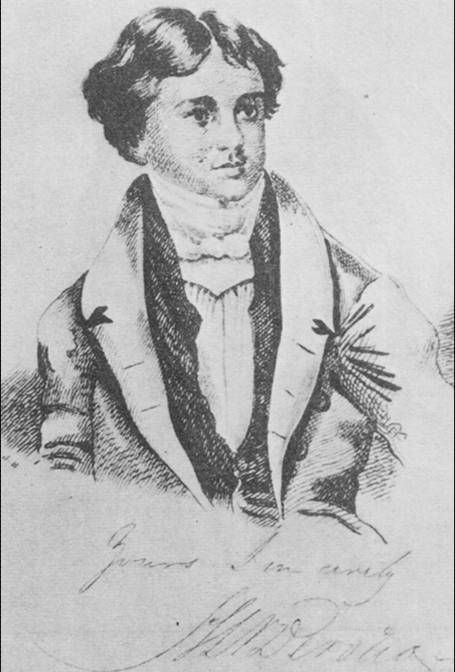
Correct: A, Henry Vivian Derozio. Henry Louis Vivian Derozio joined Hindu College, Calcutta, in 1826 as a very young teacher and drew a circle of students around him with an insistence on free thinking and on questioning authority of every kind. His followers came to be called Derozians, and the group as a whole Young Bengal. They read Bentham, Adam Smith and Ricardo, argued for free trade against monopoly and against restraints on commerce, and attacked the social orthodoxy of their own community. Derozio was removed from Hindu College in 1831 because of that radicalism and died the same year, still in his early twenties.
Why the others are wrong
- (b)David Hare: David Hare was a Scottish watchmaker turned educationist who worked with Raja Rammohan Roy and Alexander Duff to establish Hindu College in 1817 and founded other schools in Calcutta. He built the institution in which Derozio later taught, which is why his name sits so plausibly here, but the Young Bengal circle formed around Derozio and not around him.
- (c)Dwarkanath Tagore: Dwarkanath Tagore was a Calcutta entrepreneur and a associate of Rammohan Roy in the Brahmo Sabha and in public causes, and the grandfather of Rabindranath Tagore. He belongs to the same generation of the Bengal renaissance, but he was a patron of institutions rather than the leader of the Derozian circle.
- (d)Prasanna Kumar Tagore: Prasanna Kumar Tagore was a lawyer and public figure of Calcutta who supported the reform press and served on public bodies. Like Dwarkanath he was part of the wider Bengal renaissance but had no hand in founding Young Bengal.
Concept
Young Bengal was the most radical current of the early Bengal renaissance. Two bodies carried its work forward: the Academic Association, set up under Derozio's guidance in 1828 at Maniktala, where Rasik Krishna Mallick and Krishna Mohan Banerjee were among the speakers, and the Society for the Acquisition of General Knowledge, founded on 20 February 1838, which had about two hundred members by 1843. The group used the press energetically and argued for women's education, for the rights of tenants and for the removal of social restrictions.
Its limits are as instructive as its ideas. The Derozians moved among a narrow, urban, English-educated circle, made no attempt to reach the peasantry, and the social conditions of the day were not ready for the sweep of their radicalism, so the movement left a sharper intellectual than institutional mark. Set it beside the two other reform currents of the same city: Rammohan Roy's Brahmo Sabha of 1828, which worked within a religious frame, and Vidyasagar's later campaign for widow remarriage, which worked through law and scripture, and the contrast in method is the thing to remember.
Key facts
- Derozio joined Hindu College in 1826, was removed from it in 1831 for his radicalism, and died the same year.
- His followers were known as Derozians and the circle as Young Bengal.
- The Academic Association was founded under his guidance in 1828 at Maniktala.
- The Society for the Acquisition of General Knowledge was founded on 20 February 1838 and had about two hundred members by 1843.
- Hindu College, Calcutta, was established in 1817 by Raja Rammohan Roy with David Hare and Alexander Duff, and later became Presidency College.
Study next
Common traps
- Crediting David Hare with Young Bengal because he helped found Hindu College; the college and the circle inside it are different things.
- Treating the two Tagores named here as leaders of the movement rather than as contemporaries of it.
- Assuming Young Bengal was a mass movement; it was a small, urban, English-educated circle.
NDA and UPSC set founder-to-movement pairs across the nineteenth century, and Hindu College and its people are a favourite cluster.
Related PYQs
In collaboration with David Hare and Alexander Duff, who of the following established Hindu College at Calcutta?
- (a) Henry Louis Vivian Derozio
- (b) Ishwar Chandra Vidyasagar
- (c) Keshab Chandra Sen
- (d) Raja Rammohan Roy
Answer(d) Raja Rammohan Roy
Uses the same three names in a different arrangement: Hindu College was founded by Rammohan Roy with David Hare and Alexander Duff in 1817, and Derozio arrived to teach there only in 1826.
Swami Dayanand Saraswati 1. was opposed to the worship of idols of Gods and Goddesses. 2. regarded the Vedas as infallible. 3. had met and had discussions with Ishwar Chandra Vidyasagar. Which of the statements given above are correct?
- (a) 1, 2 and 3
- (b) 2 and 3 only
- (c) 1 and 3 only
- (d) 1 and 2 only
Answer(a) 1, 2 and 3
Another nineteenth-century reform current, useful as a contrast: Dayanand appealed back to the Vedas for authority where the Derozians appealed forward to reason and European political economy.
Practice
- practice, not a real PYQ
The followers of Henry Vivian Derozio were known as
- (a)Brahmos
- (b)Derozians
- (c)Prarthana Samajists
- (d)Aligarh reformers
Answer(b) Derozians: the circle of Hindu College students around him, collectively called Young Bengal. - practice, not a real PYQ
The Academic Association, founded in 1828, was set up under the guidance of
- (a)Raja Rammohan Roy
- (b)Ishwar Chandra Vidyasagar
- (c)Henry Vivian Derozio
- (d)Keshab Chandra Sen
Answer(c) Henry Vivian Derozio: it was the debating body of the Young Bengal circle.