
“...the immediate ending of British rule in India is an urgent necessity...” was a resolution of
- (a)Non Co-operation Movement
- (b)Quit India Movement
- (c)Individual Movement
- (d)Civil Disobedience Movement
Answer
Why
Correct — B, Quit India Movement. The line is from the Quit India Resolution that the All India Congress Committee adopted at Gowalia Tank Maidan in Bombay on 8 August 1942. Its own words are that the immediate ending of the British rule in India is an urgent necessity both for the sake of India and for the success of the cause of United Nations — the fragment quoted in the stem is the first half of that sentence. The resolution came after the Cripps proposals of March 1942 had been rejected, and Gandhi's ‘Do or Die’ call was given the same night. None of the other three movements produced a resolution demanding that British rule end at once.
Why the others are wrong
- (a)Non Co-operation Movement — Wrong period. Gandhi launched non-cooperation on 4 September 1920, the Congress adopted the programme that September and it began in December; he called it off on 12 February 1922 after the violence at Chauri Chaura. That is two decades before the text quoted here.
- (c)Individual Movement — This points to the Individual Satyagraha of 1940, for which Gandhi chose Vinoba Bhave as the first individual satyagrahi. It was deliberately individual and symbolic — one chosen person offering protest at a time — rather than a mass resolution of the All India Congress Committee, and it carried no demand for the immediate end of British rule.
- (d)Civil Disobedience Movement — The Civil Disobedience Movement opened with the Salt March of 1930, following the purna swaraj declaration made by the Congress at Lahore in 1929. Its resolutions belong to the early 1930s and to the salt law, not to August 1942.
Concept
A resolution is the formal text that a political body votes on, and in the freedom struggle the exact wording of the big Congress resolutions is examinable in its own right. The Quit India Resolution of 8 August 1942 is the sharpest of them, because it dropped the language of gradual constitutional advance and asked for British withdrawal at once. Almost the whole Congress leadership was arrested within hours of its passage, which is why the movement that followed was largely leaderless and spontaneous.
The examiner has quoted only a fragment, so the clue you are given is the single word ‘immediate’. In the full resolution that sentence continues ‘both for the sake of India and for the success of the cause of United Nations’, which anchors it to the Second World War. Apply that anchor and non-cooperation (1920-22) and civil disobedience (from 1930) drop out on date alone. Individual Satyagraha is the only other wartime option, but it was designed to be small and symbolic rather than a mass demand, which leaves Quit India. If the wording of the fragment is unfamiliar, the fallback is that no earlier Congress resolution asked for British rule to end immediately.
Key facts
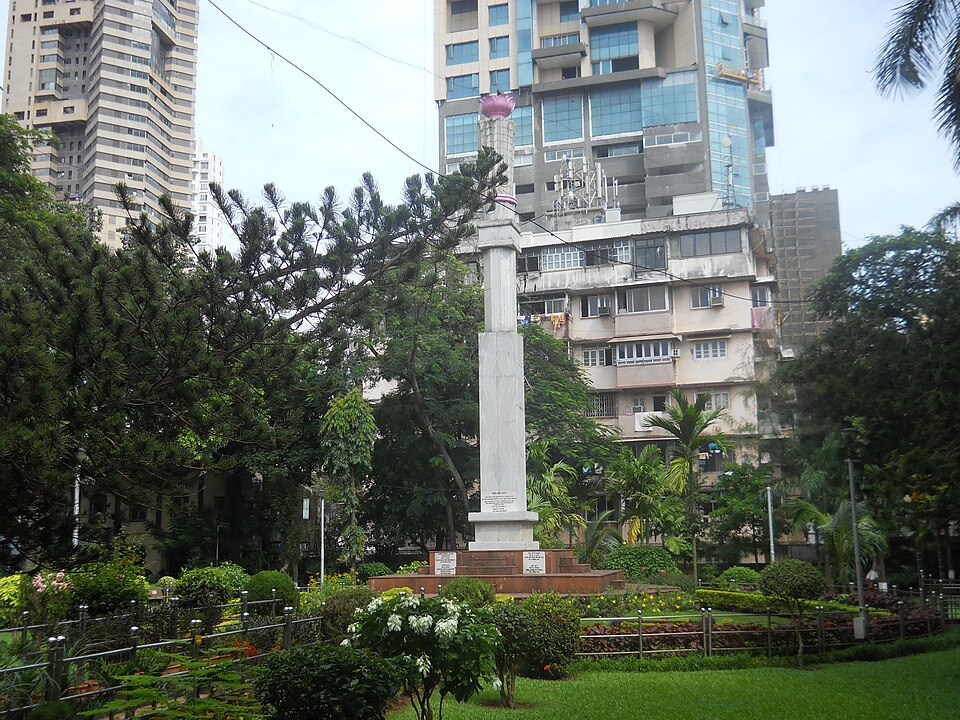
- The All India Congress Committee met at Gowalia Tank Maidan in Bombay on 7-8 August 1942 and adopted the Quit India Resolution; the ground is now called August Kranti Maidan.
- The resolution reads that the immediate ending of the British rule in India is an urgent necessity both for the sake of India and for the success of the cause of United Nations.
- Gandhi's ‘Do or Die’ speech was delivered on the night the resolution was passed.
- The Non Co-operation Movement ran from September 1920 until Gandhi withdrew it on 12 February 1922, after the Chauri Chaura incident of 4 February 1922.
Study next
Common traps
- Reading ‘Individual Movement’ as a loose phrase instead of the Individual Satyagraha of 1940.
- Assuming any wartime Congress campaign will do; only the August 1942 resolution used the language of immediate withdrawal.
Either as a quotation-to-movement item like this one, or as a date question about what happened on 8 August 1942.
Related PYQs
With reference to 8th August, 1942 in Indian history, which one of the following statements is correct?
- (a) The Quit India Resolution was adopted by the AICC,
- (b) The Viceroy’s Executive Council was expanded to include more Indians.
- (c) The Congress ministries resigned in seven provinces.
- (d) Cripps proposed an Indian Union with full Dominion Status once the Second World War was over.
Answer(a) The Quit India Resolution was adopted by the AICC
The same fact from the calendar side. UPSC gave the date and asked what happened; NDA gives a line of the text and asks which movement it belongs to. Hold the pair together — 8 August 1942, All India Congress Committee, Bombay.
Quit India Movement was launched in response to
- (a) Cabinet Mission Plan
- (b) Cripps Proposals
- (c) Simon Commission Report
- (d) Wavell Plan
Answer(b) Cripps Proposals
The cause behind the resolution. The AICC met in August 1942 only after the Cripps proposals of March that year had been rejected, which is the fact that dates the resolution for you.
Freedom fighter Kanaklata Barua was martyred in :
- (a) Sepoy Mutiny
- (b) Quit India Movement
- (c) Non-Cooperation Movement
- (d) Peasant Uprising of 1893 – 1894
Answer(b) Quit India Movement
The same movement asked through a person rather than a text, six months earlier in the same year. NDA has now tested Quit India twice in 2023 — once by its martyr and once by its resolution.
Practice
- practice — not a real PYQ
The Quit India Resolution was adopted by the All India Congress Committee at
- (a)Lahore
- (b)Bombay
- (c)Karachi
- (d)Nagpur
Answer(b) Bombay — at Gowalia Tank Maidan on 8 August 1942. - practice — not a real PYQ
Gandhi's call of ‘Do or Die’ was given at the launch of
- (a)the Non Co-operation Movement
- (b)the Civil Disobedience Movement
- (c)the Quit India Movement
- (d)Individual Satyagraha
Answer(c) the Quit India Movement — spoken in Bombay on the night of 8 August 1942.