
Which one of the following is a feature of thought and philosophy of the Kandukuri Viresalingam ?
- (a)He believed that science and morality were unconnected to truth
- (b)He believed in universal education
- (c)He believed that language had no role in inculcating morality in students
- (d)He did not attempt to build a national consciousness on a cultural base
Answer
Why
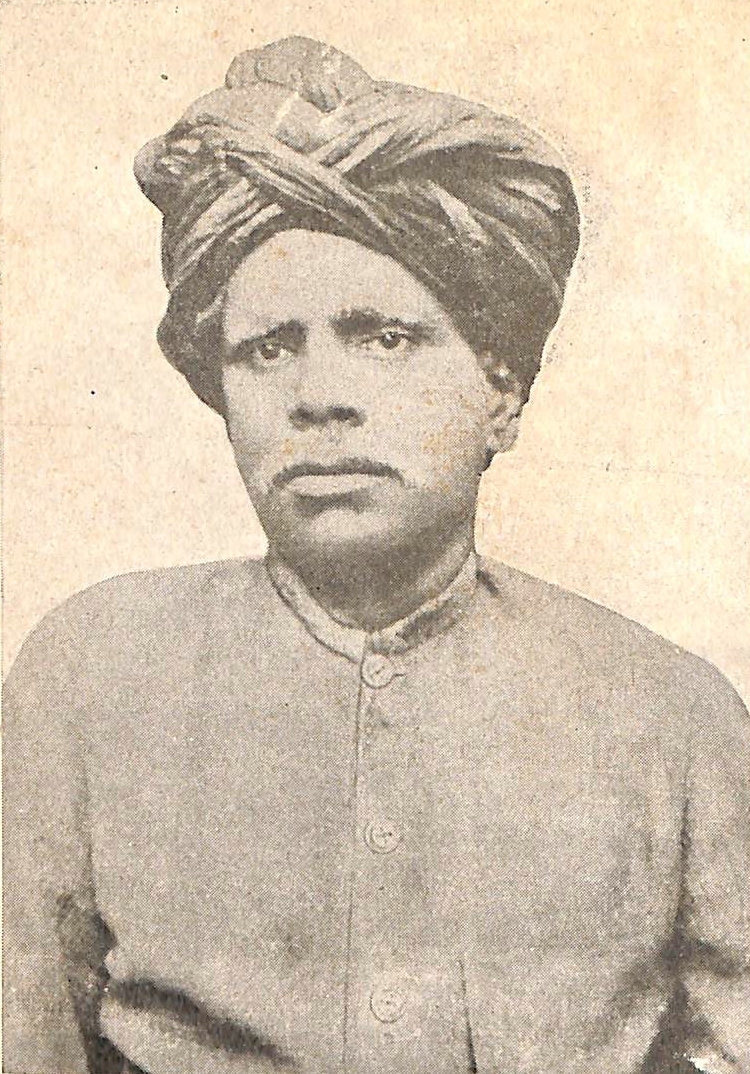
Correct — B, that he believed in universal education. Kandukuri Veeresalingam (1848-1919) made education, and above all the education of women, the centre of his reform work: it is described as one of his greatest reforms, he founded the Hithakarini School in 1908, and he ran the journal Viveka Vardhini from 1876 and a monthly for women, Satihita Bodhini, to carry the argument to readers who had no other access to it. Extending schooling to those the old order left out is exactly what 'universal education' means here.
Why the others are wrong
- (a)He believed that science and morality were unconnected to truth — This inverts his position. Veeresalingam argued for reform by reason and evidence, quoting the texts themselves against practices he opposed, and treated moral improvement as the purpose of the new learning rather than as something separate from it.
- (c)He believed that language had no role in inculcating morality in students — The opposite is true again. He was a scholar of Telugu, Sanskrit and Hindi who saw literature as an instrument to fight against social evils, wrote plays such as Prahlada and Satya Harischandra, and produced Rajasekhara Charitramu (1880), the first novel in Telugu.
- (d)He did not attempt to build a national consciousness on a cultural base — He is remembered as the father of the Telugu renaissance and is often called the Raja Ram Mohan Roy of Andhra — a reputation built precisely on remaking a regional literary and cultural life as the ground of a modern public.
Concept
Nineteenth-century social reform in India was regional as much as national: each language region produced reformers who used its own press, prose and schools. Veeresalingam did that work in Telugu — arranging the first widow remarriage on 11 December 1881, founding a Remarriage Association and later a home for widows, and campaigning against child marriage and dowry, while writing the plays, essays and the first novel that gave modern Telugu prose its shape.
Three of the four options are negative sentences, and negatives of this kind are almost never the description of a celebrated reformer. That is the fastest route through this item: a man remembered for founding schools and journals cannot be the man who thought language had no moral role or who made no cultural argument. Then confirm the positive statement against something you actually know — here, the schools and the women's journal.
Key facts
- Kandukuri Veeresalingam lived from 16 April 1848 to 27 May 1919 and worked in the Telugu-speaking districts.
- He arranged the first widow remarriage in the region on 11 December 1881 and set up a Remarriage Association and a widows' home.
- He started the journal Viveka Vardhini in 1876 and the women's monthly Satihita Bodhini, and founded the Hithakarini School in 1908.
- His Rajasekhara Charitramu (1880) is regarded as the first novel in Telugu.
- He is called the father of the Telugu renaissance and compared to Raja Ram Mohan Roy.
Study next
Common traps
- Reading a string of negative statements as though one of them must be right.
- Confusing Veeresalingam with the Maharashtra or Bengal reformers who ran parallel campaigns.
- Assuming a reformer who used scripture to argue his case was therefore an orthodox conservative.
Reformers are set as reformer-to-region or reformer-to-institution matches, or as a 'which describes his thought' item like this one built from inverted statements.
Related PYQs
Which of the following statements is/are correct regarding Brahmo Samaj? 1. It opposed idolatry. 2. It denied the need for a priestly class for interpreting the religious texts. 3. It popularized the doctrine that the Vedas are infallible.
- (a) 1 only
- (b) 1 and 2 only
- (c) 3 only
- (d) 1, 2 and 3
Answer(b) 1 and 2 only
The same nineteenth-century reform ground, tested by asking which beliefs a reform body actually held and which are misattributed to it.
Consider the following statements related to Dayanand's idea of social reform: 1. Dayanand's reform envisaged a social order, where different castes performed functions suitable to their status determined by merit. 2. Dayanand's 'robust Vedic counterpart' challenged the masculine West that had enslaved the Aryavarta. Which of the statement/s given above is/are correct?
- (a) 1 only
- (b) 2 only
- (c) Both 1 and 2
- (d) Neither 1 nor 2
Answer(c) Both 1 and 2
Another reformer's thought tested statement by statement — the same skill of matching a described belief to the man who held it.
Practice
- practice — not a real PYQ
Kandukuri Veeresalingam is best known for his reform work in
- (a)The Telugu-speaking districts
- (b)Bengal
- (c)Punjab
- (d)Malabar
Answer(a) The Telugu-speaking districts — he is called the father of the Telugu renaissance. - practice — not a real PYQ
Rajasekhara Charitramu, published in 1880, is regarded as
- (a)The first novel in Telugu
- (b)The first Telugu newspaper
- (c)A commentary on the Vedas
- (d)A collection of Bhakti poetry
Answer(a) The first novel in Telugu — written by Kandukuri Veeresalingam.