
Who launched the Bardoli Satyagraha on 4th February, 1928 ?
- (a)Mahatma Gandhi
- (b)Vallabhbhai Patel
- (c)Rajendra Prasad
- (d)Kalyanji Mehta
Answer
Why
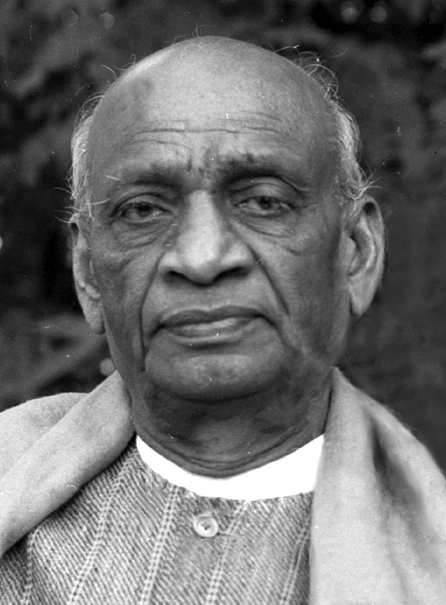
Correct — B, Vallabhbhai Patel. The peasants of Bardoli taluka in Surat district refused to pay a steep enhancement of land revenue, and Patel took charge of the campaign in February 1928, organising the taluka village by village until the government agreed to an inquiry. The Maxwell-Broomfield inquiry that followed cut the enhancement to about six per cent against the thirty per cent originally imposed. It was the women of Bardoli who gave Patel the title Sardar after the campaign succeeded.
Why the others are wrong
- (a)Mahatma Gandhi — Gandhi deliberately stayed out. He and Patel agreed that neither the Congress nor Gandhi himself would be directly involved and that the struggle would be left entirely to the people of Bardoli taluka; Gandhi gave his blessing when Patel said he was confident of the outcome.
- (c)Rajendra Prasad — Rajendra Prasad's peasant work belongs to Bihar, above all to the Champaran campaign of 1917 alongside Gandhi. He had no leading role at Bardoli.
- (d)Kalyanji Mehta — Kalyanji Mehta was one of the local Patidar workers active in the Bardoli countryside before and during the agitation, and such workers built the base Patel used. But the campaign of 1928 was launched and led by Patel, which is what the question asks.
Concept
Bardoli was a no-revenue campaign rather than a no-tax-on-salt or a boycott campaign: the government had raised the land revenue assessment sharply, and the peasants, organised into village units with their own volunteers and news-sheets, simply refused to pay. Its importance lies in showing that a disciplined district-level satyagraha could force a colonial government to reopen a settled revenue decision — the rehearsal for the Civil Disobedience Movement two years later.
An incidental note on the date. The paper prints 4 February 1928, a date that circulates in Indian textbooks, while the standard reference account dates the launch to 12 February 1928; the month and year are not in dispute and the answer does not turn on the day. Treat February 1928 and Vallabhbhai Patel as the pair to remember. The distractor to respect is Gandhi, since students assume he led every satyagraha — the whole point at Bardoli is that he stood back.
Key facts
- Bardoli taluka lies in Surat district, Gujarat.
- The campaign of 1928 followed a revenue enhancement of about thirty per cent imposed in 1926.
- The Maxwell-Broomfield inquiry later found a justified increase of only about six per cent.
- Gandhi and Patel agreed that the struggle would be left entirely to the people of Bardoli taluka.
- The title Sardar was given to Vallabhbhai Patel after the Bardoli campaign.
Study next
Common traps
- Defaulting to Gandhi for any satyagraha question.
- Confusing Bardoli, a revenue campaign in Gujarat, with Champaran, an indigo campaign in Bihar.
- Fixing on the printed day of the month when only the month and year are settled.
Movement-to-leader matching is the commonest form; expect Champaran, Kheda, Ahmedabad, Bardoli and Mahad to be shuffled against Gandhi, Patel, Rajendra Prasad and Ambedkar.
Related PYQs
The leader of the Bardoli Satyagraha (1928) was
- (a) Sardar Vallabhbhai Patel
- (b) Mahatma Gandhi
- (c) Vithalbhai J Patel
- (d) Mahadev Desai
Answer(a) Sardar Vallabhbhai Patel
The identical fact asked by UPSC, with Gandhi planted in the options in the same way.
The Mahad Satyagraha of 1927 was organized by
- (a) B. R. Ambedkar
- (b) Mahatma Gandhi
- (c) S. C. Bose
- (d) Lokmanya Tilak
Answer(a) B. R. Ambedkar
The same satyagraha-to-leader format from a neighbouring year, again with Gandhi offered as the reflex answer.
Practice
- practice — not a real PYQ
The Bardoli Satyagraha of 1928 was a campaign against
- (a)The salt tax
- (b)An enhancement of land revenue
- (c)Indigo planters
- (d)The Rowlatt Act
Answer(b) An enhancement of land revenue — the peasants of Bardoli refused to pay the raised assessment. - practice — not a real PYQ
The title 'Sardar' was conferred on Vallabhbhai Patel after his leadership of
- (a)The Kheda Satyagraha
- (b)The Bardoli Satyagraha
- (c)The Ahmedabad mill strike
- (d)The Nagpur flag satyagraha
Answer(b) The Bardoli Satyagraha — the women of Bardoli gave him the title after the campaign succeeded.