
Which colonial administrator made the following declaration about the partition of Bengal in 1904 ? “Bengal united is a power. Bengal divided will pull in different ways. That is perfectly true and one of the merits of the scheme”
- (a)Lord Curzon
- (b)H. H. Risley
- (c)Lord Minto
- (d)Sir Lancelot Hare
Answer
Why
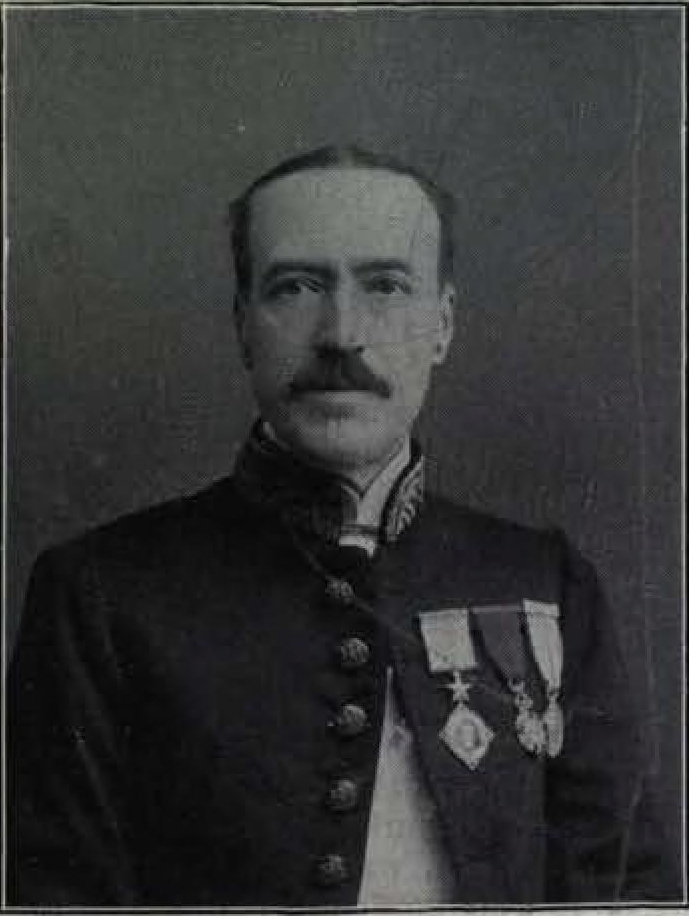
Correct — B, H. H. Risley. Herbert Hope Risley was Home Secretary to the Government of India from 1902, and the partition scheme was drafted and defended inside his department; his administrative experience proved useful to Curzon during the government's partition of Bengal along communal lines. Histories of the partition attribute this sentence to an official note written in the Home Department in 1904, the year before the partition took effect, and the official key marks Risley as its author. The sentence is famous because it is an administrator conceding in writing that dividing Bengal was meant to weaken it.
Why the others are wrong
- (a)Lord Curzon — This is the tempting answer, because the partition is universally known as Curzon's, and he was Viceroy when it was announced and enforced on 16 October 1905. But the line came from the civil servant who drafted the official case, not from the Viceroy who carried it — the question asks who made the declaration, not whose policy it was.
- (c)Lord Minto — Minto succeeded Curzon as Viceroy only in 1905, after the partition had been settled. He is associated with the later Morley-Minto reforms of 1909, not with the drafting of the partition scheme.
- (d)Sir Lancelot Hare — Hare belongs to the administration of the new province created by the partition rather than to the framing of the scheme in the Home Department, so the declaration is not his.
Concept
Bengal in 1905 was an unwieldy province of some seventy-eight million people, and administrative convenience was the official justification for dividing it. The nationalist reading was different: a united Bengal was the centre of the educated political class, and splitting it along lines that also split Hindus and Muslims served the government's political interest. Sentences like this one from inside the bureaucracy are the evidence historians use to show that the political motive was understood at the time.
One incidental slip in the printed question is worth flagging honestly. It dates the declaration to the partition 'in 1904', whereas the partition was announced and took effect on 16 October 1905 — 1904 is the year of the internal note, not of the partition. The paper's quotation also runs 'will pull in different ways', where the sentence is more usually reproduced as 'in several different ways'. Neither point changes the answer, and you should answer the paper as printed, but it is a good reminder that in a quotation item the marks sit on the name, not on the wording.
Key facts
- H. H. Risley was Home Secretary in India from 1902 and his work fed directly into the 1905 partition of Bengal.
- The partition was announced and came into effect on 16 October 1905, under Viceroy Lord Curzon.
- It was annulled at the Delhi Durbar in December 1911, and Bengal was reunited from 1912.
- The partition was the immediate cause of the Swadeshi and Boycott movement.
- Risley is also known for the caste enumeration and anthropometric work of the 1901 Census.
Study next
Common traps
- Attributing everything about the partition to Curzon because his name is attached to the policy.
- Mixing up the date of the internal note with the date the partition took effect.
- Confusing Minto's reforms of 1909 with the partition decision of 1905.
Quotation-to-author items on the colonial period usually offer one Viceroy, one senior civil servant and one provincial official; ask yourself who would have written an internal note, not who announced the policy.
Related PYQs
The Partition of Bengal made by Lord Curzon in 1905 lasted until
- (a) the First World War when Indian leaders decided to support the British and demanded its annulment as a quid pro quo
- (b) King George V abrogated Curzon's Act at the Royal Durbar in Delhi in 1911
- (c) Gandhiji launched his Civil Disobedience Movement
- (d) the Partition of India in 1947
Answer(b) King George V abrogated Curzon's Act at the Royal Durbar in Delhi in 1911
The other half of the same episode — how long the partition of Bengal survived the agitation it provoked.
During the Swadeshi movement, a National College was started in Calcutta under the principalship of
- (a) Rabindranath Tagore
- (b) Aurobindo Ghosh
- (c) Rajani Kant Sen
- (d) Syed Abu Mohammad
Answer(b) Aurobindo Ghosh
The movement that the partition of Bengal set off, tested through its constructive programme of national education.
Practice
- practice — not a real PYQ
The partition of Bengal announced by Lord Curzon came into effect in
- (a)1899
- (b)1905
- (c)1909
- (d)1911
Answer(b) 1905 — it took effect on 16 October 1905 and was annulled in 1911. - practice — not a real PYQ
The immediate cause of the Swadeshi movement was
- (a)The Rowlatt Act
- (b)The partition of Bengal
- (c)The Ilbert Bill
- (d)The Vernacular Press Act
Answer(b) The partition of Bengal — the protest against it launched the Swadeshi and Boycott programme.