
Which of the following is a Kharif crop?
- (a)Sugarcane
- (b)Barley
- (c)Gram
- (d)Wheat
Answer
Why
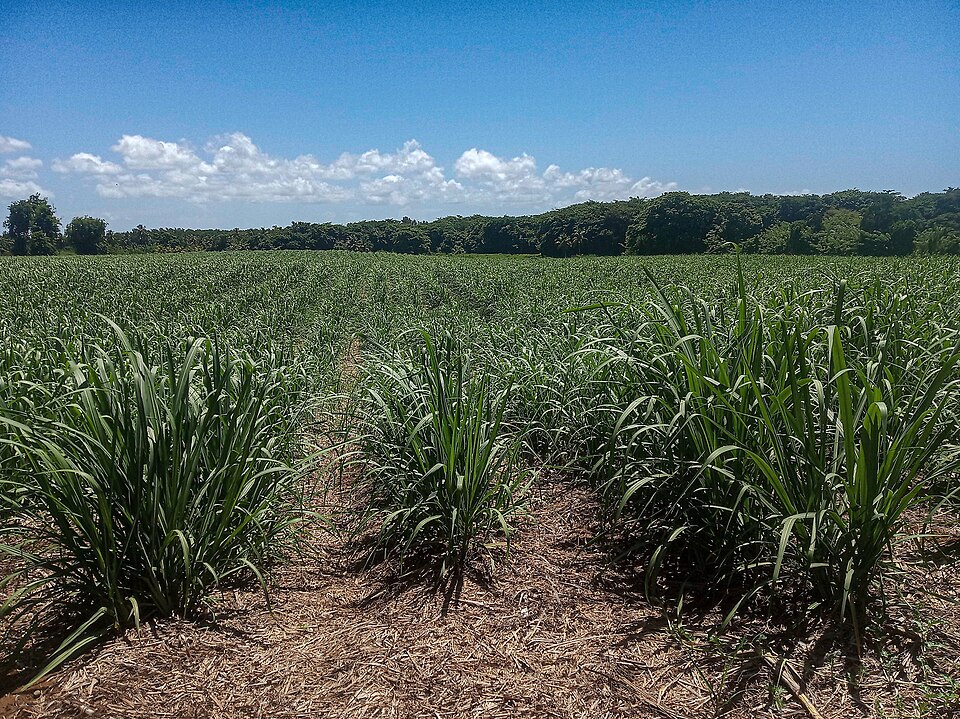
Correct — A, Sugarcane. India's cropping calendar is defined by WHEN a crop is sown and harvested, not by what family it belongs to. Kharif crops go into the ground with the onset of the south-west monsoon in June and July and are harvested in September and October — kharif is the Arabic word for autumn. Rabi crops are sown from October to December once the monsoon has withdrawn and are harvested between April and June — rabi is Arabic for spring. Zaid is the short irrigated summer season squeezed between the rabi harvest and the next kharif sowing. Judged on that calendar, sugarcane is the only crop on this list that belongs to the monsoon season: the Commission's remark classes it as sown at the beginning of the monsoon, and it wants exactly what the monsoon supplies, roughly 1,500 to 2,000 millimetres of water and temperatures of about 21 to 27 degrees Celsius. The Commission's own published remark on this question says precisely that — barley, gram and wheat are rabi crops, while sugarcane is a kharif crop since it is sown at the beginning of the monsoon and harvested in autumn. One honest qualification belongs in any serious answer, because it is what separates a student who has memorised a list from one who understands the calendar. Sugarcane is not a clean kharif crop in the way paddy or bajra is. It is a long-duration annual that stands ten to eighteen months in the field, so a single planting runs through a kharif season, a whole rabi season and often into the next kharif, and it is usually ratooned, the cut stubble being allowed to sprout again for a second and third harvest. Several standard texts therefore list sugarcane on its own rather than under kharif. The Commission has settled that ambiguity by applying the sowing-date test, and on that test sugarcane is classified with the kharif crops. In any case the elimination is airtight from the other direction: whatever label a textbook attaches to sugarcane, wheat, barley and gram are unambiguously rabi, so only option (a) can be the answer.
Why the others are wrong
- (b)Barley — Barley (Hordeum vulgare) is a rabi cereal, sown from October to December and harvested in March and April. It is the hardiest of the rabi cereals, tolerating poorer soils, higher salinity and less water than wheat, which is why it survives on the drier margins of Rajasthan, Uttar Pradesh, Madhya Pradesh, Haryana and Punjab, and it is grown mainly for malt, animal feed and sattu. Nothing about it is monsoon-sown; it is chosen only by candidates who confuse it with a coarse millet like bajra, which genuinely is kharif.
- (c)Gram — Gram or chana (Cicer arietinum) is the classic rabi pulse and India's largest single pulse crop by output, sown in October and November on the moisture the monsoon has left in the soil and harvested from February to April; it needs a cool growing period and warm dry weather at ripening. This is the most instructive wrong option, because it punishes reasoning by crop family: most Indian pulses — arhar, moong, urad — are indeed kharif, so 'pulse means kharif' feels safe. Gram is exactly the exception that the season-based classification exists to capture.
- (d)Wheat — Wheat is the definitive rabi crop and the reference point against which the whole rabi season is taught — sown in November and December, harvested in March and April, needing a cool moist growing period, bright warm sunshine at ripening and about 50 to 75 centimetres of water from rain or irrigation. It was the crop on which the Green Revolution was built from 1966-67 with dwarf high-yielding varieties. A candidate who marks wheat has not misremembered one crop; they have inverted the two seasons entirely.
Concept
India's three cropping seasons exist because the rainfall does. The south-west monsoon between June and September delivers the large majority of the country's annual rain, so the agricultural year is organised around its arrival and withdrawal rather than around the calendar year. Kharif is the monsoon crop: sown as the rains break in June and July, largely rain-fed, moisture-loving, harvested in September and October. It carries rice, maize, jowar, bajra, ragi, arhar, moong, urad, cotton, jute, groundnut, soyabean and sugarcane. Rabi is the winter crop: sown from October to December once the monsoon has retreated, living on residual soil moisture, irrigation and the modest winter rain that western disturbances bring to the north-west, and harvested from April to June. It carries wheat, barley, gram, peas, mustard and linseed. Zaid is the short summer season between the two, entirely dependent on irrigation, and grows watermelon, muskmelon, cucumber, vegetables and fodder. The essential point, and the one this question tests, is that the classification is agronomic rather than botanical. It says nothing about whether a plant is a cereal, a pulse, a fibre or a grass; it says only when the seed goes into the soil. That is also why the same species can change season with latitude and irrigation — rice is grown as a rabi crop in parts of coastal Andhra Pradesh, Tamil Nadu and West Bengal, and black gram is cultivated in both kharif and rabi.
The discriminator here is the season, not the crop family, and almost every wrong answer comes from reasoning about the plant instead of the calendar. A candidate who thinks 'sugarcane is a tall grass, like wheat and barley' or 'gram is a pulse, and pulses are kharif' has asked the wrong question. Ask instead, for each option in turn, when the seed goes into the ground. Wheat goes in during November, barley from October, gram in October and November — all after the monsoon has withdrawn, all harvested in spring, all rabi. That eliminates three options in one movement, which is a comfortable position rather than a suspicious one. Sugarcane alone is planted as the monsoon breaks. A second, independent check confirms it: kharif crops are the thirsty ones, because they are timed to ride the rain. Sugarcane needs roughly 1,500 to 2,000 millimetres of water over its long season and is routinely cited as the least water-efficient of India's major crops — a profile only a monsoon crop can have — while wheat, barley and gram are modest winter crops. The one thing not to do is over-think the caveat about sugarcane's ten-to-eighteen-month duration. It is a real complication, and worth knowing for a descriptive answer, but it cannot change the outcome here, because it does not make any of the other three crops less rabi. When a question offers one monsoon-sown crop and three winter-sown ones, the season test settles it before the botany is even relevant.
Key facts
- Kharif crops are sown with the onset of the south-west monsoon in June and July and harvested in September and October — rice, maize, jowar, bajra, ragi, arhar, moong, urad, cotton, jute, groundnut, soyabean and sugarcane; the word is Arabic for autumn.
- Rabi crops are sown from October to December after the monsoon withdraws and harvested from April to June — wheat, barley, gram, peas, mustard and linseed — surviving on residual soil moisture, irrigation and winter rain from western disturbances; the word is Arabic for spring.
- Zaid is the short summer season between the rabi harvest and the next kharif sowing, entirely irrigation-dependent, growing watermelon, muskmelon, cucumber, vegetables and fodder.
- Sugarcane is a long-duration annual that stands about ten to eighteen months in the field and is commonly ratooned, the cut stubble sprouting again for a second and third harvest; it needs roughly 1,500 to 2,000 mm of water at 21 to 27 degrees Celsius, which is why it is cited as the least water-efficient of India's major crops and why the sowing-date test places it with kharif.
- Kharif is the season Bihar's irrigation policy is built around: the Cabinet Committee on Economic Affairs approved the Kosi-Mechi Intra-State Link Project under PMKSY-AIBP on 28 March 2025 at a cost of Rs 6,282.32 crore, to provide 2,10,516 hectares of additional annual kharif irrigation in Araria, Purnea, Kishanganj and Katihar districts by March 2029.
Study next
Common traps
- Classifying by crop family rather than by season — gram is a pulse but a rabi pulse, while arhar, moong and urad are kharif pulses
- Assuming barley behaves like the coarse cereals bajra and jowar — those are kharif millets, barley is a rabi cereal sown in October
- Over-thinking sugarcane's ten-to-eighteen-month duration and abandoning the answer — it is a real qualification, but wheat, barley and gram remain unambiguously rabi whichever way sugarcane is filed
BPSC asks crop seasons in the simplest possible form — one season, four crops, pick the odd one out — and recycles it across cycles with different crop sets, so memorising the kharif and rabi lists outright is a direct return on time. UPSC has asked the identical classification as a multi-crop set at least twice, in 2004 with cotton, groundnut, maize and mustard, and in 2013 with cotton, groundnut, rice and wheat, but its modern form has shifted to the economics and agronomy around the crop: who approves the Fair and Remunerative Price of sugarcane in 2015, which crop is the least water-efficient in 2021, and trends in the area under kharif crops in 2019.
Related PYQs
Consider the following crops : 1. Cotton 2. Groundnut 3. Rice 4. Wheat Which of these are Kharif crops?
- (a) 1 and 4
- (b) 2 and 3 only
- (c) 1, 2 and 3
- (d) 2, 3 and 4
Answer(c) 1, 2 and 3
The identical classification in UPSC's preferred multi-crop form — cotton, groundnut and rice are monsoon-sown while wheat is the winter crop that must be excluded, which is exactly the season test that puts sugarcane with kharif and leaves wheat, barley and gram out of it.
Consider the following crops: 1. Cotton 2. Groundnut 3. Maize 4. Mustard Which of the above are Kharif crops?
- (a) 1 and 2
- (b) 1, 2 and 3
- (c) 3 and 4
- (d) 1, 2, 3 and 4
Answer(b) 1, 2 and 3
The same season test with a different odd one out — mustard is the rabi crop hidden among three kharif crops, just as gram is the rabi pulse hidden among the BPSC options; both items punish a candidate who sorts crops by family instead of by sowing date.
Practice
- practice — not a real PYQ
Which one of the following is a Rabi crop?
- (a)Bajra
- (b)Mustard
- (c)Jute
- (d)Groundnut
Answer(b) Mustard — it is sown in October and November after the monsoon withdraws and harvested in February and March, alongside wheat, barley, gram, peas and linseed. Bajra, jute and groundnut are all sown with the onset of the monsoon and are kharif crops. - practice — not a real PYQ
In Indian agriculture, the term 'Zaid' refers to
- (a)The monsoon cropping season from June to October
- (b)The winter cropping season from October to April
- (c)The short summer cropping season between the rabi harvest and the kharif sowing
- (d)A system of shifting cultivation practised in the north-eastern hills
Answer(c) The short summer cropping season between the rabi harvest and the kharif sowing — it runs roughly from March to June, depends entirely on irrigation, and grows watermelon, muskmelon, cucumber, vegetables and fodder. The monsoon season is kharif and the winter season is rabi.