
The species which are in danger of extinction are known as?
- (a)Vulnerable
- (b)Rare
- (c)Endangered
- (d)Extinct
Answer
Why
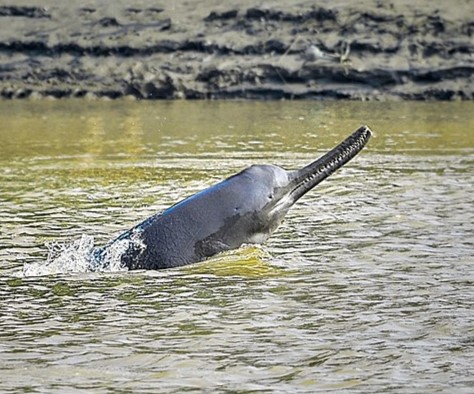
Correct — C, Endangered. The wording of the stem is the plain-English translation of the category's own name, and the IUCN Red List Categories and Criteria version 3.1 puts it in exactly those terms: a taxon is Endangered when the best available evidence indicates that it meets any of the criteria A to E for Endangered, and it is therefore considered to be facing a very high risk of extinction in the wild. That phrase — very high risk — is the middle rung of a three-rung ladder, and the ladder is what this question is really testing. Critically Endangered is defined as facing an extremely high risk of extinction in the wild; Endangered as facing a very high risk; Vulnerable as facing a high risk. Those three together are the threatened categories, and they sit inside a full list of nine: Extinct, Extinct in the Wild, Critically Endangered, Endangered, Vulnerable, Near Threatened, Least Concern, Data Deficient and Not Evaluated. What makes the modern system usable is that a species is not placed in a category by opinion. Criteria A to E are quantitative thresholds — the size of an observed or projected population reduction, the extent of occurrence and area of occupancy, a small population that is also declining, a very small or severely restricted population, and a quantitative analysis of extinction probability — and any one of them being met is enough. The Commission's own remark on this question draws the same line the Red List does: species facing a very high risk of extinction in the near future are Endangered, while species likely to become endangered in the near future if nothing is done for their conservation are Vulnerable. Indian examples make the rung concrete. The Ganges river dolphin, India's national aquatic animal and Bihar's flagship species in the Vikramshila sanctuary at Bhagalpur, is assessed Endangered; so is the Asian elephant; the Great Indian Bustard is Critically Endangered, one rung higher; and the gaur, Bihar's own state animal, is Vulnerable, one rung lower.
Why the others are wrong
- (a)Vulnerable — The genuine near-miss, because Vulnerable is a real and current IUCN category — but it is one rung below. Version 3.1 defines it as facing a high risk of extinction in the wild, which in practice means a species likely to become endangered if the pressures on it are not removed. The distinction is present danger against prospective danger, and the stem says 'in danger of extinction', not 'likely to fall into danger'. Bihar's state animal the gaur, and the snow leopard since its 2017 reassessment, are Vulnerable rather than Endangered.
- (b)Rare — This one is not a wrong rung on the ladder — it is not on the ladder at all. 'Rare' was a category in the OLD, pre-1994 IUCN Red Data Book system, alongside Indeterminate, Insufficiently Known and Out of Danger. IUCN replaced those subjective labels with the quantitative categories adopted in 1994 and revised as version 3.1 in 2001, and 'Rare' did not survive the change. Rarity now feeds in as evidence under the criteria — a small population or a restricted range — but it is no longer a status a species can be assigned.
- (d)Extinct — Extinct is the outcome, not the danger. IUCN defines a taxon as Extinct when there is no reasonable doubt that the last individual has died, and Extinct in the Wild when it survives only in cultivation, in captivity or as a naturalised population well outside its past range. A species that is extinct is no longer in danger of extinction, because the event has already happened — as with the cheetah, officially declared extinct in India in 1952. The option catches candidates who read 'extinction' in the stem and match the word rather than the meaning.
Concept
The IUCN Red List of Threatened Species is the world's inventory of extinction risk. The International Union for Conservation of Nature was founded in 1948 and is headquartered at Gland in Switzerland; it is not a United Nations body but a hybrid union of states, government agencies and non-governmental organisations, and it began compiling the Red Data Book in 1964. The list is an assessment, not a law: being listed as Endangered creates no legal protection anywhere by itself. Legal protection in India comes from the schedules of the Wildlife (Protection) Act, 1972, and restrictions on international trade come from CITES, a treaty with three Appendices. Students routinely conflate the three, and examiners exploit it. The Red List's own logic changed decisively in 1994. The pre-1994 system used descriptive labels — Endangered, Vulnerable, Rare, Indeterminate, Insufficiently Known — that different assessors applied differently. The replacement system, refined into version 3.1 in 2001, defines each threatened category by numerical thresholds under five criteria, so that two assessors working on the same data should reach the same answer. Nine categories now exist, of which exactly three are 'threatened': Critically Endangered, Endangered and Vulnerable. Two more are commonly misread — Near Threatened means a species does not qualify for the threatened categories now but is close to doing so, and Data Deficient explicitly is not a category of threat at all, only an admission that the evidence is insufficient.
This is one of the rare questions where the answer is a translation of the stem: 'in danger of extinction' is what the English word 'endangered' means, and the IUCN definition confirms it — a very high risk of extinction in the wild. That instinct is right, and the work is in checking it against the three distractors, each of which fails for a different reason worth learning. Extinct fails on logic: if the last individual has died there is no danger left to be in, so a category describing danger cannot be the category describing the end of it. Rare fails on history: it was a real IUCN label before 1994 and still appears in older Indian textbooks and Red Data Book lists, but the modern Red List has no such category, so a candidate who has read an outdated book is actually more likely to be trapped than one who has read none. That leaves Vulnerable, the only genuine contest, and the single discriminating fact is the verbatim ladder — Vulnerable is a HIGH risk, Endangered is a VERY HIGH risk and Critically Endangered is an EXTREMELY HIGH risk of extinction in the wild. Read as ordinary English, Vulnerable describes a species that will be in danger if present trends continue, while Endangered describes one that is in danger now. The Commission's remark makes exactly that distinction. Learn the three adjectives in order and this whole family of questions — including the ones that ask about Critically Endangered or about which categories count as 'threatened' — collapses into a single recall.
Key facts
- IUCN Red List Categories and Criteria version 3.1 define the three threatened ranks by risk wording — Critically Endangered is facing an extremely high risk of extinction in the wild, Endangered a very high risk, and Vulnerable a high risk; these three together are the 'threatened' categories.
- There are nine categories in all: Extinct, Extinct in the Wild, Critically Endangered, Endangered, Vulnerable, Near Threatened, Least Concern, Data Deficient and Not Evaluated. Data Deficient is expressly not a category of threat, and Near Threatened means a species is close to qualifying for a threatened category but does not qualify now.
- A taxon is Extinct when there is no reasonable doubt that the last individual has died, and Extinct in the Wild when it survives only in cultivation, in captivity or as a naturalised population well outside its past range — the cheetah was officially declared extinct in India in 1952 and was reintroduced from Namibia in September 2022.
- 'Rare' was a category of the pre-1994 IUCN system, along with Indeterminate and Insufficiently Known; IUCN replaced them with quantitative criteria adopted in 1994 and revised as version 3.1 in 2001, so no species is classified 'Rare' on the modern Red List.
- Indian anchors for the ladder: the Ganges river dolphin is Endangered on the 2022 Red List and is protected in Bihar's Vikramshila Gangetic Dolphin Sanctuary, notified on 7 August 1991 over a 60 km stretch of the Ganga from Sultanganj to Kahalgaon in Bhagalpur district; the Great Indian Bustard is Critically Endangered; the gaur, Bihar's state animal, is Vulnerable.
Study next
Common traps
- Choosing 'Rare' because older Indian textbooks still print the pre-1994 Red Data Book categories — 'Rare' does not exist on the modern IUCN Red List at all
- Confusing Vulnerable with Endangered — Vulnerable is a HIGH risk, Endangered a VERY HIGH risk, and Critically Endangered an EXTREMELY HIGH risk of extinction in the wild
- Treating Data Deficient as a mild threat category — it is not a threat category at all, only a statement that the evidence is inadequate to assess the species
BPSC asks this as a bare definition — match the phrase 'in danger of extinction' to the category name — so the whole item turns on knowing the three risk adjectives in order. UPSC has never asked the definition itself; it asks what the Red Data Book actually contains and what it does not, as in 2011, whether a named group of Indian animals is endangered, as in 2003, 2012 and 2013, and how IUCN as an organisation differs from the CITES treaty, as in 2015. So learn the ladder for BPSC and the institutions, criteria and species lists for UPSC.
Related PYQs
The "Red Data Books" published by the International Union for Conservation of Nature and Natural Resources (IUCN) contain lists of 1. Endemic plant and animal species present in the biodiversity hotspots. 2. Threatened plant and animal species. 3. Protected sites for conservation of nature and natural resources in various countries. Select the correct answer using the codes given below:
- (a) 1 and 3
- (b) 2 only
- (c) 2 and 3
- (d) 3 only
Answer(b) 2 only
The same list, tested from the outside — UPSC asks what the IUCN Red Data Book contains, namely threatened species, while BPSC asks what one of those threat categories is called; both reward knowing that Critically Endangered, Endangered and Vulnerable are the three threatened ranks.
Which one of the following groups of animals belongs to the category of endangered species?
- (a) Great Indian Bustard, Musk Deer, Red Panda and Asiatic Wild Ass
- (b) Kashmir Stag, Cheetal, Blue Bull and Great Indian Bustard
- (c) Snow Leopard, Swamp Deer, Rhesus Monkey and Saras (Crane)
- (d) Lion-tailed Macaque, Blue Bull, Hanuman Langur and Cheetal
Answer(a) Great Indian Bustard, Musk Deer, Red Panda and Asiatic Wild Ass
The identical category, applied instead of defined — UPSC makes you sort real Indian species into the endangered bracket, which is only possible once you know what BPSC is asking here, that 'endangered' means a very high risk of extinction in the wild rather than merely a scarce or declining animal.
Practice
- practice — not a real PYQ
According to the IUCN Red List, a species facing an extremely high risk of extinction in the wild is classified as
- (a)Vulnerable
- (b)Endangered
- (c)Critically Endangered
- (d)Near Threatened
Answer(c) Critically Endangered — the version 3.1 wording is 'extremely high risk' for Critically Endangered, 'very high risk' for Endangered and 'high risk' for Vulnerable. Near Threatened means a species does not qualify for any of these now but is close to doing so. - practice — not a real PYQ
The Vikramshila Gangetic Dolphin Sanctuary, the only sanctuary in India notified specifically for the Ganges river dolphin, lies in which district of Bihar ?
- (a)Bhagalpur
- (b)Munger
- (c)West Champaran
- (d)Patna
Answer(a) Bhagalpur — the sanctuary was notified in 1991 along a 60 km stretch of the Ganga from Sultanganj to Kahalgaon in Bhagalpur district. Munger has the Bhimbandh Wildlife Sanctuary and West Champaran has the Valmiki Tiger Reserve and Udaypur Wildlife Sanctuary.