
Which of the following is a non-sense codon?
- (a)UAA
- (b)AUG
- (c)UUU
- (d)UGC
Answer
Why
Correct — A, UAA. A codon is a triplet of bases on messenger RNA, and of the 64 possible triplets, 61 specify an amino acid — these are the sense codons — while exactly three specify none at all. Those three are UAA, UAG and UGA, and they are called nonsense codons precisely because they make no sense to a transfer RNA: no tRNA carries an anticodon for them. When the ribosome arrives at one, nothing enters the A site except a release factor protein, which hydrolyses the bond holding the finished polypeptide to the last tRNA and lets the chain go. So the nonsense codons are also called stop, termination or chain-terminating codons, and each has a nickname from the early laboratory work — UAA is ochre, UAG is amber and UGA is opal or umber. UAA is the one printed in this question, so option (a) is the answer; the nicknames are not decoration but laboratory history, since it was Sydney Brenner's mutation experiments that established that the amber and ochre mutations corresponded to the triplets UAG and UAA. The other three options are all sense codons, and each is famous for a different reason, which is exactly what makes this a well-built four-option item rather than a lucky guess: AUG is the start codon and codes methionine, UUU codes phenylalanine and was the very first codon ever deciphered, and UGC codes cysteine. Notice the built-in tripwire — AUG and UAA are made of overlapping letters and are the two functionally opposite codons on the paper, initiation against termination. The standard memory aid keeps them apart by reading the stop codons as sentences: U Are Away (UAA), U Are Gone (UAG), U Go Away (UGA). All three begin with U, and no start or sense codon in the trio does. A useful cross-check while revising: a nonsense mutation is a point change that turns a sense codon into one of these three, truncating the protein — beta-thalassaemia and some Duchenne muscular dystrophy alleles arise this way — which is where the word 'nonsense' in the question stem comes from.
Why the others are wrong
- (b)AUG — The exact opposite of a nonsense codon. AUG is the initiation or start codon: it codes methionine in eukaryotes and formyl-methionine in bacteria, and every polypeptide begins its synthesis there, the methionine often being clipped off afterwards. AUG is the only codon that does double duty, acting as both a start signal and an ordinary methionine codon in the middle of a message. Candidates pick it because its three letters overlap with UAA and UGA, and because it is the one codon everyone has memorised.
- (c)UUU — UUU codes phenylalanine, and it is the most historically important codon of all: in 1961 Marshall Nirenberg and Heinrich Matthaei fed a synthetic poly-U messenger to a cell-free extract of E. coli and obtained a polypeptide made entirely of phenylalanine, cracking the first letter-to-amino-acid assignment in the genetic code. It is a sense codon in every organism. Its run of three identical bases makes it look artificial or 'blank' to a candidate skimming the options, which is the whole reason it is here.
- (d)UGC — UGC codes cysteine, the sulphur-containing amino acid whose thiol groups form the disulphide bridges that hold protein tertiary structure together — including those that link the two chains of insulin. It is an ordinary sense codon. The trap is visual: UGC is one letter away from UGA, which IS a stop codon, so a candidate who has memorised the shapes rather than the sequences can read UGA where UGC is printed.
Concept
The genetic code is the dictionary that converts a nucleotide sequence into an amino acid sequence. Because there are four bases (A, U, G, C in RNA) and twenty amino acids to specify, a one-base code would name only four amino acids and a two-base code only sixteen; a triplet gives 4 x 4 x 4 = 64 combinations, which is enough and to spare. That surplus produces the two defining properties of the code. It is DEGENERATE — most amino acids are named by more than one codon, leucine, serine and arginine by six each — but it is not ambiguous, since any one codon specifies only one amino acid. It is also non-overlapping and comma-less, read three bases at a time from a fixed starting point, which is why inserting or deleting a single base causes a frameshift that garbles everything downstream. Of the 64 codons, 61 are sense and 3 are nonsense. The code is very nearly universal: the same triplets mean the same amino acids in a bacterium, a mango tree and a human being, which is the reason a human insulin gene can be expressed in E. coli at all. The decoding was done between 1961 and 1966, and Indian students should know the Indian-born name in it — Har Gobind Khorana shared the 1968 Nobel Prize in Physiology or Medicine with Marshall Nirenberg and Robert Holley for the interpretation of the genetic code and its function in protein synthesis.
The word to fix on is 'non-sense'. In everyday use it sounds like a mistake or a meaningless string, and a hurried candidate looks for the option that appears odd — which is why UUU, with its three identical letters, catches so many people. In molecular biology the term is exact and technical: a nonsense codon is one that codes for no amino acid and therefore terminates translation. So the question is really asking which of the four is a STOP codon, and there are only three stop codons to know in the whole of biology — UAA, UAG and UGA. Everything else in the code, all 61 remaining triplets, is a sense codon. Two mechanical checks finish the job in seconds. First, every stop codon begins with U, so any option beginning with A, G or C is eliminated at once — that removes AUG immediately. Second, of the three options beginning with U, only UAA appears on the list of three; UUU and UGC do not. The single discriminating fact is therefore membership of that three-item list, and the discipline is to recall the list before looking at the options rather than after. The most dangerous confusion is AUG against UAA: they use the same letters, and they are the two functionally opposite instructions in the code, one telling the ribosome to begin and one telling it to stop. If you can state 'AUG starts, UAA/UAG/UGA stop' before reading the options, this question takes five seconds.
Key facts
- Of the 64 triplet codons, 61 are sense codons that specify amino acids and exactly 3 are nonsense or stop codons — UAA (ochre), UAG (amber) and UGA (opal or umber); all three begin with U, and none is recognised by a tRNA, so a release factor protein terminates translation instead.
- AUG is the start or initiation codon and codes methionine (formyl-methionine in bacteria); it is the only codon that serves both as an initiation signal and as an ordinary amino-acid codon within a message.
- UUU codes phenylalanine and was the first codon ever deciphered — Nirenberg and Matthaei's 1961 poly-U experiment in a cell-free E. coli system produced polyphenylalanine; UGC codes cysteine, the amino acid whose disulphide bridges stabilise protein structure.
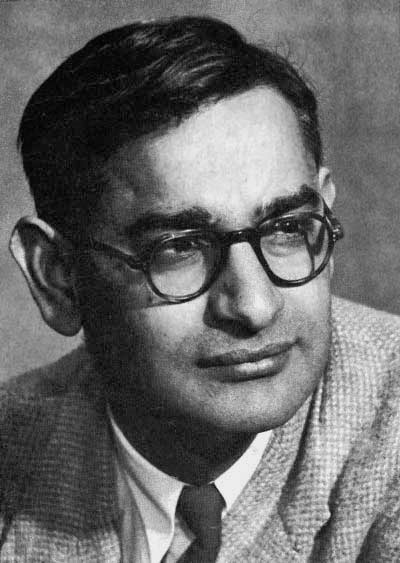
- Har Gobind Khorana (9 January 1922 – 9 November 2011), born at Raipur near Multan in undivided Punjab, shared the 1968 Nobel Prize in Physiology or Medicine with Marshall Nirenberg and Robert Holley for the interpretation of the genetic code; he later built the world's first synthetic gene and received the Padma Vibhushan in 1969.
- The code is degenerate but unambiguous — leucine, serine and arginine each have six codons, while methionine and tryptophan have only one — and it is non-overlapping and comma-less, which is why a single base insertion or deletion causes a frameshift mutation that garbles every codon downstream.
Study next
Common traps
- Reading 'non-sense' as 'strange-looking' and choosing UUU — the term is technical and means a codon that codes for no amino acid and stops translation
- Confusing AUG with UAA or UGA because the letters overlap — AUG is the start codon, the exact opposite of a stop codon
- Misreading UGC as UGA — UGC is cysteine and UGA is a stop codon, and only the last letter separates them on the page
BPSC keeps this at bare recall — name the stop codon, name the start codon, name the amino acid a triplet codes for — and rewards a candidate who has memorised the three-item stop list cold, since the whole item is decided in seconds. UPSC has never asked a codon by name; it prefers the people and the applications, matching 'establishing the complete genetic code' with Khorana in 2001, defining the transcriptome in 2016, and testing recombinant DNA and gene-editing statements in recent years. Memorise the triplets for BPSC and the scientists, techniques and consequences for UPSC.
Related PYQs
Match List I with List II and select the correct answer using the codes given below the Lists: List I (Achievement in genetics) I. Discovery of transduction and conjugation in bacteria II. Establishing the sex-linked inheritance III. Isolation of DNA polymerase from E. coli IV. Establishing the complete genetic code List II (Scientists) A) Khurana B) Kornberg C) Lederberg D) Morgan E) Ochoa
- (a) I-D, II-C, III-B, IV-A
- (b) I-C, II-D, III-A, IV-E
- (c) I-D, II-C, III-A, IV-E
- (d) I-C, II-D, III-B, IV-A
Answer(d) I-C, II-D, III-B, IV-A
The same genetic code, asked from the other end — UPSC tests who established it, pairing item IV with Khorana, while BPSC tests a specific entry in the dictionary he helped complete, namely which triplet codes for nothing at all.
Which of the following cell organelles play the most significant role in protein synthesis?
- (a) Lysosome and Centrosome
- (b) Endoplasmic reticulum and Ribosome
- (c) Golgi apparatus and Mitochondria
- (d) Lysosome and Mitochondria
Answer(b) Endoplasmic reticulum and Ribosome
Codons only mean anything inside a ribosome — this UPSC item asks where translation happens, while the BPSC item asks what the ribosome does when it reaches UAA, so together they cover the machinery and the signal that halts it.
Practice
- practice — not a real PYQ
Which one of the following is the initiation (start) codon in protein synthesis?
- (a)UAG
- (b)AUG
- (c)UGA
- (d)UAA
Answer(b) AUG — it is the start codon and codes methionine, or formyl-methionine in bacteria. UAG, UGA and UAA are the three nonsense or stop codons, which code for no amino acid and terminate translation. - practice — not a real PYQ
Of the 64 codons in the standard genetic code, how many code for amino acids ?
- (a)20
- (b)61
- (c)63
- (d)64
Answer(b) 61 — sixty-one codons are sense codons specifying amino acids and three (UAA, UAG, UGA) are nonsense codons that specify none. There are only 20 standard amino acids, which is why the code is degenerate, with most amino acids named by more than one codon.