
Where was the top leader of Hamas, Ismail Haniyeh, assassinated on 31st July 2024, allegedly in an Israeli airstrike ?
- (a)Palestine
- (b)Lebanon
- (c)Jordan
- (d)Iran
Answer
Why
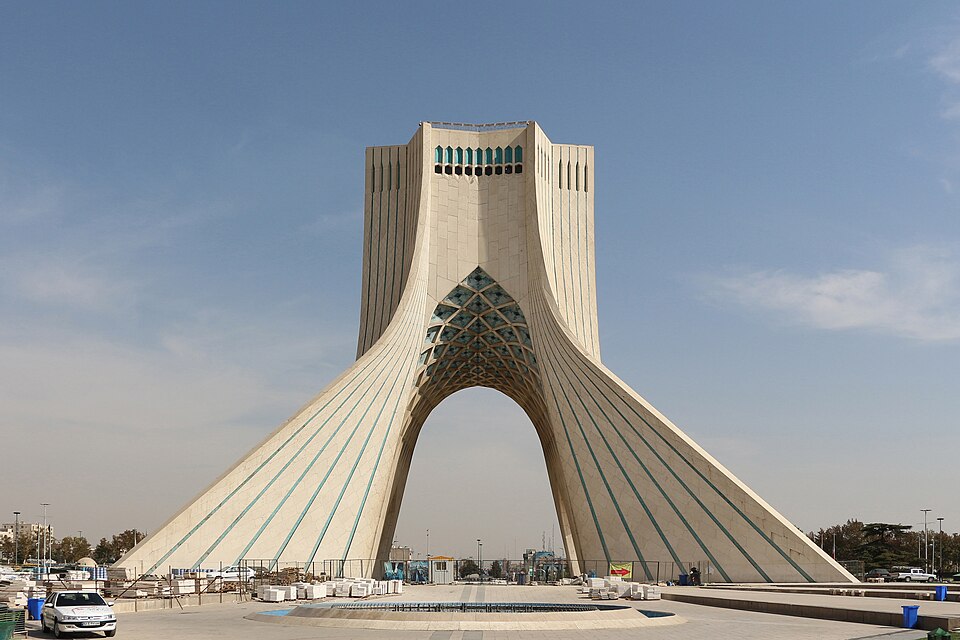
Correct: D, Iran. Ismail Haniyeh, head of the political bureau of Hamas, was killed in Tehran on 31 July 2024. He was in the Iranian capital because he had attended the inauguration of Iran's newly elected President, Masoud Pezeshkian, the previous day, 30 July. Hamas and Iran both immediately blamed Israel; Israel declined to comment at the time, and only in December 2024 did its Defence Minister, Israel Katz, publicly confirm Israeli responsibility. The place matters more than the personality here, and that is the point of the question. Haniyeh had not lived in Gaza since 2019 (he had been based in Qatar) so 'Palestine' was never where he could have been killed, and a killing carried out on Iranian soil, in the capital, on the day after a presidential inauguration, was a far graver event than the same act anywhere else, because it struck at Iran's own security and forced Tehran to decide how to respond. The timing sits inside a very compressed sequence: hours before Haniyeh's death, Israel announced that it had killed the senior Hezbollah commander Fuad Shukr in Beirut, which is exactly why Lebanon appears among the options and why a candidate who remembers 'two senior figures killed in the same forty-eight hours' can mix the two up. Hamas named Yahya Sinwar as its new political leader on 6 August 2024, a week after the killing.
Why the others are wrong
- (a)Palestine: The intuitive answer and the wrong one. Haniyeh left the Gaza Strip in 2019 and had been living in Qatar; as head of the political bureau he operated from abroad, travelling for diplomacy and negotiations. He was not in Palestinian territory on 31 July 2024 and had not been for years.
- (b)Lebanon: The sharpest trap on the list, because something very like this did happen in Lebanon in the same news cycle: hours earlier Israel announced it had killed the senior Hezbollah commander Fuad Shukr in Beirut. Two strikes, two capitals, less than a day apart, but Haniyeh was killed in Tehran, not Beirut.
- (c)Jordan: Jordan borders Israel and the West Bank and hosts a very large Palestinian population, which makes it look plausible on a map. But it maintains diplomatic relations with Israel under the 1994 peace treaty and hosts no Hamas leadership; it played no part in this event.
Concept
Hamas has two distinct wings, and the question's phrase 'top leader' refers to one of them. Its political bureau, whose chairman is the movement's public head, has for years operated in exile (from Damascus, then Doha) conducting diplomacy, negotiating ceasefires and prisoner exchanges and representing Hamas to foreign governments; its military wing, the Izz ad-Din al-Qassam Brigades, is inside Gaza. Ismail Haniyeh, who had been Palestinian prime minister after the 2006 legislative elections, chaired the political bureau from 2017 and left Gaza in 2019 to live in Qatar. The killing came during the Gaza war that began in October 2023 and belongs to a broader regional confrontation in which Israel has struck at Iran-aligned actors across several countries (Hamas, Hezbollah in Lebanon, the Houthis in Yemen and Iranian officers in Syria) while Iran positions itself as the patron of that network. That is why the country in which a strike happens is itself a strategic fact, not merely a location.
Current-affairs questions about a violent event usually turn on one of three particulars: the date, the place or the person. Here the person is given, the date is given, and the place is what is being asked, so the useful memory hook is the context rather than the map: Haniyeh was in Tehran for Masoud Pezeshkian's inauguration, and anchoring the killing to that ceremony fixes the country immediately. The elimination route is just as reliable if the news detail has faded. Haniyeh had lived outside Palestinian territory since 2019, so option (a) fails on the facts of his own life. Jordan is at peace with Israel and hosts no Hamas leadership, so option (c) fails on political geography. That leaves Lebanon against Iran, and the discriminator is which killing you are remembering: Beirut was Fuad Shukr of Hezbollah, hours earlier; Tehran was Haniyeh. Keeping two events of the same week distinct is the actual skill being tested, and it is a general one: when a paper asks about a crowded news period, write the sequence out by date rather than trying to recall it as a single impression.
Key facts
- Ismail Haniyeh, chairman of the Hamas political bureau, was killed in Tehran, Iran, on 31 July 2024
- He was in Iran to attend the inauguration of President Masoud Pezeshkian, held on 30 July 2024
- Hamas and Iran blamed Israel; Israel declined to comment at the time and confirmed responsibility only in December 2024, through Defence Minister Israel Katz
- Haniyeh had left the Gaza Strip in 2019 and had been living in Qatar, from where the political bureau conducted its diplomacy
- Hours before the Tehran killing, Israel announced it had killed the senior Hezbollah commander Fuad Shukr in Beirut: the reason Lebanon appears as a distractor
- Hamas named Yahya Sinwar as its new political leader on 6 August 2024
Study next
Common traps
- Answering 'Palestine' because Hamas is Palestinian: Haniyeh had lived outside Gaza since 2019
- Confusing the Tehran killing with the Beirut strike on Hezbollah's Fuad Shukr, which Israel announced hours earlier
- Assuming a neighbouring state such as Jordan must be involved because it borders Israel; it has had a peace treaty with Israel since 1994
BPSC asks international events as a single missing particular (the place, the date, the name) drawn from the twelve months before the paper, with the distractors chosen from countries that featured in the same news cycle, so the option list rewards a candidate who has followed the sequence rather than the headline. UPSC does not ask where an assassination happened; it asks the durable structure around it, such as which countries border Israel or what a named organisation is, so the same region has to be prepared as geography and institutions rather than as news.
Related PYQs
Which of the following are correctly matched? I. Hamas — Palestinian extremist group II. Sinn Fein — IRA’s political wing III. True Path Party — A major constituent of the ruling coalition in Turkey Choose the correct answer from the codes given below:
- (a) I and II
- (b) I and III
- (c) I, II and III
- (d) II and III
Answer(c) I, II and III
The same organisation, placed correctly: knowing what Hamas is and where it operates is the first step to knowing why its political bureau chief was abroad rather than in Gaza.
Israel has common borders with
- (a) Lebanon, Syria, Jordan and Egypt
- (b) Lebanon, Syria, Turkey and Jordan
- (c) Cyprus, Turkey, Jordan and Egypt
- (d) Turkey, Syria, Iraq and Yemen
Answer(a) Lebanon, Syria, Jordan and Egypt
The political geography that makes three of this question's four options recognisable at once: Lebanon and Jordan are Israel's neighbours, while Iran is not, which is precisely what made a strike in Tehran so significant.
Where did the former President of the USA give his interview recently?
- (a) Rome
- (b) Sarajevo
- (c) Athens
- (d) Amsterdam
Answer(c) Athens
The Commission's standard international-affairs format one edition earlier: the event and the person are supplied, the place is the missing particular, and the distractors are other plausible cities.
Practice
- practice, not a real PYQ
Ismail Haniyeh was in Tehran in July 2024 to attend which event ?
- (a)A summit of the Organisation of Islamic Cooperation
- (b)The inauguration of Iranian President Masoud Pezeshkian
- (c)Ceasefire negotiations mediated by Qatar
- (d)The funeral of a senior Iranian commander
Answer(b) The inauguration of Iranian President Masoud Pezeshkian: held on 30 July 2024, the day before Haniyeh was killed in the Iranian capital. - practice, not a real PYQ
Which of the following countries does NOT share a land border with Israel ?
- (a)Lebanon
- (b)Syria
- (c)Iran
- (d)Jordan
Answer(c) Iran: Israel's neighbours are Lebanon, Syria, Jordan and Egypt; Iran lies well to the east, beyond Iraq.