
The political strategy Struggle -Truce - Struggle or S-T-S came into prominence with a call for
- (a)Quit India
- (b)Swadeshi Movement
- (c)Khilafat issue
- (d)Boycott of Simon Commission
Answer
Why
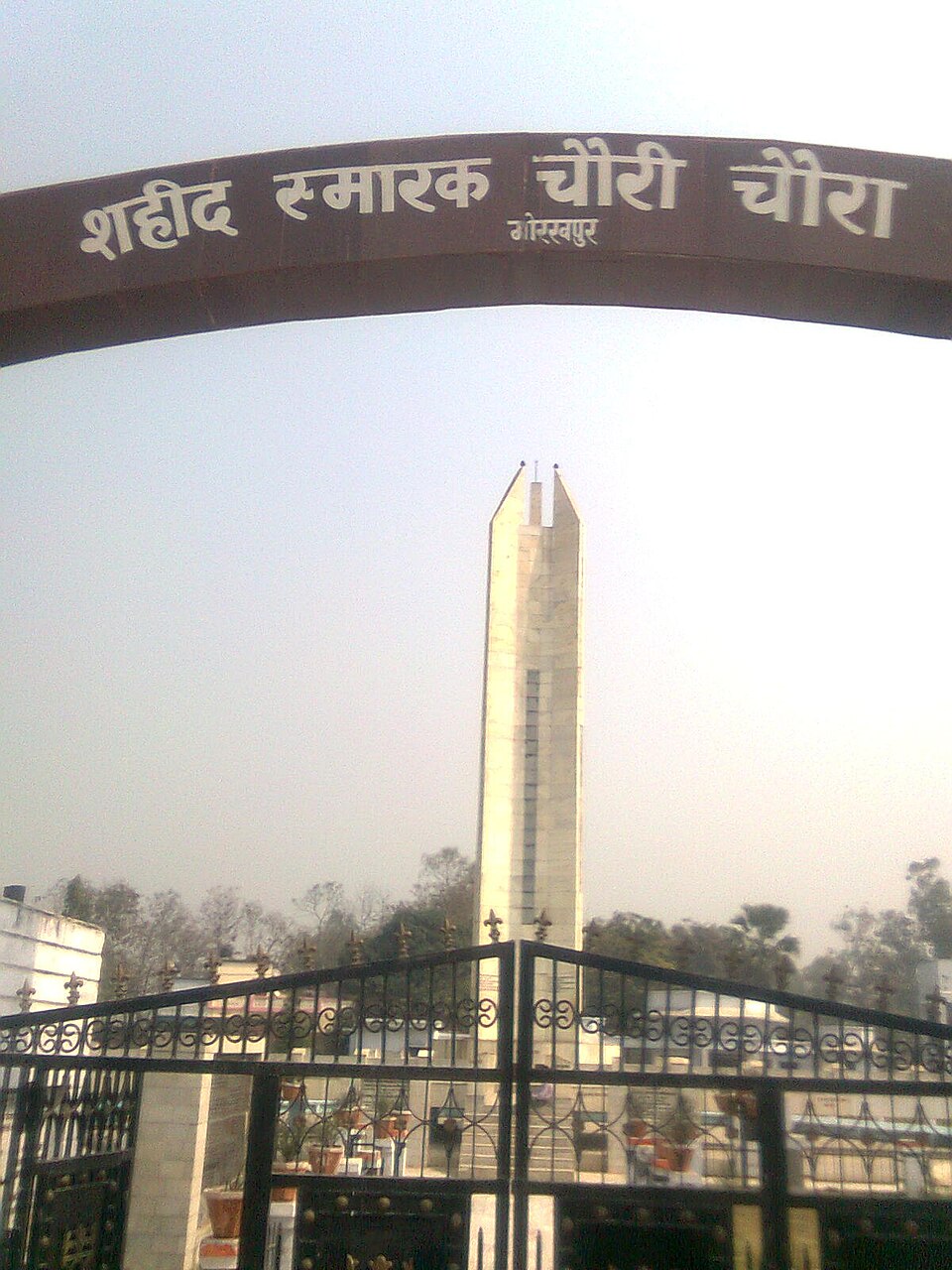
Correct: C, Khilafat issue. Struggle–Truce–Struggle is Bipan Chandra's name for the Gandhian strategy of the national movement, and in India's Struggle for Independence he defines it as a strategy in which 'a phase of vigorous extra-legal mass movement and open confrontation with colonial authority was followed by a phase during which direct confrontation was withdrawn, and political concessions, if any, wrested from the colonial regime were worked and shown to be inadequate': the quieter phase being used for ideological work among the masses so that forces could be gathered 'for another mass movement at a higher level.' For that alternation to come into prominence there must be a first extra-legal mass movement, and that is Non-Cooperation, which was called not by the Congress but over the Khilafat wrong. The chain of dates is well documented. Gandhi attended the Khilafat Conference of November 1919 as a special invitee; in February 1920 he suggested to the Khilafat Committee that it adopt a programme of non-violent non-cooperation; on 9 June 1920 the Khilafat Committee, meeting at Allahabad, unanimously accepted that suggestion and asked Gandhi to lead the movement; he gave the Viceroy notice in his letter of 22 June 1920, asserting the right 'from time immemorial of the subject to refuse to assist a ruler who misrules'; and the movement was launched formally on 1 August 1920, the day Tilak died. The Congress followed rather than led: its special session at Calcutta in September 1920 adopted non-cooperation as its own, and the annual session at Nagpur that December closed the argument. The rest of the cycle then ran exactly as the model predicts: the struggle phase ended when Gandhi withdrew the movement on 12 February 1922, after the violence at Chauri Chaura on 5 February; the truce phase filled the years 1922–29 with Swarajist council entry, the Simon boycott and the Nehru Report; and the second struggle phase opened with Civil Disobedience in 1930. One honest caveat: 'came into prominence' is the setter's phrase and not a historian's, so what is really being asked is which call opened the first S-T-S cycle, and on the reading both derivations took that is the Khilafat–Non-Cooperation call of 1920. Be aware that Chandra never writes 'came into prominence', and the one place he sets S-T-S beside a 'call' is his discussion of Quit India, so option (a) is a live alternative rather than a simple trap, and this answer is ours rather than his.
Why the others are wrong
- (a)Quit India: The strongest trap, because Quit India genuinely belongs to this story, but at the far end of it. Chandra writes that 'the culmination of this strategy of S-T-S came with a call for Quit India and the achievement of independence.' Culmination is the opposite of coming into prominence: August 1942 is twenty-two years after the alternation began, and the 'Do or Die' pledge contemplated no truce phase at all.
- (b)Swadeshi Movement: The Swadeshi and Boycott movement of 1905–08, against Curzon's partition of Bengal, was a mass movement but a pre-Gandhian one: Gandhi returned to India only in 1915 and led no all-India campaign before 1920. It has no planned withdrawal and no truce phase to alternate with; it ebbed under repression and the Surat split of 1907, which is a collapse, not a strategy.
- (d)Boycott of Simon Commission: The 1927–28 Simon boycott sits inside the first truce phase rather than at the strategy's origin. By then the alternation was already five years old: Non-Cooperation had been withdrawn in February 1922 and Congressmen were working the councils through the Swaraj Party. The boycott is an illustration of the intense agitational work Chandra says fills a truce phase: the strategy in operation, not the call that established it.
Concept
Struggle–Truce–Struggle is a piece of historians' vocabulary rather than a slogan any leader used, and it belongs to the Marxist-nationalist school associated with Bipan Chandra. Its claim is that the Gandhian national movement was not one continuous agitation but a deliberate alternation: an extra-legal mass phase in which laws are broken, followed by a 'passive' phase in which confrontation is suspended, whatever reforms the Raj has conceded are worked and exposed as inadequate, and cadres are recruited and trained inside the legal framework: then a fresh mass phase at a higher level. Chandra insists the process was 'an upward spiralling one', with each stage an advance on the last, and that the passive phases were political phases too, not surrender: as Gandhi put it, 'suspension of civil disobedience does not mean suspension of war.' The model exists partly because it was contested. Jawaharlal Nehru rejected it in the mid-1930s and counterposed what Chandra abbreviates as S-V (struggle until victory) arguing that freedom could not be won 'bit by bit' and that any withdrawal meant 'some form of compromise with imperialism.'
To reason to the answer, first fix what the question is actually asking: not which movement was the biggest or the last, but which call is the point at which the alternation first becomes visible. That immediately re-sorts the four options into a timeline (Swadeshi 1905, Khilafat–Non-Cooperation 1920, Simon boycott 1927–28, Quit India 1942) and the strategy can only 'come into prominence' at the beginning of a cycle, not in its middle or at its end. Then apply the one structural test that separates the survivors: an S-T-S phase must be a mass, extra-legal struggle that was deliberately called off, because without the withdrawal there is no truce and therefore no alternation. Non-Cooperation is the only one of the four that fits: launched 1 August 1920 on the Khilafat call, withdrawn by Gandhi's own decision on 12 February 1922. Swadeshi predates Gandhi's leadership entirely; the Simon boycott happened during a truce, not as one; Quit India ended the sequence rather than starting it. The deeper reason the Khilafat is the right label is that in 1920 the Khilafat Committee moved first and the Congress followed three months later, which is precisely why the call is remembered as a Khilafat call rather than a Congress one.
Key facts
- Bipan Chandra's definition: under S-T-S a phase of 'vigorous extra-legal mass movement and open confrontation with colonial authority' alternates with a phase in which confrontation is withdrawn and concessions are worked and shown to be inadequate
- Trigger of the Khilafat agitation: the Treaty of Sèvres, signed with Turkey in May 1920, confirmed the dismemberment of the Ottoman Empire and the Caliph's loss of control over the holy places
- 9 June 1920: the Khilafat Committee at Allahabad unanimously accepted Gandhi's February 1920 suggestion of non-violent non-cooperation and asked him to lead it
- Non-Cooperation was launched formally on 1 August 1920, after the notice Gandhi gave the Viceroy in his letter of 22 June 1920; the Congress adopted it at the Calcutta special session in September 1920 and confirmed it at Nagpur in December
- The first truce began on 12 February 1922, when Gandhi withdrew the movement through the Bardoli resolution of the Congress Working Committee, a week after the Chauri Chaura violence of 5 February 1922
- Chandra calls Quit India the 'culmination' of S-T-S, and records that Nehru rejected the strategy in the 1930s in favour of S-V: struggle until victory, with no withdrawal
Study next
Common traps
- Reading 'came into prominence' as 'reached its peak' and answering Quit India: Chandra calls Quit India the culmination of the strategy, not its beginning
- Assuming the Congress issued the 1920 call; the Khilafat Committee accepted non-cooperation on 9 June 1920, three months before the Congress special session at Calcutta
- Treating the Swadeshi movement as an early Gandhian phase: it ran in 1905–08, before Gandhi had returned to India
BPSC asks the freedom struggle through named labels and coined phrases: a historian's term, a slogan, a nickname, and expects you to attach it to one movement in a single line, as here. UPSC almost never names the framework; it tests the same period through statement sets on what the Non-Cooperation programme actually contained, through assertion–reason pairs on Khilafat and Hindu–Muslim unity, and through the consequences of withdrawal, so the dates and the content of each phase matter more than the vocabulary.
Related PYQs
Consider the following statements in respect of the Non-Cooperation Movement: I. The Congress declared the attainment of 'Swaraj' by all legitimate and peaceful means to be its objective. II. It was to be implemented in stages with civil disobedience and non-payment of taxes for the next stage only if 'Swaraj' did not come within a year and the Government resorted to repression. Which of the statements given above is/are correct?
- (a) I only
- (b) II only
- (c) Both I and II
- (d) Neither I nor II
Answer(c) Both I and II
The same phased logic, asked from inside the programme rather than by its label: statement II is the staging principle that makes Non-Cooperation the first S-T-S cycle, with the harder forms of struggle held back for a later phase.
Assertion (A): The Khilafat movement did bring the urban Muslims into the fold of the National Movement. Reason (R): There was a predominant element of anti-imperialism in both the National and Khilafat Movements.
- (a) Both A and R are true, and R is the correct explanation of A
- (b) Both A and R are true, but R is NOT a correct explanation of A
- (c) A is true, but R is false
- (d) A is false, but R is true
Answer(a) Both A and R are true, and R is the correct explanation of A
Why the Khilafat call, and not a Congress call, is the answer to the 2024 question: it was the Khilafat issue that supplied the mass base for the first struggle phase, on a shared anti-imperialist plank.
“We shall either free India or die in the attempt …” who said it?
- (a) Jawaharlal Nehru
- (b) Mahatma Gandhi
- (c) Abul Kalam Azad
- (d) V.D. Savarkar
Answer(b) Mahatma Gandhi
The 71st tested the other end of the same sequence: the Quit India pledge of 8 August 1942, which is exactly the phase that admits no truce and therefore cannot be where an alternating strategy came into prominence.
Practice
- practice, not a real PYQ
On which date was the Non-Cooperation Movement formally launched ?
- (a)9 June 1920
- (b)1 August 1920
- (c)4 September 1920
- (d)26 December 1920
Answer(b) 1 August 1920: the day Gandhi's notice to the Viceroy expired, and the day Tilak died; 9 June 1920 was the Khilafat Committee's acceptance at Allahabad, and the Congress sessions at Calcutta and Nagpur came later that year. - practice, not a real PYQ
The Non-Cooperation Movement was withdrawn by Mahatma Gandhi through a resolution passed at
- (a)Bardoli
- (b)Chauri Chaura
- (c)Nagpur
- (d)Ahmedabad
Answer(a) Bardoli: the Congress Working Committee met there on 12 February 1922 and passed the resolution suspending the movement; Chauri Chaura in Gorakhpur district was the site of the 5 February violence that prompted it.