
Who among the following introduced the Persian festival Nowruz in India?
- (a)Firuz Shah Tughlaq
- (b)Alauddin Khilji
- (c)Balban
- (d)Iltutmish
Answer
Why
Correct: C, Balban. Ghiyasuddin Balban, Sultan of Delhi from 1266 until his death on 13 January 1287, is credited with bringing the Persian new-year festival of Nowruz into the Delhi court. It was not a private taste but one plank of a deliberate programme. Balban had risen as a Turkish slave of the Ilbari tribe, had been one of the Turkan-i-Chihalgani (the Forty) and had governed as naib for the puppet Sultan Nasiruddin Mahmud from 1246. Ziauddin Barani, whose Tarikh-i-Firuz Shahi is the source for almost everything we know about this reign, is blunt about the position: “During the twenty years of his reign Balban was Deputy of the State, and bore the title of Ulugh Khan. He, keeping Nasiru-d din as a puppet (namuna), carried on the government, and even while he was only a Khan used many of the insignia of royalty.” A man with that record needed to place the crown far above the nobility that had made him. He did it by importing the ceremonial of the Sasanian and post-Sasanian Persian monarchy wholesale: the doctrine of niyabat-i-khudai, kingship as vice-regency of God; the title Zill-i-Ilahi, Shadow of God; a fabricated descent from Afrasiyab, the legendary Turanian hero of the Shahnama; sijda, prostration before the sovereign, and paibos, the kissing of his feet; a grim, sober court; and the celebration of Nowruz, the Iranian new year of the spring equinox, as a state spectacle. Barani's picture of the result is worth having in his own words: “In the first and second year he assumed great state, and made great display of his pomp and dignity… Musulmans and Hindus would come from distances of one or two hundred kos to see the splendour of his equipage… No sovereign had ever before exhibited such pomp and grandeur in Dehli.” The austerity was as deliberate as the display (“He never joked with any one, nor did he allow any one to joke in his presence; he never laughed aloud, nor did he permit any one in his Court to laugh”) and a Sultan who had been “addicted to wine drinking” as a Khan “repented of all his former drunken bouts, gave up wine, and never mentioned the name of either wine or wine-drinkers” once crowned. There is contemporary corroboration for the festival itself, from a poet who was standing in that court. Amir Khusrau's first diwan, the Tuhfat-us-Sighar (verse of his sixteenth to nineteenth years) was written, in Elliot and Dowson's summary, “in the time of Sultan Balban”, and “most of the kasidas in this Diwan, which are not devoted to the Sultan, were written in celebration of new year festivals and the 'Ids, or addressed to the king's eldest son… Khan-i Shahid.” New-year festivals were court occasions at Balban's Delhi, grand enough to commission poetry for. Nowruz is the one item on Balban's list that is a festival rather than a protocol, which is exactly why it is the one BPSC picked.
Why the others are wrong
- (a)Firuz Shah Tughlaq: Firuz Shah Tughlaq (r. 1351–1388) genuinely did celebrate Nowruz, which is what makes this the strongest wrong option on the card: his own court historian Shams-i Siraj Afif devotes a chapter of the Tarikh-i-Firuz Shahi to festivals and records that “Sultan Firoz used to keep the 'ids, the Shab-i barat, and the Nau-ros (New Year's Day) as public festivals.” But he kept a festival that had been at the Delhi court for roughly a century; the question asks who introduced it. Firuz belongs to the Tughlaqs, three dynasties on, and his own record is one of works rather than ceremonial: the largest canal network any Sultan built, the towns of Firuzabad, Hisar, Fatehabad and Jaunpur, the Diwan-i-Bandagan for his corps of slaves, a free state hospital, a marriage-grant bureau, and the extension of jizya to Brahmins.
- (b)Alauddin Khilji: Alauddin Khalji (r. 1296–1316) inherited the Persianised court Balban had built rather than creating it: he took the throne nine years after Balban's death, with the ceremonial already in place, and added to it only the boast of Sikandar-i-Sani. His own innovations run the other way, towards control rather than magnificence: market-price regulation in Delhi with a shahna-i-mandi to enforce it, the dagh (branding of horses) and chehra (a descriptive roll of every soldier) to stop muster fraud, a paid standing army in place of iqta levies, and land revenue assessed at half the measured produce. A candidate reaches for him because he is the Sultanate ruler most often in the news of a syllabus, not because anything ties him to Nowruz.
- (d)Iltutmish: Iltutmish (r. 1211–1236) was the real consolidator of the Sultanate: he fixed the capital at Delhi, organised the iqta system, issued the silver tanka and copper jital, completed the Qutb Minar, built the Sultan Ghari tomb in 1231 and secured investiture from the Caliph in 1229, so a candidate who is looking for the ruler who “set the pattern” of the Delhi court can talk himself into this. But the elaborate Persian ritual came two generations later, and the give-away is a piece of the story that runs the opposite way: it was Iltutmish who created the Chihalgani, and Balban, having been one of the Forty himself, who destroyed it.
Concept
Nowruz is the Iranian new year, falling at the spring equinox around 20–21 March. It is far older than Islam, with roots in Zoroastrian Iran, and was the great state festival of the Achaemenid and Sasanian courts, where the king received tribute and gifts from every province. Persianate rulers across Central and South Asia carried it with them, and for a Turkish sultan in Delhi it was a ready-made instrument: a fixed day on which the whole nobility had to appear, offer nazr, and see the sovereign raised visibly above them. That is how Balban used it. Under later dynasties it became a fixture: the Mughals kept an elaborate Nowruz, and Jahangir's nineteen-day celebration is well documented, but its introduction to the Delhi court belongs to Balban's reign. The festival is today inscribed on UNESCO's Representative List of the Intangible Cultural Heritage of Humanity and is celebrated in India chiefly by Parsi and Shia communities. One thing worth knowing about how this period is known at all: nearly the whole picture of Balban's court comes from a single chronicler, Ziauddin Barani, writing in the 1350s, some seventy years after Balban died. Barani states his own evidence: what he wrote on Balban “he himself heard from his father and grandfather, and from men who held important offices under that sovereign.” That is testimony at one remove, and it shows: his king-list gives Balban a reign of “twenty years” while his narrative speaks of “the twenty-two years that Balban reigned”. Medieval Indian chronology is often like this, which is why exams test the ruler and the innovation rather than the exact figure.
Treat this as a question about a programme rather than a stray fact. If you know the cluster (sijda, paibos, Zill-i-Ilahi, niyabat-i-khudai, descent from Afrasiyab, a wine-free and laughter-free court, the barid intelligence network) then Nowruz simply joins the list, because it is Persian court ceremonial and nothing else on that list belongs to anyone else. The discriminating idea is motive. Each of the other three Sultans is famous for something structural, and none of them needed to import majesty: Iltutmish had legitimacy from Aibak and from the Caliph, Alauddin had conquest and a full treasury, Firuz had piety and public works. Balban alone was a former slave and a former member of the very oligarchy he had to crush, so the borrowed grandeur of the Persian monarchy was his cheapest weapon. If a Delhi Sultanate question is about awe, spectacle or prostration, the answer is almost always Balban. There is one refinement that separates a careful candidate from a lucky one. Firuz Shah Tughlaq really did celebrate Nowruz (his own historian says so in as many words) so “which Sultan celebrated Nowruz?” and “which Sultan introduced Nowruz?” have different answers, and BPSC has written the second. Read the verb. Introduce, first, originated and started all point back to the earliest ruler in the chain; kept, observed, celebrated and patronised do not. This paper has no published answer key, so the letter here is our own derived answer rather than the Commission's, but both independent derivations reached (c), and the Persian-ceremonial cluster is standard textbook ground.
Key facts
- Balban ruled as Sultan from 1266 to 13 January 1287, after twenty years as naib to Sultan Nasiruddin Mahmud from 1246, during which Barani says he “used many of the insignia of royalty” while still only a Khan
- His Persian court apparatus: Nowruz as a state festival, sijda (prostration) and paibos (kissing the feet), the title Zill-i-Ilahi and the doctrine of niyabat-i-khudai, and a claimed descent from Afrasiyab of the Shahnama
- He broke the Turkan-i-Chihalgani, the group of forty Turkish nobles created by Iltutmish, of which he had himself been a member
- Nowruz falls at the vernal equinox, about 20–21 March, and is pre-Islamic in origin, the chief state festival of Achaemenid and Sasanian Iran; it is on UNESCO's Intangible Cultural Heritage list
- Amir Khusrau's first diwan, the Tuhfat-us-Sighar, written at Balban's court in his sixteenth to nineteenth years, consists largely of qasidas “in celebration of new year festivals and the 'Ids”: contemporary evidence that the new year was already a court occasion under Balban
- Shams-i Siraj Afif records that Firuz Shah Tughlaq (r. 1351–1388) “used to keep the 'ids, the Shab-i barat, and the Nau-ros (New Year's Day) as public festivals”: celebrating it a century later, not introducing it
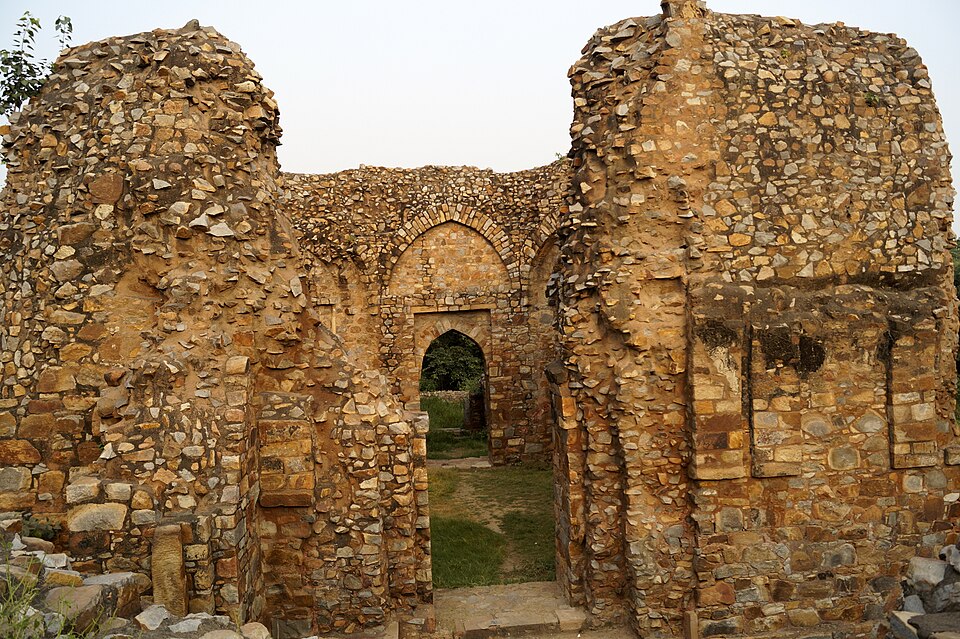
- Balban's tomb stands in the Mehrauli Archaeological Park, Delhi, and is credited with the earliest true arch built in India; his heir Prince Muhammad, Khan-i-Shahid, was killed fighting the Mongols in 1285
Study next
Common traps
- Reading “introduced” as “celebrated”: Firuz Shah Tughlaq's own chronicler records him keeping Nau-roz as a public festival, but he inherited it; the introducer is Balban, a century earlier
- Attributing Nowruz to the Mughals because Akbar and Jahangir celebrated it lavishly; they continued a court festival that had reached Delhi under Balban
- Crediting Balban with the branding of horses: dagh and chehra are Alauddin Khalji's, a pairing UPSC set as a trap in 2002
- Confusing Zill-i-Ilahi (Balban's title, Shadow of God) with Din-i-Ilahi (Akbar's syncretic order) or with Sikandar-i-Sani (Alauddin's boast)
BPSC asks the Delhi Sultanate as one-line attribution (who introduced this festival, who built this canal, who ruled longest) with the same four or five Sultans recycled as options, so the reliable preparation is a per-Sultan list of firsts rather than a narrative. UPSC prefers to bury the same fact inside a “which pair is correctly matched” or “which statement is correct” item, where the wrong attribution is planted deliberately, as it did with Balban and horse-branding in 2002. Both examiners are also fond of the introduced-versus-continued distinction, which on this topic is the whole difference between Balban and Firuz Shah Tughlaq.
Related PYQs
After consolidating his power, Balban assumed the grand title of
- (a) Tute-i-Hind
- (b) Kaisr-i-Hind
- (c) Zil-i-Ilahi
- (d) Din-i-Ilahi
Answer(c) Zil-i-Ilahi
The same programme, tested through its title instead of its festival. Zill-i-Ilahi, Shadow of God, and the celebration of Nowruz are two items from one borrowed Persian vocabulary of kingship, and a candidate who knows either should get both.
With reference to medieval Indian rulers, which one of the following statements is correct?
- (a) Alauddin Khalji first set up a separate Ariz's department
- (b) Balban introduced the branding system of horses of military
- (c) Muhammad bin Tughlaq was succeeded by his uncle to the Delhi throne
- (d) Firuz Tughlaq set up a separate department of slaves
Answer(d) Firuz Tughlaq set up a separate department of slaves
Exactly the skill this question needs (attach each innovation to the right Sultan) and it plants the mirror-image trap, crediting Balban with the horse-branding that belongs to Alauddin Khalji. Two of its four options are the same men BPSC offers here.
Who among the following rulers, ruled for the maximum period?
- (a) Alauddin Khilji
- (b) Muhammad bin Tughluq
- (c) Bahlol Lodi
- (d) Balban
Answer(c) Bahlol Lodi
The same shortlist of Sultans two years later, tested on reign length rather than court ceremonial, and it rewards the same reign dates: Balban 1266–1287 is 21 years as Sultan, against Bahlul Lodi's 38 from 1451 to 1489.
Practice
- practice, not a real PYQ
The practices of sijda (prostration) and paibos (kissing the feet of the Sultan) were introduced at the Delhi court by
- (a)Qutbuddin Aibak
- (b)Iltutmish
- (c)Balban
- (d)Alauddin Khilji
Answer(c) Balban: both were borrowed from Persian court ceremonial, alongside Nowruz and the title Zill-i-Ilahi, to raise the sovereign above the Turkish nobility. - practice, not a real PYQ
The Turkan-i-Chihalgani, the group of forty powerful Turkish nobles, was created by one Sultan and destroyed by another. Which pair is correct?
- (a)Created by Qutbuddin Aibak, destroyed by Iltutmish
- (b)Created by Iltutmish, destroyed by Balban
- (c)Created by Balban, destroyed by Alauddin Khilji
- (d)Created by Iltutmish, destroyed by Razia Sultan
Answer(b) Created by Iltutmish, destroyed by Balban: Balban had himself been one of the Forty and dismantled the group after 1266 to make the crown supreme.