
‘Ashta Pradhan’ was a Council of Ministers
- (a)in the Gupta administration
- (b)in the Chola administration
- (c)in the Maratha administration
- (d)in the Vijayanagara administration
Answer
Why
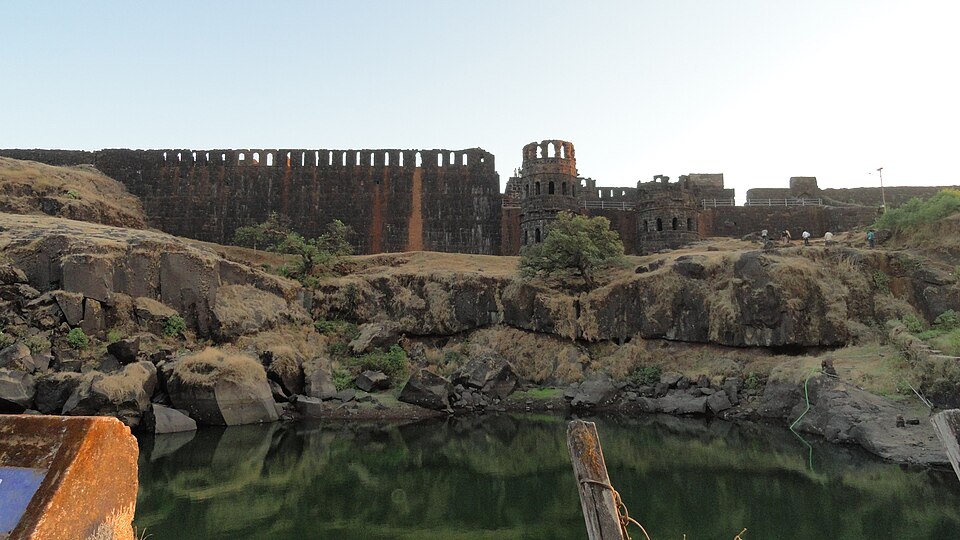
Correct: C, in the Maratha administration. ‘Ashta Pradhan’ means literally ‘the eight ministers’, and it is the council Shivaji formalised at his coronation at Raigad fort on 6 June 1674: the same occasion on which he issued coinage in his own name, the copper shivrai and the gold hon, and proclaimed a new Rajyabhisheka era. That is why historians treat the council as the birth of a Maratha bureaucracy rather than a durbar of favourites: each of the eight held a named department. The eight offices, with the Persian-derived alternative titles they replaced, were the Peshwa or Pantpradhan, chief minister for general administration, first held by Moropant Trimbak Pingle; the Amatya or Mujumdar, in charge of finance and the accounts of the state, the title conferred at the coronation on Ramchandra Pant; the Sachiv or Shurunavis, secretary, who drew up and scrutinised royal letters, held by Annaji Datto; the Mantri or Waqia-navis, keeper of the king's daily record and of intelligence; the Senapati or Sar-i-Naubat, commander-in-chief, of whom Hambirrao Mohite is the most celebrated; the Sumant or Dabir, foreign affairs and relations with other sovereigns; the Nyayadhish, chief justice for civil and criminal matters, held by Niraji Ravji; and the Panditrao, head of religious endowments and learning, held by Raghunath Pandit. Two features mark the council out. The designations were deliberately Sanskrit, displacing the Persian and Arabic administrative vocabulary the Deccan sultanates had used: the same impulse that produced the Rajyavyavaharakosha, the lexicon of about 1,344 state terms in ten thematic vargas compiled by that same Raghunath Pandit to supply Sanskrit equivalents for the Persian words of government. And the posts were working ones: with the sole exception of the Nyayadhish and the Panditrao, every pradhan also held a full-time military command, his deputy discharging the civil business in his absence. That combination (a fixed number, named departments, Sanskrit titles and serving commanders) is what makes the Ashta Pradhan a cabinet rather than a court, and it is the reason examiners keep returning to it.
Why the others are wrong
- (a)in the Gupta administration: Tempting because a Sanskrit-titled council of ministers sounds ancient rather than seventeenth-century. But the Gupta establishment is described in inscriptions by a quite different vocabulary: kumaramatyas as high functionaries, the sandhivigrahika or minister for war and peace (Harisena held the office under Samudragupta), the mahadandanayaka and mahabaladhikrita, with provinces called bhuktis under uparikas and districts called vishayas under vishayapatis. No Gupta source records a fixed council of eight, and the term Ashta Pradhan never appears.
- (b)in the Chola administration: The Chola state is famous for the opposite of a cabinet: its local self-government. The Uttaramerur inscriptions of Parantaka I, dated 919 and 921 CE, record how the brahmadeya sabha chose its variyams, or committees, by the kudavolai lot drawn from palm-leaf tickets in a pot; alongside the sabha stood the ur of ordinary villages and the nagaram of merchant towns. Central officers existed and were graded as perundanam and sirutanam, but there was no eight-member ministerial council and no Ashta Pradhan.
- (d)in the Vijayanagara administration: The closest miss, and the reason the option is on the paper. Vijayanagara genuinely did have a council of ministers advising the raya, along with the nayankara system under which military chiefs held amaram land in return for troops and the ayagar system of twelve hereditary village servants. But that council was neither fixed at eight nor known as the Ashta Pradhan, and the Vijayanagara empire ended in the sixteenth century, a hundred years before Shivaji's coronation.
Concept
The Ashta Pradhan is the administrative heart of what Shivaji built between 1645 and 1680, and its point is institutional rather than ceremonial. Shivaji's swaraj was carved out of territory held by Bijapur and then contested by the Mughals, so it needed a state apparatus that could outlive any one commander. The coronation of 6 June 1674 at Raigad, performed by Gaga Bhatt of Banaras after a long dispute among court Brahmins over whether a king could be crowned outside the Kshatriya order, was the moment that apparatus was declared: a sovereign era, sovereign coinage, and a council of eight departmental ministers. Below the council the kingdom was divided into prants under subhedars, with the land revenue assessed on measured land rather than farmed out to hereditary intermediaries, and forts placed under a deliberate triad of a havaldar, a sabnis and a sarnobat so that no single officer could hand one over. Outside the swaraj proper, Maratha claims on neighbouring territory were expressed as chauth, a levy of one-fourth of the revenue, and sardeshmukhi, an additional tenth claimed as the hereditary right of a paramount deshmukh. The council did not survive as a working cabinet: Sambhaji, who ruled from 1680 to 1689, cut its powers, and from 1714 the Peshwa appointed by Shivaji's grandson Shahu steadily engrossed authority until the office became hereditary in one Chitpavan family at Pune, leaving the other seven pradhans as court dignitaries with titles and no departments.
Two habits solve this question quickly. The first is to read the term itself: ashta is eight and pradhan is minister, and only one Indian polity is remembered for a council fixed at precisely eight. The second is to date the vocabulary. Ashta Pradhan, Peshwa, Senapati, Nyayadhish and Panditrao are Sanskrit administrative titles of a self-consciously Hindu kingship in the seventeenth-century Deccan; the Gupta and Chola states of the fourth to twelfth centuries used entirely different office-names, which an aspirant meets under separate headings. The single discriminating fact, if the reasoning has to come down to one, is the Peshwa. Everyone who has read any Maratha history knows the Peshwa, and the Peshwa is the first of the eight, so the council that contains him cannot belong to any other option. The option worth pausing on is Vijayanagara, because it did have ministers and did have a layered administration; the discriminator there is that its council had no fixed number and no such name. A candidate who is short of time should also notice how familiar the wording feels. UPSC set almost exactly this sentence, with the same four administrations offered, in its 1995 prelims, and the answer was the same; the 69th CCE simply moved the correct option from the fourth slot to the third.
Key facts
- The Ashta Pradhan was formalised at Shivaji's coronation at Raigad fort on 6 June 1674; a second coronation followed on 24 September 1674, performed by the tantric priest Nischal Puri Goswami after the first was declared to have fallen under inauspicious stars.
- The eight portfolios: Peshwa/Pantpradhan (chief minister), Amatya/Mujumdar (finance), Sachiv/Shurunavis (royal correspondence), Mantri/Waqia-navis (household record and intelligence), Senapati/Sar-i-Naubat (commander-in-chief), Sumant/Dabir (foreign affairs), Nyayadhish (chief justice) and Panditrao (religious affairs).
- Only the Nyayadhish and the Panditrao were exempt from military duty; the other six pradhans held field commands, with deputies running their departments in their absence.
- The coronation also produced Shivaji's own coinage (the copper shivrai and the gold hon) and a new Rajyabhisheka calendar era, the marks of a sovereign rather than a subordinate deshmukh.
- Maratha revenue claims outside the swaraj were chauth, one-fourth of the assessed revenue, and sardeshmukhi, a further one-tenth claimed as the due of a hereditary paramount deshmukh.
- The Sanskritising of the state vocabulary was a documented project: the Rajyavyavaharakosha, compiled by Raghunath Pandit, gives roughly 1,344 Sanskrit equivalents for Persian and Arabic administrative terms, arranged in ten vargas.
- The council's decline is datable: Sambhaji (1680–1689) reduced its powers, and from 1714, under Shahu, the Peshwa's office passed to a single family and became hereditary, after which the Ashta Pradhan was never revived as a working cabinet.
Study next
Common traps
- Assuming the Peshwa was always the head of the Maratha state: under Shivaji he was one of eight departmental ministers appointed by the Chhatrapati; hereditary Peshwa supremacy begins only under Shahu after 1714
- Confusing the Ashta Pradhan with the Vijayanagara council of ministers, which existed but had neither a fixed strength of eight nor this name
- Treating the Sanskrit designations as ancient: they are seventeenth-century coinages, adopted precisely to displace the Persian administrative vocabulary of the Deccan sultanates
BPSC asks this area as one-line identification (name the administration, name the portfolio, name the levy) and it recycles wording from older UPSC papers, as this question does almost verbatim from 1995. UPSC has moved on to the analytical form: which minister held which department, what distinguished chauth from sardeshmukhi, who reorganised the administration after Sambhaji. Learn the eight offices with their portfolios rather than as a list of names, because the portfolio is what both examiners actually test.
Related PYQs
Ashtapradhan was a Council of Ministers
- (a) in the Gupta Administration
- (b) in the Chola Administration
- (c) in the Vijayanagar Administration
- (d) in the Maratha Administration
Answer(d) in the Maratha Administration
The same question, twenty-eight years earlier, with the same four administrations on offer: only the position of the correct option changed. Worth attempting as a reminder that a state commission's ancient-and-medieval section often reuses an old UPSC stem outright.
The member of Shivaji’s Astha Pradhana who looked after foreign affairs was
- (a) Peshwa
- (b) Sachiv
- (c) Pandit Rao
- (d) Sumant
Answer(d) Sumant
The harder version of the same topic: not which state had the Ashta Pradhan, but which of the eight held which portfolio. The Sumant, also called the Dabir, handled relations with other sovereigns: the detail that separates candidates who memorised eight names from those who learnt eight departments.
Practice
- practice, not a real PYQ
Shivaji's Ashta Pradhan was formally constituted on the occasion of his coronation at which fort?
- (a)Sindhudurg
- (b)Raigad
- (c)Pratapgad
- (d)Torna
Answer(b) Raigad: Shivaji was crowned there on 6 June 1674 by Gaga Bhatt, and the eight-minister council, his own coinage and the Rajyabhisheka era all date from that occasion. Sindhudurg was his first marine fort, Pratapgad the site of the encounter with Afzal Khan in 1659, and Torna the first fort he took. - practice, not a real PYQ
In Shivaji's Ashta Pradhan, the minister who held charge of finance and the accounts of the state was designated:
- (a)Peshwa
- (b)Amatya
- (c)Nyayadhish
- (d)Panditrao
Answer(b) Amatya: also called the Mujumdar, he kept the accounts and finances; the Peshwa headed general administration, the Nyayadhish was chief justice and the Panditrao looked after religious and charitable affairs.