
Which of the following animals was not known to the people of the Indus Valley Civilization?
- (a)Bull
- (b)Horse
- (c)Elephant
- (d)None of the above
Answer
Why
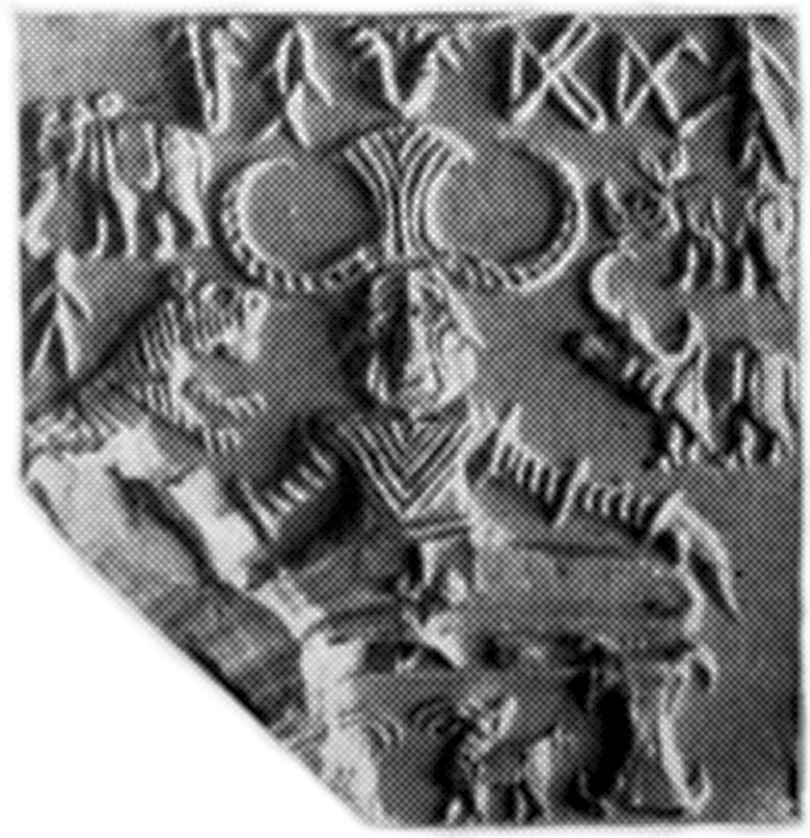
Correct: B, Horse. Two of the three animals named are among the best-attested creatures in the entire Harappan record. The bull is everywhere: the single-horned bovine facing a standard (the so-called unicorn) is the commonest device on Indus seals, the humped zebu and the short-horned bull appear on seals of their own, and bulls recur as terracotta figurines and on painted pottery. The elephant is attested too, on seals and in terracotta, and it is one of the four large animals ranged around the seated horned figure on the famous 'Pashupati' seal from Mohenjo-daro, alongside the tiger, the rhinoceros and the buffalo. The horse is the conspicuous absentee. No seal, sealing, terracotta or painted vessel in the Harappan corpus has been accepted as a depiction of a horse: a striking silence in a civilisation that engraved almost every large animal it lived beside, and one that becomes sharper when you set it against the Rigveda, where the ashva is central to ritual, poetry and warfare. Two independent lines of evidence point the same way, and neither is archaeology. Ancient-genome work published in Nature in October 2021 by Librado and colleagues, drawing on 273 ancient horse genomes, places the homeland of the modern domestic horse in the Western Eurasian steppes around the lower Volga–Don, and finds that these horses expanded rapidly across Eurasia only from about 2000 BC, moving together with Sintashta spoke-wheeled chariots; the same study shows that the earlier Botai horses of Central Asia, around 3500 BC, are not the ancestors of the modern domestic horse at all, so there is no older lineage to appeal to. The mature Harappan phase, roughly 2600 to 1900 BCE, is largely earlier than that expansion. The human genetic clock agrees: Narasimhan and colleagues, sequencing 523 ancient humans for Science in 2019, date the arrival of Steppe pastoralist ancestry in South Asia to about 4,000 years ago, and Shinde and colleagues, reporting the one Harappan genome yet sequenced (from Rakhigarhi) in Cell the same year, found it carried little if any Steppe ancestry. Horses, chariots and Steppe people all arrive on the same late clock, and it runs after the Harappan cities were built. Where the answer is finely balanced: the stem says 'not known', which is a stronger claim than 'not depicted'. Sándor Bökönyi identified equid remains from Surkotada in Kutch, dated to the late third millennium BC, as true horse in South Asian Studies in 1997, and Richard H. Meadow published a comment contesting that identification in the very same volume. The difficulty is genuine, because Kutch is home to another equid: the Indian wild ass or khur, Equus hemionus khur, which still survives in the Little Rann only a short distance from Surkotada, and separating half-ass from true horse on fragmentary teeth and limb bones is notoriously contested among faunal specialists. The dispute has never been settled. The answer stands because the mainstream reading of the evidence, and the position every standard syllabus takes, is that the horse was not part of the Harappan world.
Why the others are wrong
- (a)Bull: The opposite of absent. Bovines dominate Harappan seal iconography (the unicorn device is the single commonest motif in the corpus, and the humped zebu and short-horned bull have seals of their own) and bulls also survive as terracotta figurines and as the draught animals of the terracotta model carts recovered from Harappan sites, which are among the earliest wheeled-vehicle models known from the subcontinent. That last point is worth holding, because it answers the unspoken half of this question: the Harappans did have carts and wheels, and the animal in the yoke was the ox, not the horse. If any animal can be said to be the signature of the civilisation's art, it is the bull.
- (c)Elephant: Also well attested, and on two independent kinds of evidence rather than one. Elephants appear on Indus seals and in terracotta, and one stands among the animals surrounding the seated horned figure on the 'Pashupati' seal from Mohenjo-daro; separately, worked ivory (combs, rods, gaming pieces and inlay) is a standard class of Harappan find, which means the animal was not merely seen but used. A candidate may pick this option on the vague sense that elephants belong to the later Indian history of war elephants and Mauryan armies, but that is a fact about how the animal was used, not about whether it was known, and the Harappans plainly knew it.
- (d)None of the above: This option only wins if all three animals were known, and it is the honest refuge for a candidate persuaded by the Surkotada horse-bone claim, or by the handful of ambiguous terracotta figurines from Harappan sites that have occasionally been read as horses. Both readings run into the same problem. The Surkotada identification was contested in print in the same journal issue that carried it and has never been resolved, and the region's own wild equid, the khur, is a live alternative explanation for equid bone in Kutch; the figurines are too crude to bear the weight placed on them, which is why no standard corpus lists a Harappan horse depiction. A contested minority reading cannot carry an exam answer against a securely attested one. Since the bull and the elephant are attested on both iconography and material remains and the horse is attested on neither, a positive option exists and 'None of the above' fails.
Concept
What we know of Harappan animal life comes from two independent bodies of evidence, and they are not equally strong. The first is iconography: the animals carved on the steatite seals, modelled in terracotta and painted on pottery, which tells us what the Harappans thought worth representing. The second is faunal remains, the actual bones recovered from excavated levels, which tell us what they lived among, worked and ate. The bull, the elephant, the rhinoceros, the tiger, the buffalo, the goat and the antelope appear in both records. The horse appears convincingly in neither, and the argument over the handful of contested equid bones has run for decades for two reasons. One is technical: several equids lived in the region, including the Indian wild ass, and identifying a species from broken teeth and limb fragments is among the hardest calls a faunal analyst makes, so a single disputed assemblage cannot settle anything. The other is that the stakes are not really zoological. The horse is the defining animal of Vedic culture, so its presence or absence at Harappan sites became the hinge of the wider debate over whether the Vedic people were the Harappans' descendants or later arrivals, which is why a few bones from one small site in Kutch have generated a literature far out of proportion to their number.
Answer this by elimination on strength of evidence rather than by trying to recall a list. Ask of each animal whether you can picture it in the Harappan material, and two of the three answer themselves: the bull is the emblematic seal animal and the elephant sits on the best-known seal of all. The horse is the one you cannot place, and that gap is the answer. The single discriminating fact is that no accepted depiction of a horse exists anywhere in the Harappan corpus, in a civilisation that engraved almost every other large animal it lived beside. What turns that from a hunch into a confident answer is that three independent clocks now agree: the archaeological silence, the horse-genome date of about 2000 BC for the spread of the modern domestic horse, and the human-genome date of about 4,000 years ago for the arrival of Steppe ancestry in South Asia. All three fall at or after the end of the mature Harappan phase. Two cautions still belong with the answer. First, absence of evidence is being read as evidence of absence, which is why this question is finely balanced rather than airtight: the Surkotada equid bones identified as horse in 1997 were contested in the same volume and the argument continues. Second, the option 'None of the above' is doing real work here: it is where the minority reading of the evidence would send you, so a candidate who has read about Surkotada and stops there can talk themselves out of the intended answer.
Key facts
- The single-horned 'unicorn' before a standard is the commonest device on Indus seals, and the humped zebu and short-horned bull carry seals of their own: bulls also survive as terracotta figurines and on painted pottery
- The elephant appears on Indus seals and in terracotta, and is one of four large animals (with the tiger, rhinoceros and buffalo) surrounding the seated horned figure on the 'Pashupati' seal from Mohenjo-daro
- No seal, sealing, terracotta or painted vessel in the Harappan corpus has been accepted as a depiction of a horse, although the ashva is central to the Rigveda
- Librado and colleagues, Nature 598 (20 October 2021), pp. 634–640, used 273 ancient horse genomes to place the modern domestic horse's homeland in the Western Eurasian steppes near the lower Volga–Don and date its rapid spread across Eurasia to about 2000 BC, alongside Sintashta spoke-wheeled chariots: later than most of the mature Harappan phase of about 2600–1900 BCE; the same study shows the earlier Botai horses of about 3500 BC are not ancestral to modern domestic horses
- Narasimhan and colleagues, Science 365 (2019), sequenced 523 ancient humans and dated the spread of Steppe pastoralist ancestry into South Asia to roughly 4,000 years ago; Shinde and colleagues, Cell 179 (2019), reported the single sequenced Harappan genome, from Rakhigarhi, and found it carried little if any Steppe ancestry
- The contrary claim rests on Sándor Bökönyi's identification of late third-millennium BC equid remains from Surkotada, Kutch, as horse in South Asian Studies 13 (1997), pp. 297–307, which Richard H. Meadow contested in a comment at pp. 308–315 of the same volume
- Kutch has its own wild equid: the Indian wild ass or khur, Equus hemionus khur, whose surviving population lives in the Little Rann of Kachchh near Surkotada, which is why identifying equid bone in this region as true horse rather than half-ass is a genuinely contested call
Study next
Common traps
- Treating 'not depicted' and 'not known' as the same claim: the stem uses the stronger wording, and the Surkotada bones are the reason it is arguable at all
- Being drawn to 'None of the above' after reading about the Surkotada horse-bone claim without also learning that it was contested in print in the same journal issue
- Assuming the cow appears wherever the bull does: UPSC has asked this precise point, and the answer is that the bull is everywhere on Harappan seals while the cow is not
BPSC asks Harappan material as a compact identification with an escape hatch: three animals and a 'None of the above', so the setter is testing confidence as much as content. UPSC works the same evidence through comparison and through negatives: which animal was not represented on Harappan seals and terracotta, or which features distinguish Rigvedic Aryans from Indus Valley people, where the horse recurs as one statement among several. Both reward learning the Harappan animal list as attested and unattested sets rather than as a single fact.
Related PYQs
Which one of the following animals was NOT represented on the seals and terracotta art of the Harappan culture?
- (a) Cow
- (b) Elephant
- (c) Rhinoceros
- (d) Tiger
Answer(a) Cow
The same question, and a warning. UPSC asked which animal is missing from Harappan seals and the answer was the cow, not the horse: the bull is ubiquitous while the cow is absent. Two different animals are 'the missing one' depending on how the question is framed, so learn the attested and unattested lists rather than a single remembered answer.
With reference to the difference between the culture of Rigvedic Aryans and Indus Valley people, which of the following statements is/are correct ? 1. Rigvedic Aryans used the coat of mail and helmet in warfare whereas the people of Indus Valley Civilization did not leave any evidence of using them. 2. Rigvedic Aryans knew gold, silver and copper whereas Indus Valley people knew only copper and iron. 3. Rigvedic Aryans had domesticated the horse whereas there is no evidence of Indus Valley people having been aware of this animal. Select the correct answer using the code given below :
- (a) 1 only
- (b) 2 and 3 only
- (c) 1 and3 only
- (d) 1,2 and3
Answer(c) 1 and3 only
Statement 3 is this BPSC question in UPSC's words: the Rigvedic people had the domesticated horse and there is no evidence the Indus Valley people knew it. Seeing it inside a comparison shows why the point matters: the horse is one of the markers used to separate the two cultures, not a stray fact about animals.
Practice
- practice, not a real PYQ
The single-horned animal shown facing a standard, the commonest motif on Indus Valley seals, is usually referred to as the:
- (a)Unicorn
- (b)Zebu
- (c)Nandi
- (d)Gaur
Answer(a) Unicorn: the conventional name for the single-horned bovine before a standard, the most frequently occurring device in the Harappan seal corpus. The zebu, the humped bull, is a separate and less common seal type. - practice, not a real PYQ
Which of the following animals is depicted on the 'Pashupati' seal found at Mohenjo-daro?
- (a)Horse
- (b)Camel
- (c)Rhinoceros
- (d)Lion
Answer(c) Rhinoceros: the seated horned figure is flanked by an elephant, a tiger, a rhinoceros and a buffalo. No horse appears on this or any other Harappan seal.