
Which country has recently reaffirmed Arunachal Pradesh as an integral part of India?
- (a)USA
- (b)Australia
- (c)Germany
- (d)Russia
Answer
Why
Correct: A, USA. On 16 February 2023 Senators Jeff Merkley, Bill Hagerty and John Cornyn introduced Senate Resolution 75 in the 118th Congress, titled 'Reaffirming the state of Arunachal Pradesh as Indian territory and condemning the People's Republic of China's provocations in South Asia'. Its first operative clause states that the Senate 'unequivocally recognizes the state of Arunachal Pradesh as an integral part of the Republic of India and supports the country's sovereignty and territorial integrity': the exact formulation the question uses. Two of its recitals matter even more than the resolution itself, because they record what American policy already was: that 'since the Sino-Indian war of 1962, the United States has recognized the McMahon Line as the international boundary between the People's Republic of China and the Indian state of Arunachal Pradesh', and that the United States recognises Arunachal Pradesh 'not as disputed territory but as an integral part of the Republic of India, and this recognition is not qualified in any way'. That is why the stem says 'reaffirmed' rather than 'recognised': the position dates from the 1960s and was being restated. What prompted the restatement is set out in the text: China's Ministry of Civil Affairs published a map in December 2021 assigning Mandarin names to 15 geographic features in Arunachal Pradesh (eight residential settlements, four mountain peaks, two rivers and one mountain pass) and in December 2022 Chinese and Indian troops clashed along the Line of Actual Control in the State, the biggest confrontation in the Eastern Sector in six years. The resolution also condemns China's construction of two villages close to the LAC, commends India's border-village development through the Vibrant Villages programme, and notes India's G20 presidency in 2023. One honest caveat a student should carry: a Senate resolution is an expression of that chamber's sense, not a treaty or a statute, and this one was referred to the Committee on Foreign Relations. Its significance is as a public, dated restatement of the American position, which is exactly what the question is testing.
Why the others are wrong
- (b)Australia: Australia is India's Quad partner alongside the United States and Japan, signed the Economic Cooperation and Trade Agreement with India in 2022, and is a natural guess for any 'friendly country backs India against China' question. But Canberra's public line on the India-China frontier is the standard one of urging restraint and peaceful resolution; it has issued no formal declaration that Arunachal Pradesh is an integral part of India. The 2023 reaffirmation in the news, and the recognition dating to 1962, are American.
- (c)Germany: Germany is India's largest trading partner in Europe and the two governments hold Inter-Governmental Consultations at head-of-government level, so the relationship is close, but it runs on trade, green hydrogen, migration and mobility, not on the Himalayan boundary. European states generally avoid taking a position on the sovereignty of specific disputed territories in Asia. Nothing equivalent to Senate Resolution 75 exists on the German side.
- (d)Russia: This is the trap for a candidate who reasons from friendship rather than from the record. Russia is India's oldest defence partner, but it is also China's closest strategic partner, and Moscow has consistently declined to take sides on the India-China boundary, treating it as a bilateral matter for the two neighbours. Precisely because it will not choose between Delhi and Beijing, Russia has never described Arunachal Pradesh as an integral part of India in the way the US Senate resolution does.
Concept
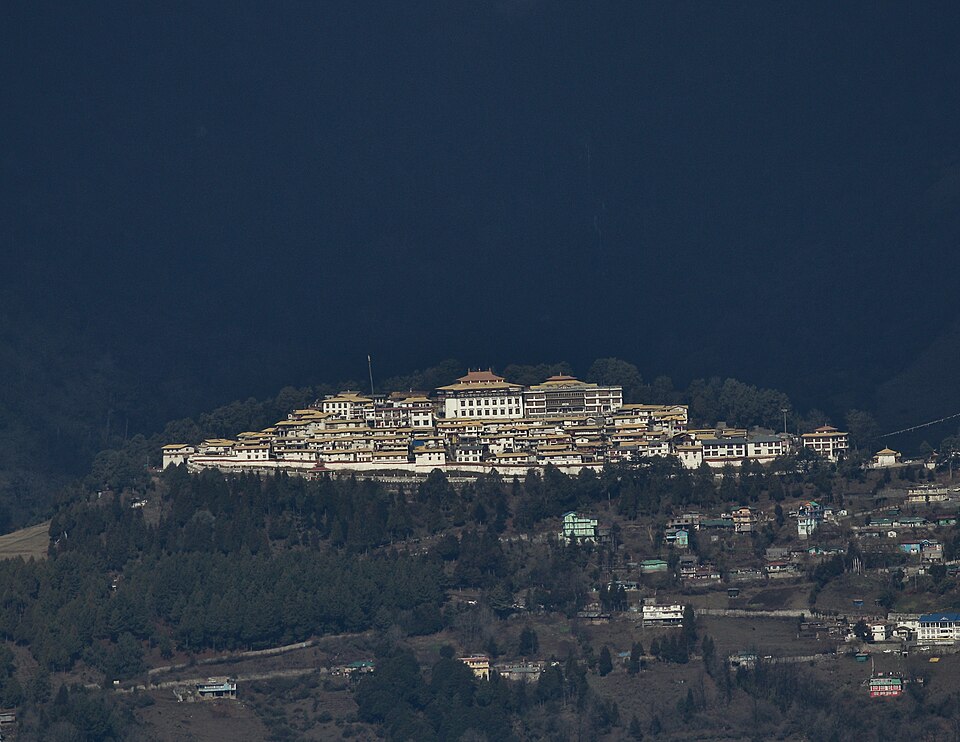
Arunachal Pradesh is claimed in full by China, which calls it 'Zangnan' or South Tibet. The boundary India relies on is the McMahon Line, drawn at the Simla Convention of 1913-14 between British India and Tibet and named after the British negotiator Henry McMahon; China refused to ratify it and rejects it to this day. The dispute became a war in 1962, after which the two armies settled along the Line of Actual Control: a line of control by mutual perception rather than a demarcated border, which is why patrols still collide. China presses its claim through non-military instruments as well: it has issued successive lists of Mandarin place names inside Arunachal Pradesh, objected to visits by the Dalai Lama and by Indian leaders, and refused ordinary visas to residents of the State, offering stapled visas instead. Tawang is the emotional centre of the claim: it holds the Tawang Monastery, the largest in India, and is the birthplace of the sixth Dalai Lama, Tsangyang Gyatso, which is why Beijing links the territory to its authority over Tibetan Buddhism.
Work from the word 'reaffirmed'. It implies a country that had already taken a position and was repeating it, which immediately favours a state with a long, documented stance rather than one making a fresh gesture. Only one of the four has that: the United States has treated the McMahon Line as the international boundary since the 1962 war, and the 2023 Senate resolution says so in terms. Then apply the test of interest. Germany and Australia have substantial partnerships with India but neither takes public positions on the sovereignty of contested Himalayan territory; Russia is the sharper trap, because a candidate who ranks countries by warmth towards India will reach for it, forgetting that Moscow's relationship with Beijing makes neutrality on this boundary a fixed policy. A further discriminator is the type of instrument. Recognition of territory is the sort of thing a legislature or a foreign ministry puts on the record in writing, and the United States, with an active Congress that passes country-specific resolutions, is the system most likely to generate a citable document. Candidates who track India's external affairs by reading only summit outcomes miss these; the resolution was not a summit product at all.
Key facts
- Senate Resolution 75 of the 118th Congress was introduced on 16 February 2023 by Senators Merkley, Hagerty and Cornyn and referred to the Committee on Foreign Relations; clause 1 'unequivocally recognizes the state of Arunachal Pradesh as an integral part of the Republic of India'
- The resolution records that the United States has recognised the McMahon Line as the international boundary between China and Arunachal Pradesh since the Sino-Indian war of 1962, and that this recognition 'is not qualified in any way'
- In December 2021 China's Ministry of Civil Affairs published a map assigning Mandarin names to 15 features in Arunachal Pradesh: 8 residential settlements, 4 mountain peaks, 2 rivers and 1 mountain pass
- In December 2022 Indian and Chinese troops clashed along the Line of Actual Control in Arunachal Pradesh, the biggest such incident in the Eastern Sector in six years; the earlier Galwan Valley clash of June 2020 in the Western Sector killed 20 Indian soldiers
- The McMahon Line was drawn at the Simla Convention of 1913-14 between British India and Tibet; China did not ratify it and claims the territory as 'South Tibet'
- Arunachal Pradesh contains Tawang, home to the Tawang Monastery and the birthplace of the sixth Dalai Lama, Tsangyang Gyatso, which is why Beijing frames the claim in Tibetan-Buddhist terms
- The Senate resolution notes that nearly 25 per cent of Arunachal Pradesh's population was multidimensionally poor on India's 2021 National Multidimensional Poverty Index, and commends India's Vibrant Villages programme for border-village infrastructure, housing, connectivity and decentralised renewable energy
- The same resolution frames the India-United States relationship through the Comprehensive Global Strategic Partnership, the Major Defence Partnership, the Quad with Japan and Australia and the I2U2 with Israel and the UAE, and commits to channelling assistance to the region through mechanisms such as the Countering PRC Influence Fund
Study next
Common traps
- Answering by warmth of relationship rather than by documented position: Russia is a close partner of India but is deliberately neutral on this boundary
- Treating a Senate resolution as United States law; it expresses the sense of that chamber, and this one was referred to committee rather than enacted
- Confusing the McMahon Line (India-China, Eastern Sector) with the Line of Actual Control (the whole undemarcated India-China frontier), the Line of Control (India-Pakistan) or the Radcliffe Line (the 1947 partition boundary)
BPSC asks foreign-affairs current events as one-line attributions (which country, which body, which city) where the whole question turns on having read the news item accurately rather than on analysis. UPSC frames the same material conceptually: it will ask what best describes a named dispute, which principle belongs to Panchsheel, or which passes and rivers lie along the India-China frontier, and it rarely asks you to name the country that issued a statement.
Related PYQs
Which one of the following is NOT a principle of “Panchsheel”?
- (a) Non-alignment
- (b) Peaceful Co-existence
- (c) Mutual respect for each other’s territorial integrity and sovereignty
- (d) Mutual non-interference in each other’s internal affairs
Answer(a) Non-alignment
The same principle, in the India-China agreement that first put it in writing. Panchsheel opens with mutual respect for territorial integrity and sovereignty, which is precisely the commitment the 2023 resolution invokes on India's behalf, and precisely what the renaming of places in Arunachal Pradesh is alleged to breach.
Which one of the following statements best reflects the issue with Senkaku Islands, sometimes mentioned in the news?
- (a) It is generally believed that they are artificial islands made by a country around South China Sea.
- (b) China and Japan engage in maritime disputes over these islands in East China Sea.
- (c) A permanent American military base has been set up there to help Taiwan to increase its defence capabilities.
- (d) Though International Court of Justice declared them as no man's land, some South-East Asian countries claim them.
Answer(b) China and Japan engage in maritime disputes over these islands in East China Sea.
The same pattern in a different theatre: territory administered by one country and claimed by China, with the United States publicly backing the administering state. Learning the Senkaku answer and the Arunachal answer together is what makes China's territorial method visible as a method.
What is the name of the city mayor who proclaimed April 14, 2025, as Dr. B. R. Ambedkar Day in New York City?
- (a) Bill de Blasio
- (b) Eric Adams
- (c) Sadiq Khan
- (d) More than one of the above
Answer(b) Eric Adams
BPSC's recurring habit two years on: a formal declaration made abroad about India, with the marks going to whoever read the attribution rather than guessing from familiarity. Both questions punish the candidate who knows the story but not who actually issued the statement.
Practice
- practice, not a real PYQ
Which line has the United States recognised as the international boundary between China and the Indian State of Arunachal Pradesh?
- (a)Radcliffe Line
- (b)Durand Line
- (c)McMahon Line
- (d)Line of Control
Answer(c) McMahon Line: drawn at the Simla Convention of 1913-14 and treated by the United States as the international boundary since the 1962 war; the Radcliffe Line is the 1947 partition boundary, the Durand Line runs between Pakistan and Afghanistan, and the Line of Control divides Indian- and Pakistani-administered Jammu and Kashmir. - practice, not a real PYQ
The Vibrant Villages Programme, mentioned in the context of Arunachal Pradesh, is aimed at the development of:
- (a)Coastal fishing villages
- (b)Villages along India's northern border
- (c)Villages affected by left-wing extremism
- (d)Villages in drought-prone districts
Answer(b) Villages along India's northern border: the programme funds infrastructure, housing, road connectivity, tourism facilities and decentralised renewable energy in border villages, Arunachal Pradesh among them.