
Which State Government launched the State-Level Committee for Vulture Conservation (SLCVC), proposed by the national action for the protection of vultures in India?
- (a)Tamil Nadu
- (b)Sikkim
- (c)Assam
- (d)Meghalaya
Answer
Why
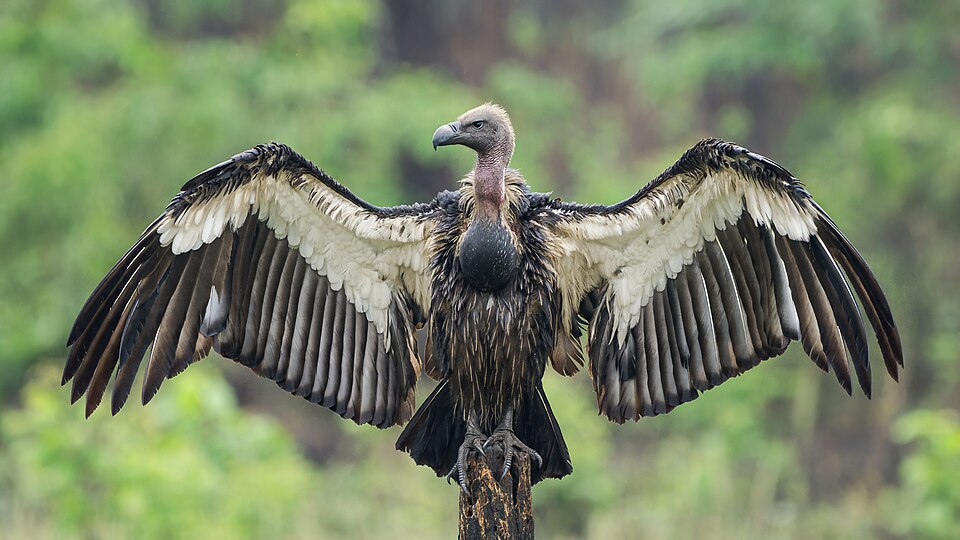
Correct: A, Tamil Nadu. The Government of Tamil Nadu constituted the State-Level Committee for Vulture Conservation (SLCVC) in October 2022, and the phrase in the stem: "proposed by the national action for the protection of vultures": points to the Union Environment Ministry's Action Plan for Vulture Conservation (APVC) 2020-2025, which is what the committee exists to deliver on the ground. The committee was created at the request of the State's Principal Chief Conservator of Forests, who chairs it, with nine other members; that membership list is the real tell. It includes the Director of Animal Husbandry and the Director of the Drugs Control, Food Safety and Drug Administration wing alongside conservation non-profits working in the Nilgiri landscape, because the agent that destroyed India's vultures was a veterinary pharmaceutical, not a poacher or a bulldozer, and a forest department alone cannot regulate a drug. Its written mandate matches that logic: scientific management of carcass dumps, laboratory analysis of cattle-carcass samples to detect banned NSAID residues, an enforcement mechanism against drugs found toxic to vultures, more breeding and rescue centres, regular population monitoring, participation in the nationwide vulture census, identification of 'Vulture Safe Zones', and an annual report on implementation of the Action Plan. Tamil Nadu had already moved further than most States on the pharmaceutical side, which is why it is the State this committee came from: in 2015 it became the first State to ban the veterinary use of ketoprofen, in the Nilgiris, Erode and Coimbatore districts, and in 2022 its drugs control department proceeded against 104 suppliers, distributors, manufacturers and retailers of diclofenac. The birds it is protecting are the white-rumped, long-billed and red-headed vultures, all Critically Endangered, and the Endangered Egyptian vulture, surviving mainly in the Nilgiri forest landscape the State shares with Karnataka and Kerala: a population that no single department, and no single State, can secure alone.
Why the others are wrong
- (b)Sikkim: Sikkim is the reflex answer on any 'which State acted first on the environment' question, because it was India's first fully organic State and is genuinely a conservation front-runner. But its vultures are overwhelmingly high-altitude birds (the Himalayan griffon and the bearded vulture) which were far less affected by diclofenac than the lowland Gyps species, since treated cattle carcasses are scarce at those elevations. The State-Level Committee for Vulture Conservation reported in October 2022 was Tamil Nadu's.
- (c)Assam: The strongest distractor, because Assam really is a vulture State: it hosts one of India's vulture conservation breeding centres, set up after the pioneering facility at Pinjore in Haryana, and its Gyps populations were among those tracked through the crash of the 1990s. A candidate who has filed 'Assam' and 'vulture' together will pick it. But a captive-breeding centre is a different instrument from an inter-departmental coordination committee under the Action Plan, and the committee in this question is Tamil Nadu's.
- (d)Meghalaya: Meghalaya is biodiversity-rich and appears often in wildlife current affairs (Nokrek Biosphere Reserve, its living root bridges, its sacred groves and its caves) but not for vulture administration. Note the setter's device here: three north-eastern States are ranged against one southern State, which invites the candidate either to pick the geographical odd one out on principle, or to assume that any wildlife story must come from the north-east. Neither shortcut works.
Concept
India's vulture collapse is the most severe recorded decline of any bird group anywhere. Nine vulture species occur in India; between 1993 and 2002 the white-rumped vulture (Gyps bengalensis) fell by about 99.7 per cent and the long-billed and slender-billed vultures by about 97.4 per cent. In 2003 a team led by Lindsay Oaks traced the cause to diclofenac, a cheap non-steroidal anti-inflammatory drug given to working cattle; a vulture that feeds on a carcass treated shortly before death suffers visceral gout and kidney failure. Modelling showed that contamination of well under 1 per cent of carcasses was enough to drive the crash. Because vultures were India's carcass-disposal system, their loss let feral dog numbers surge, with documented consequences for rabies deaths. The Government of India banned the veterinary use of diclofenac on 11 March 2006 and capped human diclofenac vials at 3 ml in 2015 to stop diversion to cattle. The Ministry of Environment, Forest and Climate Change followed with the Action Plan for Vulture Conservation 2020-2025, which asks States to build their own institutional machinery for it.
Two things narrow this question quickly. First, read the second half of the stem: the committee is 'proposed by the national action for the protection of vultures', so it is a State body created under a Union action plan (the APVC 2020-2025) and the question is asking which State built that machinery, not which State has the most vultures. Second, ask what such a committee must actually do. Its core work is drug regulation and carcass testing, so the State most likely to set one up is the one with a track record of prosecuting diclofenac sellers and of banning other vulture-toxic NSAIDs. That is Tamil Nadu, which restricted veterinary ketoprofen in three districts as early as 2015 and prosecuted 104 diclofenac traders in 2022: precisely the enforcement history the committee was designed to institutionalise. Assam is the trap for anyone who substitutes 'where are the vultures bred in captivity' for the question actually asked; a breeding centre is a facility, while an SLCVC is a coordination body chaired by the PCCF with animal-husbandry and drugs-control officials on it. If you can hold that distinction, the option set collapses to one. Date the event too: the committee was reported in October 2022, roughly a year before this paper was set, which is the window BPSC's 'recently' questions almost always draw from.
Key facts
- Action Plan for Vulture Conservation 2020-2025: launched by the Ministry of Environment, Forest and Climate Change in 2020 as the successor to the 2006-2011 vulture action plan, with the explicit aim of extending the ban to NSAIDs other than diclofenac that are toxic to vultures
- Tamil Nadu's SLCVC, reported in October 2022, is chaired by the Principal Chief Conservator of Forests and has nine other members, including the Director of Animal Husbandry and the Director of Drugs Control, Food Safety and Drug Administration
- Veterinary diclofenac was banned in India on 11 March 2006; Nepal followed in August 2006, Pakistan in October 2006 and Bangladesh in 2010, and India capped human diclofenac vials at 3 ml in 2015 to block diversion to cattle
- Population figures: white-rumped vulture down about 99.7 per cent between 1993 and 2002, long-billed and slender-billed vultures down about 97.4 per cent; the last nationwide count put India's vultures at 18,645 in 2015 against over 40,000 in 2003
- Meloxicam is the established vulture-safe painkiller and tolfenamic acid was identified as a second safe option in 2021, while aceclofenac, ketoprofen and nimesulide have all been shown to be toxic to vultures
- Tamil Nadu became the first State to ban the veterinary use of ketoprofen (in the Nilgiris, Erode and Coimbatore districts in 2015) and in 2022 its drugs control department acted against 104 suppliers, distributors, manufacturers and retailers of diclofenac
- The public-health cost of losing the scavengers has been quantified: India's feral dog population rose by at least 5 million, associated with over 38 million additional dog bites and more than 47,000 extra rabies deaths, at an estimated economic cost of about 34 billion US dollars
- Captive breeding runs in parallel with the Action Plan: the Jatayu Conservation Breeding Centre at Pinjore, Haryana ran Asia's first vulture re-introduction programme in 2016, and further centres operate in West Bengal, Assam and Madhya Pradesh
Study next
Common traps
- Confusing a Vulture Conservation Breeding Centre (a facility, present in Haryana, West Bengal, Assam and Madhya Pradesh) with the State-Level Committee for Vulture Conservation (an inter-departmental body)
- Assuming that because the vulture crash was worst in north and central India, the administrative response must have come from a northern or north-eastern State
- Writing that diclofenac is banned outright in India: the ban is on veterinary use, with human formulations restricted to 3 ml vials since 2015
BPSC asks this area as a one-line current-affairs identification (which State, which body, which year) and rewards candidates who have read the environment pages of a newspaper rather than a textbook. UPSC almost never asks 'which State'; it asks why, as in its 2012 question that made candidates trace the disappearance of vultures back to a drug given to cattle, or it builds statement-based items around IUCN status, protected-area categories and the legal effect of a Schedule listing.
Related PYQs
Vultures, which used to be very common in Indian countryside some years ago, are rarely seen nowadays. This is attributed to
- (a) the destruction of their nesting sites by new invasive species
- (b) a drug used by cattle owners for treating their diseased cattle
- (c) scarcity of food available to them
- (d) a widespread, persistent and fatal disease among them
Answer(b) a drug used by cattle owners for treating their diseased cattle
The same crisis from the causal end. UPSC tests why the vultures vanished (diclofenac in cattle carcasses) which is exactly why Tamil Nadu's committee has the animal-husbandry and drugs-control directors on it rather than foresters alone.
Recently, for the first time in our country, which of the following States has declared a particular butterfly as ‘State Butterfly’?
- (a) Arunachal Pradesh
- (b) Himachal Pradesh
- (c) Karnataka
- (d) Maharashtra
Answer(d) Maharashtra
The same question shape at the same level of government: a State taking a species-specific step ahead of the rest, with the exam asking which State moved. Both reward reading the environment pages, and both punish guessing by geography.
Which organisation recognized the Nagi bird sanctuary Site as an Important Bird and Biodiversity Area (IBA)?
- (a) UNESCO
- (b) World Wildlife Fund
- (c) Bird Life International
- (d) More than one of the above
Answer(c) Bird Life International
BPSC returning to the same idea two years later, which body sits behind a bird-conservation designation. BirdLife International is also the organisation whose census produced the vulture numbers this committee was created to reverse, so the two questions share a source as well as a concept.
Practice
- practice, not a real PYQ
The Action Plan for Vulture Conservation 2020-2025 was launched by which of the following?
- (a)Ministry of Agriculture and Farmers' Welfare
- (b)Ministry of Environment, Forest and Climate Change
- (c)Bombay Natural History Society
- (d)National Biodiversity Authority
Answer(b) Ministry of Environment, Forest and Climate Change: it launched the plan in 2020 as the successor to the 2006-2011 vulture action plan, with State-level committees as one delivery mechanism. - practice, not a real PYQ
Which drug is recommended as the vulture-safe substitute for diclofenac in veterinary use in India?
- (a)Ketoprofen
- (b)Aceclofenac
- (c)Meloxicam
- (d)Nimesulide
Answer(c) Meloxicam: it is rapidly metabolised and harmless to vultures; ketoprofen, aceclofenac and nimesulide have all been shown to be toxic to them.