
Match List–I with List–II and select the correct answer using the code given below the Lists : List–I (Mahamatta) A. Anta-mahamatta B. Ithijhakha-mahamatta C. Dhamma-mahamatta D. Nagalaviyohalaka-mahamatta List–II (Function) 1. Women’s welfare 2. Spread of Dhamma 3. Associated with city administration 4. In-charge of frontier areas Code :
- (a)A B C D — 3 2 1 4
- (b)A B C D — 3 1 2 4
- (c)A B C D — 4 1 2 3
- (d)A B C D — 4 2 1 3
Answer
Why
Correct — C, the pairing A-4, B-1, C-2, D-3. Each Prakrit title carries its own job description once you break it up. Anta means border or frontier, so the anta-mahamatta was the officer for the frontier peoples and border tracts, giving A-4. Ithijhakha is the Prakrit of the Sanskrit stri-adhyaksha, superintendent of women, so that officer looked after the welfare of women, giving B-1. Dhamma-mahamattas were the officers of morality Ashoka says he appointed in his fourteenth regnal year to spread and supervise Dhamma among all sects, giving C-2. Nagalaviyohalaka stands for nagara-vyavaharika, the city officer dealing with legal and civic business, so D-3. Only option (c) carries that sequence.
Why the others are wrong
- (a)A B C D — 3 2 1 4 — It puts the anta-mahamatta in charge of the city and the nagalaviyohalaka-mahamatta on the frontier — an exact swap of the two territorial officers. It also mismatches the two remaining titles, pairing the dhamma officer with women's welfare.
- (b)A B C D — 3 1 2 4 — The middle two pairings are right, but the two territorial ones are reversed: anta means the frontier, not the city, and nagala- is the city, not the frontier. Getting only B and C right is exactly the trap this option is built for.
- (d)A B C D — 4 2 1 3 — It fixes the frontier and the city correctly but swaps the other two, sending the ithijhakha-mahamatta to spread Dhamma and the dhamma-mahamatta to women's welfare. The word ithi, meaning woman, settles that pair.
Concept
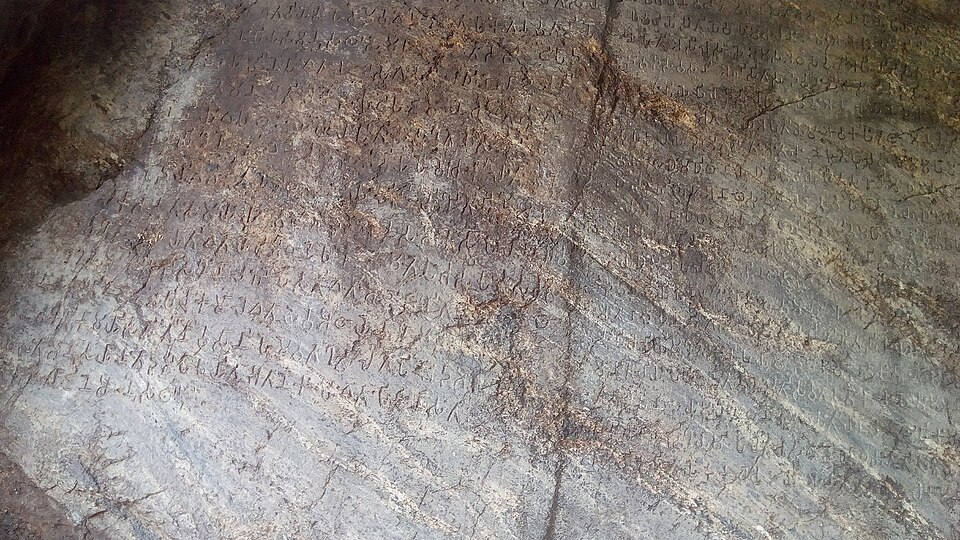
Mahamattas — Sanskrit mahamatra — were the senior officers of the Mauryan administration, and Ashoka's edicts show them specialised by function rather than being a single undifferentiated cadre. The edicts name officers for the Dhamma, for the border peoples, for women and for the cities. The best known are the dhamma-mahamattas, whom Major Rock Edict V records Ashoka as appointing when he had been anointed thirteen years, with a brief to work among all sects and all classes for the practice of Dhamma. The Separate Rock Edicts at Dhauli and Jaugada, in the conquered Kalinga country, are addressed to the city officers and warn them against arbitrary imprisonment and harassment.
Matching questions of this kind are really tests of whether you can read Prakrit compounds, because the exam will not expect you to have memorised a list of officer names. Split each term and translate the first element — anta (border), ithi (woman), dhamma (moral law), nagala (city) — and every pair falls out without any recall of Mauryan history at all. The printed booklet uses the Prakrit forms of the edicts, which is why the spellings here differ from the mahamatra, stri-adhyaksha and nagara-vyavaharika that most textbooks print; treat them as the same offices under their inscriptional names. Answer options are then engineered so that partial knowledge lands you on a near-miss, with two of the four pairs correct.
Key facts
- Mahamatta (Sanskrit mahamatra) was the general term for a high officer in the Mauryan administration, and Ashoka's edicts name several specialised kinds.
- Dhamma-mahamattas were appointed, by Ashoka's own statement in Major Rock Edict V, when he had been anointed thirteen years.
- Anta-mahamattas dealt with the frontier regions and the peoples on the borders of the empire.
- Ithijhakha-mahamatta corresponds to the Sanskrit stri-adhyaksha-mahamatra, the officer in charge of women's affairs.
- The Separate Rock Edicts at Dhauli and Jaugada in Kalinga are addressed to the city administrators, the officers of nagara-vyavahara.
Study next
Common traps
- Swapping the frontier officer and the city officer, which is what two of the four options are built to catch.
- Assuming the dhamma-mahamatta handled everything, when the edicts show a specialised cadre.
- Being thrown by the Prakrit spellings of the printed paper, which differ from the Sanskrit forms used in most textbooks.
Usually as a match-the-list item on Mauryan officers, and occasionally as a single-line question on which officer Ashoka appointed to propagate Dhamma.
Related PYQs
Assertion (A): According to Asoka's edicts, social harmony among the people was more important than religious devotion. Reason (R): He spread ideas of equity instead of promotion of religion.
- (a) Both A and R are true, and R is the correct explanation of A
- (b) Both A and R are true, but R is NOT a correct explanation of A
- (c) A is true, but R is false
- (d) A is false, but R is true
Answer(a) Both A and R are true, and R is the correct explanation of A
Goes to the purpose behind the office in pair C — the dhamma-mahamattas existed to promote concord among sects and ethical conduct, not to advance one faith.
Which one of the following was not a part of the dhamma of King Ashoka?
- (a) Honouring the king
- (b) Tolerance of religions other than one's own
- (c) Respecting Brahmanas
- (d) Promoting the welfare of his subjects
Answer(a) Honouring the king
Tests the content of the Dhamma that the officers in pair C were appointed to spread, so the two questions cover the policy and its administrative machinery.
Arthashastra, the classical work of Indian political thought, focuses primarily on
- (a) economy
- (b) culture
- (c) statecraft
- (d) monarchy
Answer(c) statecraft
The other main source for Mauryan officialdom — the Arthashastra's superintendents are the literary counterpart of the mahamattas named in the edicts.
Practice
- practice — not a real PYQ
According to Major Rock Edict V, Ashoka appointed the Dhamma-mahamattas
- (a)in the year of his accession
- (b)immediately after the Kalinga war, in his ninth regnal year
- (c)when he had been anointed thirteen years
- (d)in the last year of his reign
Answer(c) when he had been anointed thirteen years — the edict says so in Ashoka's own words, which is why textbooks place the appointment in the fourteenth year counted from his consecration. - practice — not a real PYQ
The Separate Rock Edicts of Ashoka, found at Dhauli and Jaugada, are chiefly addressed to
- (a)the Buddhist Sangha
- (b)the officers administering the conquered Kalinga country
- (c)the Greek rulers of the west
- (d)the guilds of merchants
Answer(b) the officers administering the conquered Kalinga country — they instruct the city officers on the fair treatment of the people and warn against arbitrary imprisonment.