
Which one of the following was not a part of the dhamma of King Ashoka?
- (a)Honouring the king
- (b)Tolerance of religions other than one's own
- (c)Respecting Brahmanas
- (d)Promoting the welfare of his subjects
Answer
Why
Correct — A, Honouring the king. Ashoka's dhamma, as set out in his edicts, was a code of ethical and social conduct — respect for elders, generosity and courtesy towards Brahmanas and ascetics, tolerance of all sects, kindness to servants, non-violence and the welfare of subjects. It never asked people to honour or worship the king; that idea is alien to the dhamma, so 'Honouring the king' is the one item that was not part of it.
Why the others are wrong
- (b)Tolerance of religions other than one's own — Tolerance among sects is central to the dhamma — Rock Edict XII urges people to honour other sects and warns that praising one's own faith while disparaging others harms one's own faith; so this was very much a part of it.
- (c)Respecting Brahmanas — The edicts repeatedly enjoin respect and generosity towards Brahmanas and shramanas (ascetics/renouncers); this is a stated element of the dhamma, not an exclusion.
- (d)Promoting the welfare of his subjects — Ashoka described himself as caring for his subjects like a father for his children and set up welfare measures (medical care, wells, rest-houses, roadside trees); public welfare is a core dhamma principle.
Concept
Ashoka's 'dhamma' was not a new religion or a set of Buddhist rituals but a broad code of moral behaviour he propagated through rock and pillar edicts after the Kalinga war. Its themes were social harmony, non-violence, tolerance of all sects, respect for elders and holy men, humane treatment of servants and animals, and the material and moral welfare of his people.
Three of the four options are recognisable dhamma virtues drawn straight from the edicts. The odd one out is loyalty or homage to the ruler — a political duty, not a dhamma value — which lets you eliminate it even without recalling each edict verbatim.
Key facts
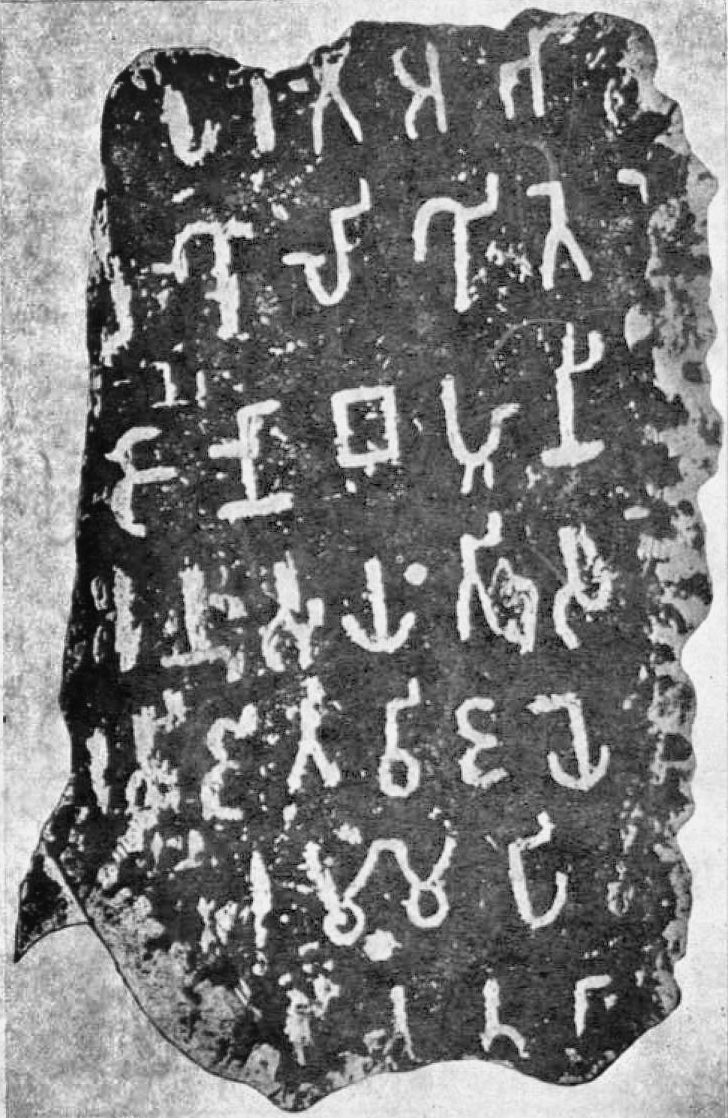
- Dhamma was spread through Ashoka's Major and Minor Rock Edicts and Pillar Edicts, written mainly in Prakrit and the Brahmi script.
- Rock Edict XII stresses tolerance and concord among all sects.
- The edicts call for respect towards Brahmanas and shramanas and kind treatment of servants and slaves.
- Officers called Dhamma-mahamatras were appointed to spread and supervise the dhamma.
Study next
Common traps
- Reading dhamma as strictly Buddhist doctrine — it was a wider civic/ethical code addressed to all subjects.
- Confusing a political duty (loyalty to the king) with a moral dhamma value.
Often as 'which of the following was/was not a feature of Ashoka's dhamma' or by matching a specific edict to its theme (e.g., Edict XII = tolerance, Edict XIII = Kalinga).
Related PYQs
Assertion (A): According to Asoka's edicts, social harmony among the people was more important than religious devotion. Reason (R): He spread ideas of equity instead of promotion of religion.
- (a) Both A and R are true, and R is the correct explanation of A
- (b) Both A and R are true, but R is NOT a correct explanation of A
- (c) A is true, but R is false
- (d) A is false, but R is true
Answer(a) Both A and R are true, and R is the correct explanation of A
Same concept — the content and purpose of Ashoka's dhamma, that it prioritised social harmony and ethical conduct over sectarian devotion, the very reasoning that rules out 'honouring the king'.
Practice
- practice — not a real PYQ
Ashoka's dhamma was primarily propagated through which of the following?
- (a)Coins
- (b)Rock and pillar edicts
- (c)Copper-plate grants
- (d)Sanskrit court poetry
Answer(b) Rock and pillar edicts — inscribed mostly in Prakrit and Brahmi across the empire. - practice — not a real PYQ
Which Major Rock Edict of Ashoka deals mainly with tolerance and concord among religious sects?
- (a)Rock Edict II
- (b)Rock Edict XII
- (c)Rock Edict XIII
- (d)Rock Edict I
Answer(b) Rock Edict XII — it urges respect for all sects and warns against disparaging others' faiths.