
In mitochondria, ATP synthesizing chemical reactions take place in the
- (a)Outer membrane.
- (b)Matrix.
- (c)Inner membrane.
- (d)DNA of mitochondria.
Answer
Why
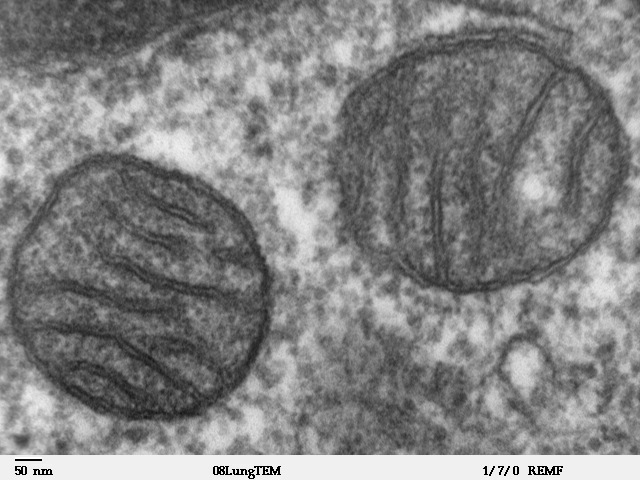
Correct — C, Inner membrane. The mitochondrion's inner membrane is deeply folded into cristae, and it carries the electron-transport chain together with the enzyme ATP synthase. The proton gradient built up across this membrane drives ATP synthase to make ATP, so the ATP-synthesising reactions of oxidative phosphorylation occur on the inner membrane.
Why the others are wrong
- (a)Outer membrane. — The outer membrane is smooth and freely permeable to small molecules; it does not carry the electron-transport chain or ATP synthase.
- (b)Matrix. — The matrix hosts the Krebs (citric acid) cycle, which supplies the electron carriers NADH and FADH2, but the ATP-making machinery itself sits on the inner membrane, not free in the matrix.
- (d)DNA of mitochondria. — Mitochondrial DNA stores genetic information for a few proteins; it does not carry out the chemical reactions that synthesise ATP.
Concept
A mitochondrion has a smooth outer membrane and a folded inner membrane enclosing the matrix. The folds (cristae) greatly increase surface area. The inner membrane houses the electron-transport chain and ATP synthase; as electrons pass down the chain, protons are pumped across the membrane, and their flow back through ATP synthase generates ATP — the cell's energy currency.
The trap is the matrix. The Krebs cycle does run in the matrix, so it feels like 'where respiration happens', but the question asks specifically where ATP is synthesised, and that is the inner membrane (oxidative phosphorylation). Distinguishing 'where fuel is processed' from 'where ATP is actually made' is the key.
Key facts
- Mitochondria are the 'powerhouse of the cell', making most of its ATP.
- The inner membrane is folded into cristae and carries the electron-transport chain and ATP synthase.
- The matrix holds the enzymes of the Krebs cycle plus mitochondrial DNA and ribosomes.
- Most ATP is made by oxidative phosphorylation on the inner membrane.
Study next
Common traps
- Choosing the matrix because the Krebs cycle runs there — ATP synthesis itself is on the inner membrane.
- Assuming the outer membrane is the active site — it is smooth and permeable, not the reaction surface.
Asked as the exact site of ATP synthesis, or by linking the folded inner membrane/cristae to increased ATP-making surface area.
Related PYQs
Match List I (Physiological processes: Photosynthesis, Mineral uptake, Respiration, Protein Synthesis) with List II (Cell organelles: Plasma membrane, Chloroplast, Mitochondria, Ribosomes) and select the correct answer.
- (a) I-A, II-B, III-C, IV-D
- (b) I-A, II-B, III-D, IV-C
- (c) I-B, II-A, III-C, IV-D
- (d) I-B, II-A, III-D, IV-C
Answer(c) I-B, II-A, III-C, IV-D
Same organelle — the mitochondrion is matched to respiration (energy release/ATP), the exact role behind its inner-membrane ATP-synthesising machinery.
Which one among the following is the source of energy in cells?
- (a) ADP
- (b) ATP
- (c) AMP
- (d) NAD
Answer(b) ATP
Same concept — ATP as the cell's energy currency, the very molecule the mitochondrial inner membrane synthesises.
Practice
- practice — not a real PYQ
The folds of the inner mitochondrial membrane are called
- (a)Cristae
- (b)Thylakoids
- (c)Grana
- (d)Villi
Answer(a) Cristae — they increase the surface area for ATP synthesis. - practice — not a real PYQ
Mitochondria are commonly called the
- (a)control centre of the cell
- (b)powerhouse of the cell
- (c)protein factory of the cell
- (d)suicide bag of the cell
Answer(b) powerhouse of the cell — because they produce most of the cell's ATP.