
Which of the following statements about Saguna bhakti traditions is/are correct? 1. Saguna bhakti traditions focus on the worship of specific deities such as Vishnu or his avatars. 2. In Saguna bhakti traditions, Gods and Goddesses are conceptualised in anthropomorphic forms. Select the correct answer using the code given below:
- (a)1 only
- (b)2 only
- (c)Both 1 and 2
- (d)Neither 1 nor 2
Answer
Why
Correct — C, Both 1 and 2. Saguna (literally 'with attributes') bhakti worships god as having form and qualities — specific deities such as Vishnu and his avatars, Shiva, or the Goddess (statement 1) — and it conceives these deities in anthropomorphic, human forms that are depicted, described and installed as images (statement 2). Both statements describe Saguna bhakti accurately, so both are correct.
Why the others are wrong
- (a)1 only — Statement 2 is also correct — Saguna bhakti characteristically imagines deities in human (anthropomorphic) forms, so limiting the answer to statement 1 is wrong.
- (b)2 only — Statement 1 is also correct — focusing devotion on specific named deities such as Vishnu or his avatars is the defining feature of Saguna worship, so it cannot be excluded.
- (d)Neither 1 nor 2 — Both statements are true of Saguna bhakti; rejecting both confuses Saguna with Nirguna (the formless, attributeless strand).
Concept
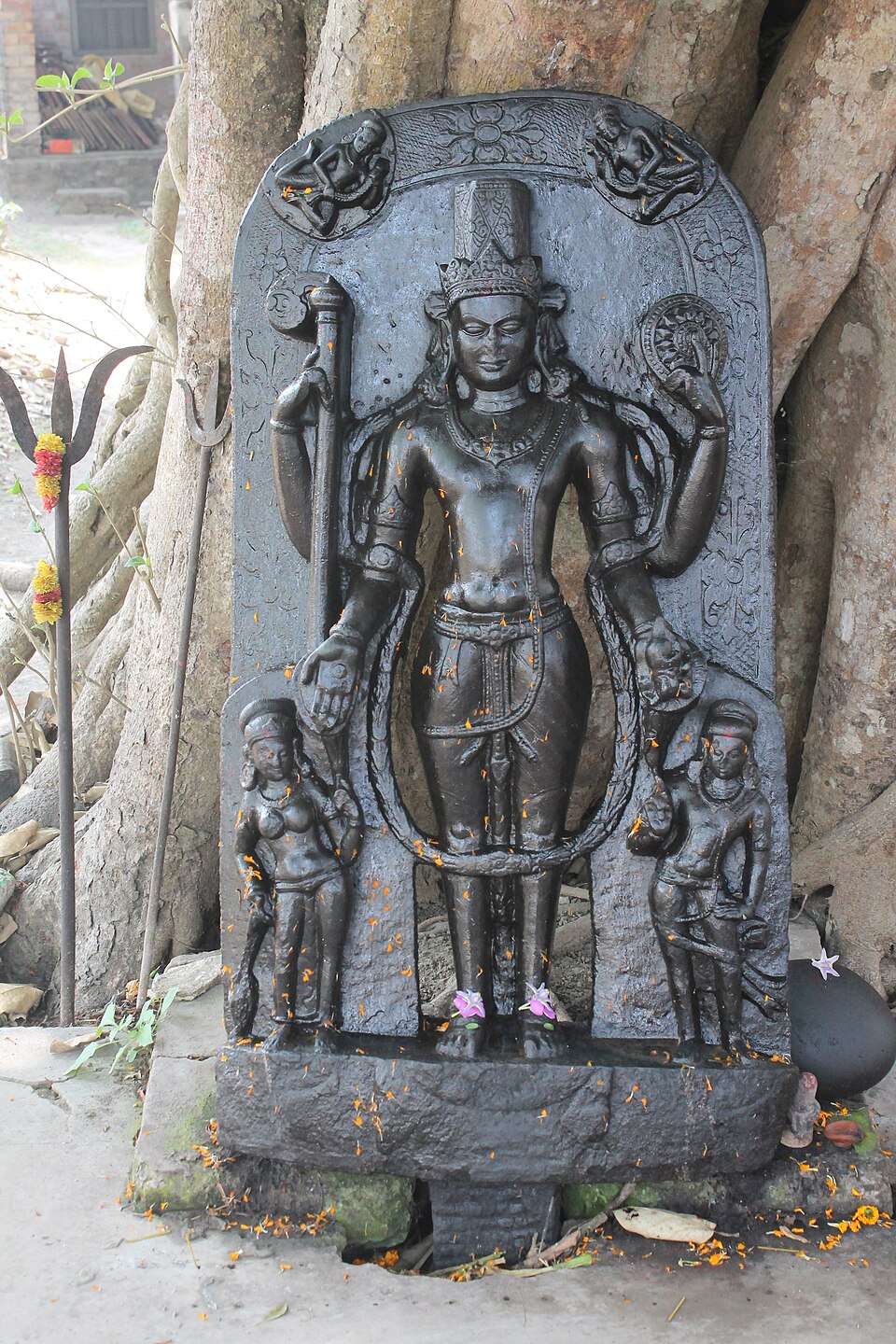
Medieval bhakti is broadly divided into two strands. Saguna bhakti worships a personal god 'with attributes and form' — deities like Vishnu (and avatars such as Rama and Krishna), Shiva and Devi, represented in anthropomorphic images and myths. Nirguna bhakti (e.g., Kabir) worships a formless, attributeless (nirakar) absolute and rejects idol worship.
The whole item turns on knowing the meaning of 'saguna' (sa-guna = with qualities). Once you recall that Saguna = god with form/attributes, both statements read as correct; the trap options exist for candidates who mix up Saguna with the formless Nirguna strand.
Key facts
- 'Saguna' means 'with attributes/qualities'; 'Nirguna' means 'without attributes' (formless).
- Saguna deities include Vishnu and his avatars (Rama, Krishna), Shiva and the Goddess.
- Saguna worship uses anthropomorphic images, temples and personal-god devotion.
- Nirguna saints such as Kabir rejected image worship and a personal deity with form.
Study next
Common traps
- Confusing Saguna (with form) with Nirguna (formless) — the opposite meanings of the terms.
- Assuming only statement 1 is right because it names a deity, while overlooking that anthropomorphism (statement 2) is equally definitional.
Asked as a Saguna/Nirguna distinction, or by placing a named saint in the correct strand (e.g., Kabir = Nirguna, Tulsidas = Saguna).
Related PYQs
Among the following, who was not a proponent of bhakti cult?
- (a) Nagarjuna
- (b) Tukaram
- (c) Tyagaraja
- (d) Vallabhacharya
Answer(a) Nagarjuna — he was a Mahayana Buddhist philosopher, while Tukaram, Tyagaraja and Vallabhacharya were bhakti figures.
Same movement — the bhakti tradition and its proponents; identifying who belongs to bhakti (largely Saguna devotion to a personal deity) versus who does not.
Practice
- practice — not a real PYQ
Which one of the following bhakti saints belonged to the Nirguna (formless) tradition?
- (a)Tulsidas
- (b)Surdas
- (c)Kabir
- (d)Mirabai
Answer(c) Kabir — he worshipped a formless, attributeless god and rejected idol worship, unlike the Saguna saints listed. - practice — not a real PYQ
In Indian religious philosophy, the term 'Nirguna' refers to a god who is
- (a)with form and attributes
- (b)without form or attributes
- (c)worshipped only in temples
- (d)an avatar of Vishnu
Answer(b) without form or attributes — 'nir-guna' literally means devoid of qualities, the opposite of Saguna.