
Match List–I with List–II and select the correct answer using the code given below the Lists : List–I (Local Wind) A. Yamo B. Black Roller C. Bise D. Haboob List–II (Place) 1. Sudan 2. France 3. Japan 4. North America Code : A B C D
- (a)1 4 2 3
- (b)1 2 4 3
- (c)3 4 2 1
- (d)3 2 4 1
Answer
Why
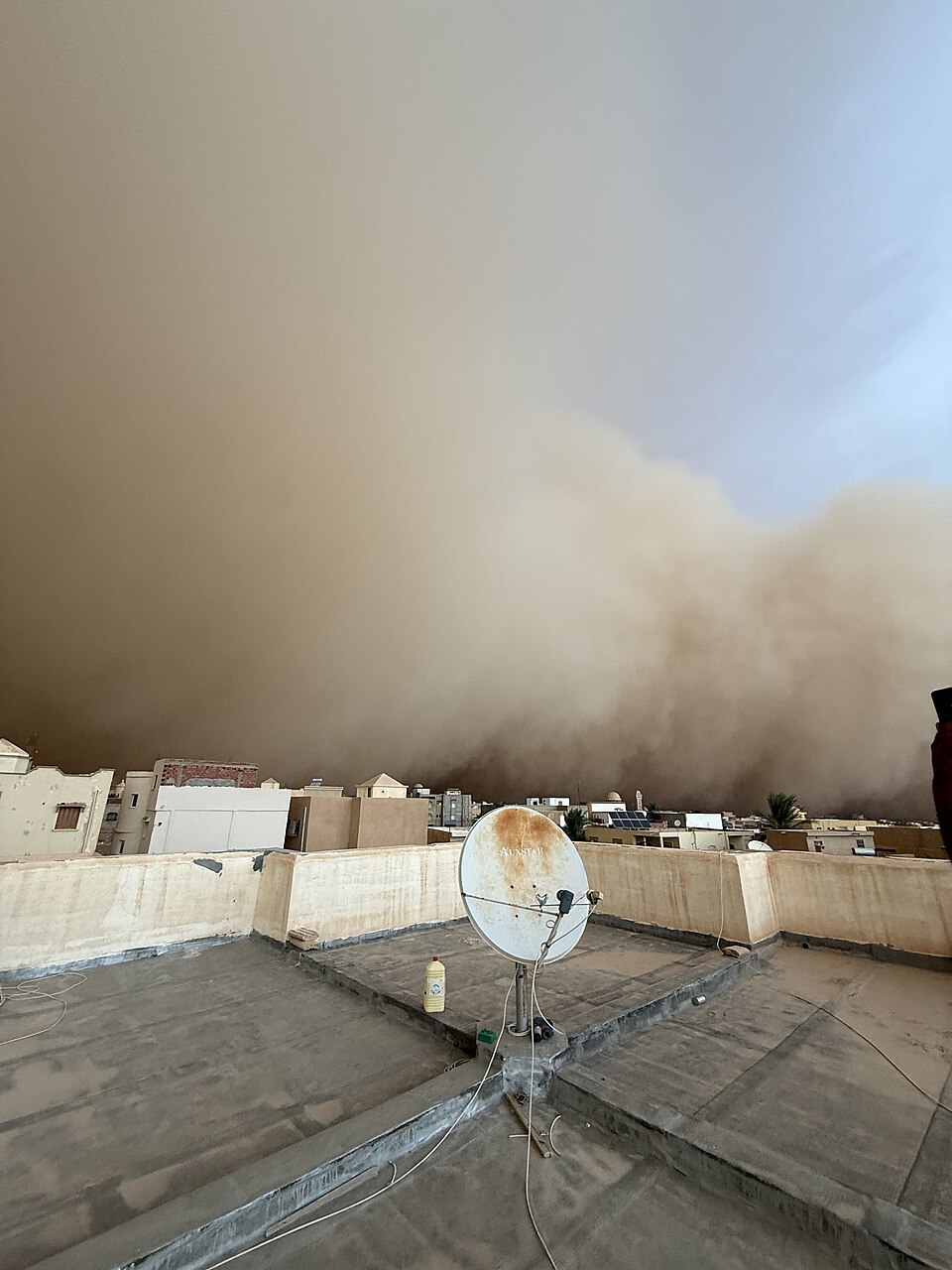
Correct: C, the code 3 4 2 1. Three of the four pairs can be fixed from well-documented meteorology and the fourth then follows. The haboob is the wall of dust and sand raised by the outflow of a thunderstorm; the name is Arabic and the wind is described as passing mainly through Sudan, so D-1. The black roller, also called a black blizzard, is the name given to the choking dust storms of the American and Canadian prairies during the Dust Bowl years of the 1930s, so B-4. The bise is a cold northerly wind of France, blowing from the north-east in Switzerland, so C-2. That leaves only Japan for the Yamo, a local wind of the steep Japanese valleys, giving A-3, and the code reads 3 4 2 1.
Why the others are wrong
- (a)1 4 2 3: It keeps the black roller in North America and the bise in France, but swaps the two ends: Yamo to Sudan and the haboob to Japan. The haboob is an Arabic word for a desert dust wall, and Japan is a humid monsoon country with no such wind.
- (b)1 2 4 3: Every pair is displaced. It puts the Yamo in Sudan, the black roller in France, the bise in North America and the haboob in Japan. The black roller belongs to the dry interior plains of North America, and the bise to the Alpine borderlands of France and Switzerland.
- (d)3 2 4 1: The two ends are right (Yamo to Japan and haboob to Sudan) but the middle two are exchanged, sending the black roller to France and the bise to North America. The names themselves point the other way: bise is a French word, and black roller is an English one coined on the prairies.
Concept
Local winds are small-scale winds that owe their character to the terrain and the season of a particular region, and every one of them carries a local name. They fall into recognisable families: warm dry downslope winds off a mountain range, such as the chinook of the Rockies and the foehn of the Alps; cold outflow winds off a plateau or a snowfield, such as the mistral of the Rhône valley and the bora of the Adriatic; and dust-laden desert winds such as the haboob, the simoom and the loo. The bise belongs to the cold group, and the haboob and the black roller to the dust group, though the black roller was made by farming rather than by desert: decades of ploughing the prairie grassland left the soil bare to the wind.
A four-pair match with unfamiliar names is best attacked by scoring the pairs you can defend and letting the remainder fall out. Here the haboob is the securest of the four, because the word is widely defined as a Sudanese dust storm, and it appears against option 1 in only two of the four codes. The black roller is next, since it is documented as the Dust Bowl name for the American and Canadian prairie dust storms. Those two together already force the code to (c). Yamo is the name almost nobody will recognise, and that is by design: you are meant to reach it by elimination rather than by recall. Note honestly that Yamo is listed as a wind of Japan in standard Indian geography tables rather than in international meteorological glossaries, so treat the pairing as exam knowledge and lean on the other three when reasoning.
Key facts
- A haboob is a fast-moving sandstorm wind that mainly passes through Sudan; the word is Arabic.
- Black rollers, also called black blizzards, were the dust storms of the American and Canadian prairies in the 1930s Dust Bowl.
- The bise is a cold northerly wind of France, blowing from the north-east in Switzerland.
- Yamo is listed among the local winds of Japan; the AMS glossary records the separate Japanese wind yamase, a cold north-easterly of the Tohoku coast.
Study next
Common traps
- Guessing a wind's home from how the name sounds. Bise is French and black roller is English, but haboob is Arabic and belongs to Sudan, not to any English-speaking region.
- Treating every dust wind as a desert wind. The black roller was raised from ploughed farmland, not from a desert.
- Trying to recall all four pairs. Two secure pairs are usually enough to force the code.
NDA asks for the region of a single named local wind, whether a wind is warm or cold, or, as here, for the full wind-to-place match in code form.
Related PYQs
Which one of the following is a local wind that blows out from Siberia ?
- (a) Bora
- (b) Purga
- (c) Mistral
- (d) Blizzard
Answer(b) Purga
The same local-wind topic tested in the first session of the same year, and a reminder that these items reward a stocked list of named winds rather than reasoning.
Which one of the following is a cold local wind?
- (a) Santa Ana
- (b) Chinook
- (c) Mistral
- (d) Loo
Answer(c) Mistral
Sorts local winds into warm and cold, which is the classification that places the bise of France in the same group as the mistral.
Practice
- practice, not a real PYQ
The haboob is a local wind chiefly associated with
- (a)Japan
- (b)Sudan
- (c)Argentina
- (d)Switzerland
Answer(b) Sudan: a fast-moving wind that raises a wall of dust and sand ahead of a thunderstorm. - practice, not a real PYQ
Which one of the following pairs of a local wind and its region is correctly matched?
- (a)Mistral — Australia
- (b)Chinook — Rocky Mountains
- (c)Bise — Sudan
- (d)Harmattan — Japan
Answer(b) Chinook: Rocky Mountains, the warm dry wind that descends their eastern slope and clears snow off the prairies.