
If one set of chromosomes for a given plant is represented as N; in case of double fertilization, the zygote and the endosperm nucleus of a diploid plant would have how many sets of chromosomes respectively?
- (a)N and 2N
- (b)2N and 2N
- (c)N and 3N
- (d)2N and 3N
Answer
Why
Correct: D, 2N and 3N. In a flowering plant a single pollen grain delivers two male gametes, and both of them are used, which is what the term double fertilization names. The first male gamete, carrying one set N, fuses with the egg cell, which also carries N, so the zygote is 2N and grows into the embryo. The second male gamete, again N, fuses with the central cell of the embryo sac, and that cell already holds two polar nuclei of N each. One set plus two sets gives three, so the primary endosperm nucleus is 3N and grows into the triploid endosperm that feeds the developing embryo. The counting is that simple: one gamete plus one egg for the zygote, one gamete plus two polar nuclei for the endosperm.
Why the others are wrong
- (a)N and 2N: This leaves the zygote haploid, which cannot be right: a zygote is by definition the product of the fusion of two gametes, so it must carry both sets. It also gives the endosperm only two sets, forgetting that the second fusion involves two polar nuclei and not one.
- (b)2N and 2N: The zygote is right but the endosperm is wrong, and this is the commonest error. It treats the second fertilisation as though it were a simple one-plus-one fusion like the first, ignoring the second polar nucleus that makes the endosperm triploid.
- (c)N and 3N: The endosperm is right but the zygote is wrong. It is a half-remembered answer: the student recalls the striking 3N figure for the endosperm and forgets that the ordinary fusion producing the embryo still doubles a haploid egg to 2N.
Concept
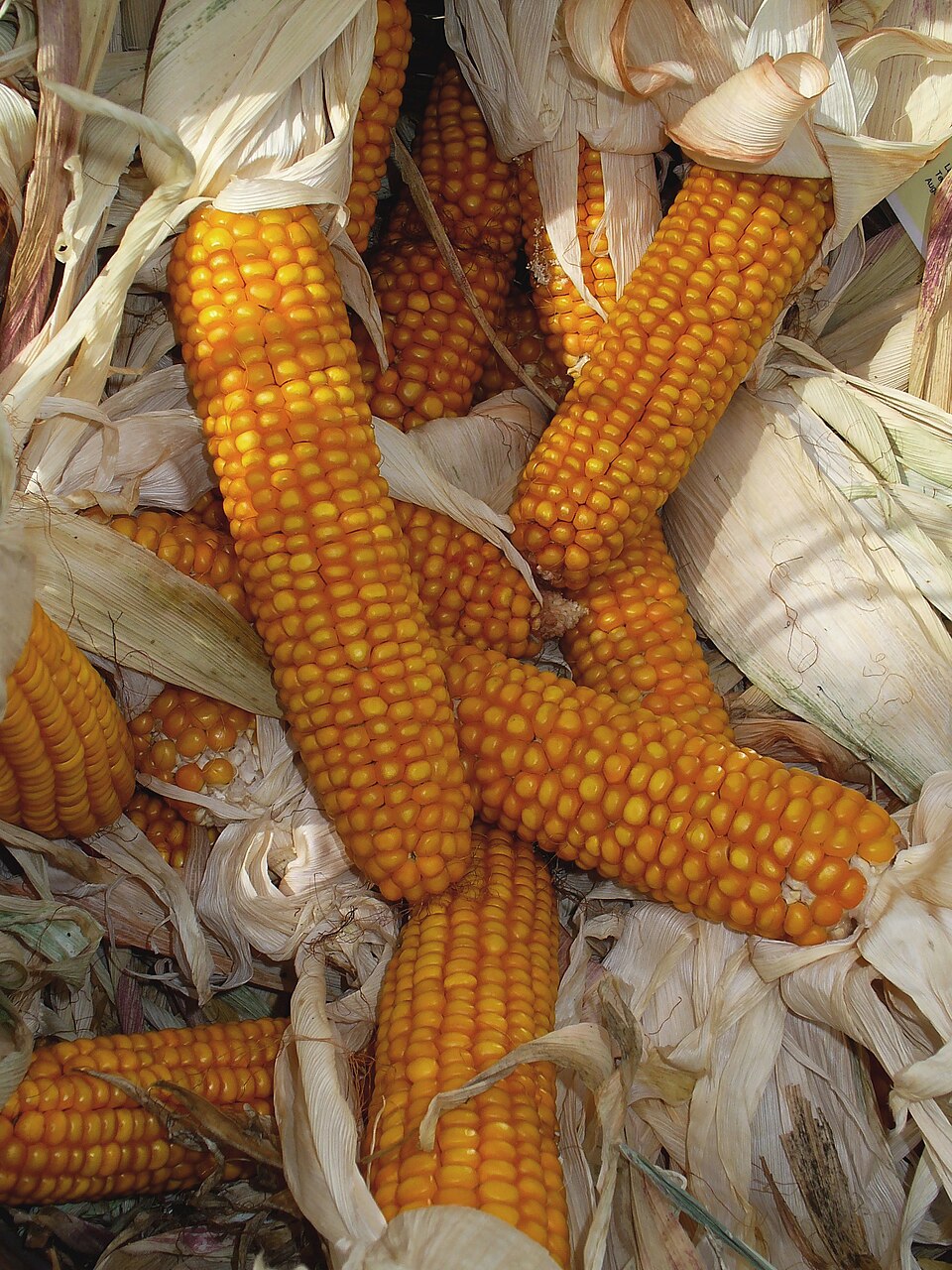
Double fertilization is unique to flowering plants and was described by Nawaschin and Guignard in the 1890s. A mature embryo sac has eight nuclei in seven cells, including one egg cell and one large central cell holding two polar nuclei. The pollen tube grows down the style, enters the ovule and discharges two male gametes. Syngamy is the fusion of one gamete with the egg, giving the diploid zygote; triple fusion is the fusion of the other gamete with the two polar nuclei, giving the triploid primary endosperm nucleus. The endosperm then divides rapidly and becomes the food store the seedling draws on: the white starchy bulk of a maize grain or a wheat grain is exactly this tissue.
The whole item is arithmetic once you know how many nuclei enter each fusion, so the safe habit is to write the sum rather than recall the answer. Zygote is N plus N, which is 2N. Endosperm is N plus N plus N, which is 3N, because the central cell contributes two polar nuclei and not one. It also helps to keep two ploidy levels straight: in an angiosperm the parent plant and the seed embryo are diploid, the pollen grain and the embryo sac are haploid gametophytes, and the endosperm is the one triploid tissue in the life cycle. Coconut water is the free-nuclear stage of that same triploid endosperm, which makes it a memorable anchor.
Key facts
- Double fertilization involves two fusions using the two male gametes delivered by one pollen tube.
- Syngamy (one male gamete with the egg cell) gives a diploid (2N) zygote that becomes the embryo.
- Triple fusion (one male gamete with the two polar nuclei) gives a triploid (3N) primary endosperm nucleus.
- Endosperm is the nutritive tissue of the seed; the liquid endosperm of a coconut is its free-nuclear stage.
Study next
Common traps
- Assuming both fusions are one-plus-one. The second involves two polar nuclei, which is why the endosperm is triploid.
- Confusing the ploidy of the endosperm with the ploidy of the seed coat, which is maternal tissue and diploid.
- Reading 'double fertilization' as fertilisation by two pollen grains; it is two gametes from a single pollen grain.
NDA asks for the ploidy of the zygote and the endosperm, for what the two male gametes do, or for which structure develops into which part of the seed.
Related PYQs
In angiosperms, pollen grain germinates to produce two male gametes. Which one of the following functions is carried out by these gametes ?
- (a) Both the gametes fuse with a single egg cell
- (b) Both the gametes fuse with two different egg cells
- (c) One gamete fuses with the egg cell and the other one eventually degenerate
- (d) One gamete fuses with the egg cell and the other one fuses with a diploid secondary nucleus
Answer(d) One gamete fuses with the egg cell and the other one fuses with a diploid secondary nucleus
The mechanism behind this card's arithmetic, stated in words: the second gamete meets a nucleus that is already diploid, which is exactly why the endosperm ends up 3N.
After fertilization, the fruit and the seed are produced by
- (a) ovule and ovary, respectively
- (b) ovary and ovule, respectively
- (c) ovary, no ovule required
- (d) ovule, no ovary required
Answer(b) ovary and ovule, respectively
Follows the same event forward: once the zygote and the endosperm have formed inside the ovule, this is what the surrounding structures become.
Practice
- practice, not a real PYQ
The fusion of one male gamete with the two polar nuclei in the embryo sac is called
- (a)syngamy
- (b)triple fusion
- (c)pollination
- (d)germination
Answer(b) triple fusion: three haploid nuclei combine to give the triploid primary endosperm nucleus. - practice, not a real PYQ
In a flowering plant, the endosperm develops into
- (a)the seed coat
- (b)the embryo
- (c)the nutritive tissue of the seed
- (d)the fruit wall
Answer(c) the nutritive tissue of the seed: the food store the growing embryo draws on.