
After fertilization, the fruit and the seed are produced by
- (a)ovule and ovary, respectively
- (b)ovary and ovule, respectively
- (c)ovary, no ovule required
- (d)ovule, no ovary required
Answer
Why
Correct — B, ovary and ovule, respectively. In a flowering plant the ovary sits at the base of the pistil and encloses one or more ovules. Once fertilisation has taken place, the ovary matures into the fruit — its wall thickening into the pericarp — while each fertilised ovule inside it matures into a seed. The order in the option matters: the question names the fruit first and the seed second, so the correct pairing must read ovary first and ovule second.
Why the others are wrong
- (a)ovule and ovary, respectively — This has the right two structures but in the wrong order. It would make the fruit develop from the ovule and the seed from the ovary — the reverse of what happens, and it would leave the tiny ovule producing the large fruit that encloses it.
- (c)ovary, no ovule required — The ovary does form the fruit, but the second half fails: the seed cannot appear without an ovule, because a seed simply is a fertilised, matured ovule. Seedless fruits formed without fertilisation are the special case of parthenocarpy, not the general rule the question asks about.
- (d)ovule, no ovary required — The ovule gives the seed, but the fruit needs the ovary. Without an ovary there is nothing to ripen into a fruit wall — which is why gymnosperms such as pines, whose ovules sit naked on scales with no enclosing ovary, bear seeds but no true fruit.
Concept
Fertilisation in a flowering plant sets off a coordinated set of transformations in the gynoecium. Pollen lands on the stigma, the pollen tube grows down the style into the ovary and delivers male gametes to the ovule. After that the zygote becomes the embryo, the ovule becomes the seed, its integuments harden into the seed coat, the ovary wall becomes the pericarp and the ovary as a whole becomes the fruit. The remaining floral parts — petals, stamens, sepals — usually wither and fall away.
Every option here is built from the same two words, so the item is testing whether you hold the containment relationship in mind rather than the vocabulary. The ovule lies inside the ovary, so the structure that becomes the seed must lie inside the structure that becomes the fruit. That single picture kills the reversed option and both of the 'not required' options at once. Two honest refinements are worth carrying beyond the exam. In a false fruit such as the apple, the fleshy edible part develops largely from the thalamus rather than the ovary alone, and in parthenocarpic fruits such as many bananas the ovary develops without fertilisation and no viable seeds form.
Key facts
- After fertilisation the ovary matures into the fruit and each fertilised ovule matures into a seed.
- The wall of the ovary becomes the pericarp, and the integuments of the ovule become the seed coat.
- The zygote develops into the embryo of the seed.
- Gymnosperms have naked ovules with no enclosing ovary, so they produce seeds but no true fruit.
- A fruit formed without fertilisation, and therefore usually seedless, is called a parthenocarpic fruit.
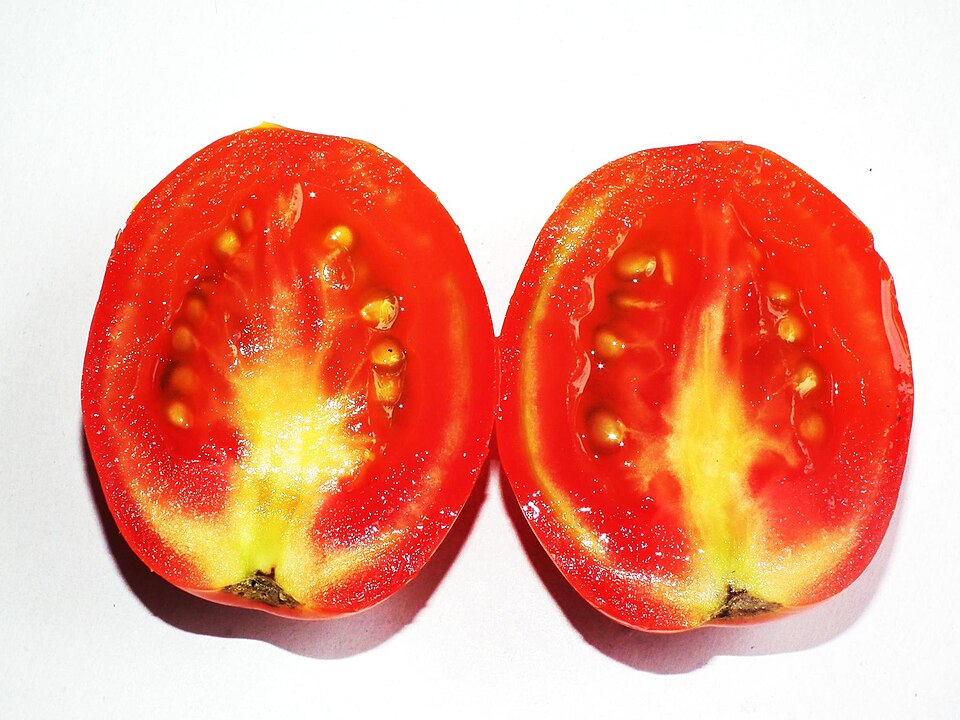
Study next
Common traps
- Getting the two structures right but the order wrong — the question asks for the fruit first.
- Assuming every fruit contains seeds; parthenocarpic fruits are formed without fertilisation.
- Treating the whole edible part of an apple as ovary tissue — much of it comes from the thalamus.
As this respectively-style pairing, as a match-the-column item linking flower parts to their mature products, or as a sequence question on the path of the pollen tube.
Related PYQs
Match List I with List II and select the correct answer using the codes given below the lists: List I — I. Fruit II. Seed III. Wood IV. Starch ; List II — A) Ovule B) Leaf C) Stem D) Ovary
- (a) I-B, II-A, III-E, IV-D
- (b) I-D, II-A, III-C, IV-B
- (c) I-B, II-C, III-A, IV-D
- (d) I-D, II-C, III-A, IV-B
Answer(b) I-D, II-A, III-C, IV-B
The identical pairing, only embedded in a match-the-list format — fruit to ovary and seed to ovule. UPSC has been testing this exact association for decades, which is why the NDA version rewards recall rather than reasoning.
In a typical flower, germinating pollen grains pass through several parts of the gynoecium before they reach the ovule. A list of the parts of gynoecium is given below in different combinations. Choose the combination that represents the correct sequence of pollen tube pathway/journey:
- (a) Style, Stigma, Ovary
- (b) Stigma, Style, Ovary
- (c) Pistil, Stigma, Ovary
- (d) Ovary, Pistil, Style
Answer(b) Stigma, Style, Ovary
The step immediately before this question. Once you can trace the pollen tube down to the ovule inside the ovary, the containment that decides the fruit-and-seed pairing is already fixed in your head.
Practice
- practice — not a real PYQ
The wall of the ovary in a flowering plant develops after fertilisation into the
- (a)seed coat
- (b)pericarp
- (c)endosperm
- (d)cotyledon
Answer(b) pericarp — the ovary wall thickens into the fruit wall, while the ovule's integuments form the seed coat. - practice — not a real PYQ
A fruit that develops without fertilisation and is therefore usually seedless is called
- (a)a false fruit
- (b)an aggregate fruit
- (c)a parthenocarpic fruit
- (d)a composite fruit
Answer(c) a parthenocarpic fruit — the ovary matures on its own, as in many cultivated bananas.