
Which one of the following is a waterborne disease?
- (a)Jaundice
- (b)Tuberculosis
- (c)Rabies
- (d)Arthritis
Answer
Why
Correct: A, Jaundice. In Indian public-health usage 'jaundice' stands for infective hepatitis, chiefly hepatitis A and hepatitis E, and both of those viruses spread by the faecal-oral route: sewage reaching a drinking-water source or contaminating food washed in it. The virus multiplies in the liver, bilirubin builds up in the blood, and the yellowing of the skin and the whites of the eyes that gives the disease its common name follows. It therefore sits with cholera, typhoid, amoebic dysentery and giardiasis on the standard list of water-borne diseases, and it is controlled by the same measures: safe piped supply, chlorination or boiling, and keeping sewage away from drinking water. None of the other three is carried by water at all.
Why the others are wrong
- (b)Tuberculosis: An airborne bacterial disease. Mycobacterium tuberculosis travels in the fine droplets an infected person coughs, sneezes or speaks out, and is inhaled by someone nearby: crowding and poor ventilation spread it, not contaminated water.
- (c)Rabies: A viral disease of the nervous system passed on in the saliva of an infected animal, most often through a dog bite. Water plays no part in transmitting it. The trap is the word hydrophobia: a rabies patient's fear of water is a symptom of the disease, not the route by which it is caught.
- (d)Arthritis: Inflammation of the joints, and in its common forms a non-communicable disorder rather than an infection. No pathogen is picked up from water, so it cannot be classed as water-borne.
Concept
Diseases are grouped by their route of transmission, and the route decides the method of control. Water-borne diseases are caused by pathogens shed in faeces that reach the mouth through contaminated drinking water. Airborne diseases travel in respiratory droplets. Vector-borne diseases need an insect carrier such as the mosquito. Others spread by direct contact with blood, saliva or body fluids. Jaundice of the infective kind belongs squarely in the first group.
Two distinctions save marks here. The first is within hepatitis itself: A and E are water-borne and faecal-oral, while B and C spread through blood, contaminated needles, unsterile tattooing and sexual contact, which is why UPSC's hepatitis questions so often turn on B rather than A. The second is that jaundice is strictly a sign, the yellow colouring produced by excess bilirubin, and can also arise from gallstones, alcohol damage or the breakdown of red blood cells. The exam uses the common Indian sense of the word, meaning infective hepatitis, and the option set here leaves no doubt about which sense is intended.
Key facts
- Water-borne diseases in India include cholera, typhoid, hepatitis A and E, amoebic dysentery, giardiasis and polio.
- Hepatitis A and E spread by the faecal-oral route; hepatitis B and C spread through blood and body fluids.
- Tuberculosis is airborne and caused by Mycobacterium tuberculosis; the BCG vaccine is given against it.
- Rabies is transmitted through the saliva of an infected animal and is very nearly always fatal once symptoms appear, though post-exposure vaccination prevents it.
- Boiling, chlorination and filtration of drinking water break the transmission chain for every water-borne pathogen.
Study next
Common traps
- Filing rabies as water-borne because of the word hydrophobia.
- Treating all hepatitis alike; A and E come from water, B and C from blood and body fluids.
- Looking for a water route for a non-communicable condition such as arthritis.
Health items give four diseases and ask which one fits a stated route (water-borne, airborne, vector-borne or deficiency) so learn each disease with its route and its causative organism together.
Related PYQs
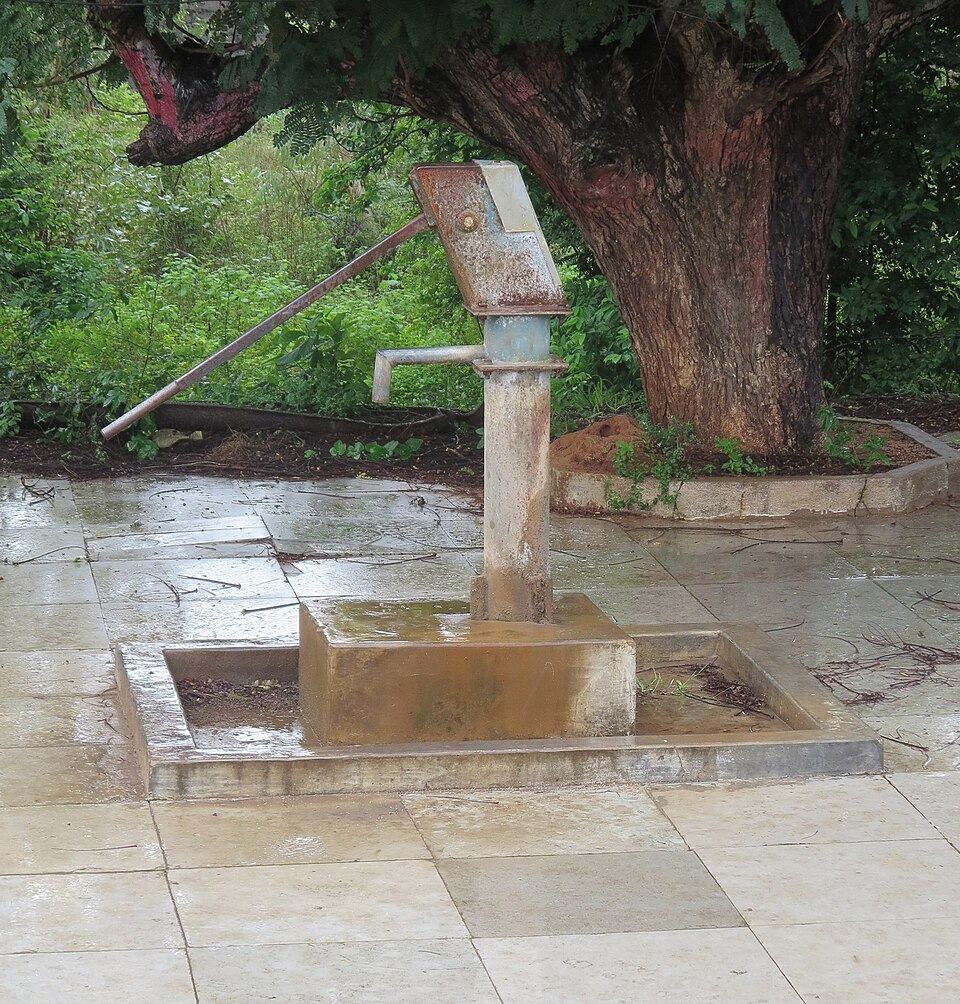
People drinking water from a shallow hand pump are likely to suffer from all of the following diseases, except
- (a) Cholera
- (b) Typhoid
- (c) Jaundice
- (d) Fluorosis
Answer(d) Fluorosis
Places jaundice alongside cholera and typhoid as a disease of contaminated shallow groundwater, and separates it from fluorosis, which comes from the chemistry of deep water rather than from a pathogen.
Practice
- practice, not a real PYQ
Which one of the following diseases is NOT transmitted through contaminated drinking water?
- (a)Cholera
- (b)Typhoid
- (c)Malaria
- (d)Hepatitis A
Answer(c) Malaria: it is spread by the bite of an infected female Anopheles mosquito, making it vector-borne rather than water-borne. - practice, not a real PYQ
The yellow colouring of the skin and eyes in jaundice is caused by an excess of
- (a)haemoglobin
- (b)bilirubin
- (c)melanin
- (d)carotene
Answer(b) bilirubin: a pigment from the breakdown of haemoglobin that accumulates when the liver cannot process and excrete it.