
Damage to the apical meristem of a growing young plant will affect the
- (a)length of the plant
- (b)colour of the flower
- (c)colour of the leaves
- (d)taste of the fruits
Answer
Why
Correct: A, length of the plant. Plants grow only where meristematic tissue keeps dividing. The apical meristem sits at the tip of the shoot and at the tip of the root, and its divisions, followed by the elongation of the daughter cells, are what make a stem taller and a root longer: this is primary growth. Damage that tip and the source of extension in length is gone, so the plant stops getting taller, though it can still thicken through its lateral meristem and can push out side branches from lateral buds. Gardeners use exactly this: pinching out the shoot tip of a hedge or a tea bush stops upward growth and forces the plant to spread sideways.
Why the others are wrong
- (b)colour of the flower: Petal colour comes from pigments such as anthocyanins and carotenoids, laid down under genetic control and modified by the pH of the cell sap. It has nothing to do with which meristem is intact.
- (c)colour of the leaves: Leaf colour depends on chlorophyll and the accessory pigments in the chloroplasts, and varies with light, mineral nutrition (nitrogen and magnesium especially) and the age of the leaf. Removing the shoot tip does not change it.
- (d)taste of the fruits: The taste of a fruit follows the sugars, acids, tannins and volatile compounds that accumulate as it ripens, which are set by the variety and by growing conditions. The apical meristem has no part in it.
Concept
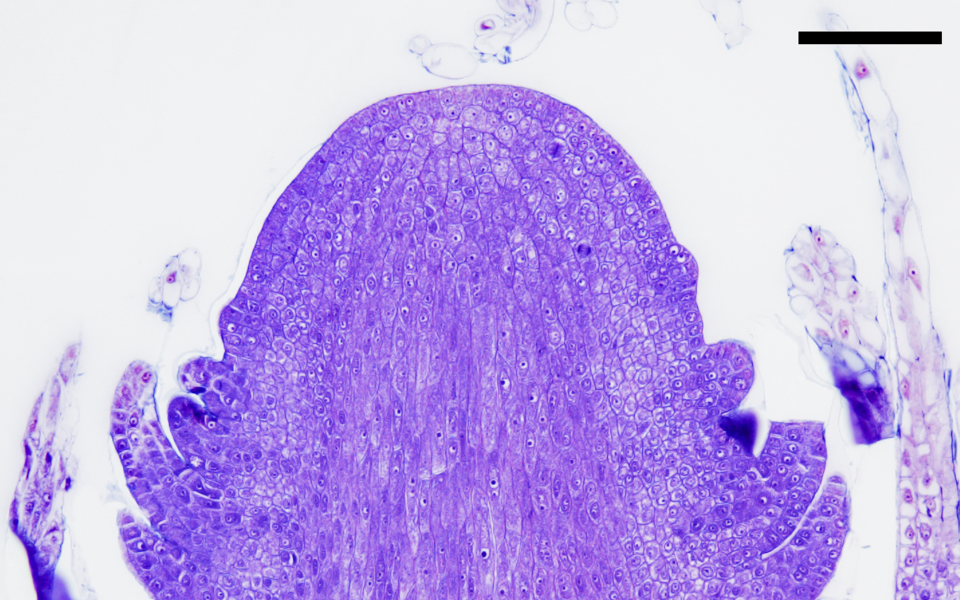
Meristematic tissue is made of small, thin-walled, densely cytoplasmic cells with no vacuoles to speak of, and it retains the power to divide throughout the plant's life. It comes in three positions. Apical meristem, at the shoot and root tips, drives growth in length. Lateral meristem, chiefly the cambium, lies along the sides of stems and roots and drives growth in girth. Intercalary meristem sits at the base of leaves or between nodes, mostly in grasses, and is why a lawn or a sugarcane crop regrows after being cut. The cells these meristems produce become permanent tissue through differentiation.
The question is really asking you to name what the apical meristem does, and then to spot that the other three options describe properties no meristem controls. That is a common NDA pattern in plant biology: one option names a growth parameter and the rest name pigments, flavours or shapes. Fix the three meristems by what each one increases: apical for length, lateral for girth, intercalary for regrowth after cutting. With that in hand, both this item and its more common cousin, the girth question, fall out immediately.
Key facts
- Apical meristem, at the shoot and root tips, is responsible for primary growth: increase in length.
- Lateral meristem, mainly the vascular cambium, causes secondary growth: increase in girth.
- Intercalary meristem at the base of leaves and internodes lets grasses regrow after grazing or mowing.
- Meristematic cells are small, have dense cytoplasm, thin cell walls and no large vacuoles.
- Cells produced by meristems take on their final form and function through differentiation, becoming permanent tissue.
Study next
Common traps
- Attributing an increase in girth to the apical meristem; that is the lateral meristem's work.
- Assuming the root has no apical meristem because the visible growing tip is the shoot.
- Reading 'damage to the tip' as damage to the whole plant and expecting every listed property to change.
Plant-tissue items ask which meristem is responsible for a stated kind of growth, or what follows when a particular meristem is removed or damaged.
Related PYQs
Girth of stem of a plant increases due to division of cells in
- (a) apical meristem only.
- (b) lateral meristem only.
- (c) apical and intercalary meristem.
- (d) both apical and lateral meristem.
Answer(b) lateral meristem only.
The companion question to this one: apical meristem for length, lateral meristem for girth, and NDA has set both.
Which one of the following statements about meristematic tissues in plants is correct ?
- (a) These are dead tissues and form wood
- (b) They provide flexibility to plant due to their thickened walls
- (c) These are present in the bark of a tree only
- (d) Growth occurs in plants due to division of cells of these tissues
Answer(d) Growth occurs in plants due to division of cells of these tissues
From the same year's first session, establishing the general principle that this item then applies to the apical meristem in particular.
Practice
- practice, not a real PYQ
A gardener repeatedly pinches out the growing tip of a hedge plant. The most direct result is that the plant
- (a)grows taller more quickly
- (b)stops increasing in height and branches out sideways
- (c)produces larger flowers
- (d)loses its green colour
Answer(b) stops increasing in height and branches out sideways: removing the apical meristem ends growth in length and releases the lateral buds. - practice, not a real PYQ
A lawn recovers its height within days of being mown because grasses possess
- (a)apical meristem only
- (b)lateral meristem only
- (c)intercalary meristem
- (d)no meristem at all
Answer(c) intercalary meristem: dividing tissue at the base of the leaves and internodes pushes the blade back up after the tip has been cut off.