
Which one of the following is the Official Mascot of the FIFA World Cup, 2018?
- (a)Fuleco
- (b)Zakumi
- (c)Pille
- (d)Zabivaka
Answer
Why
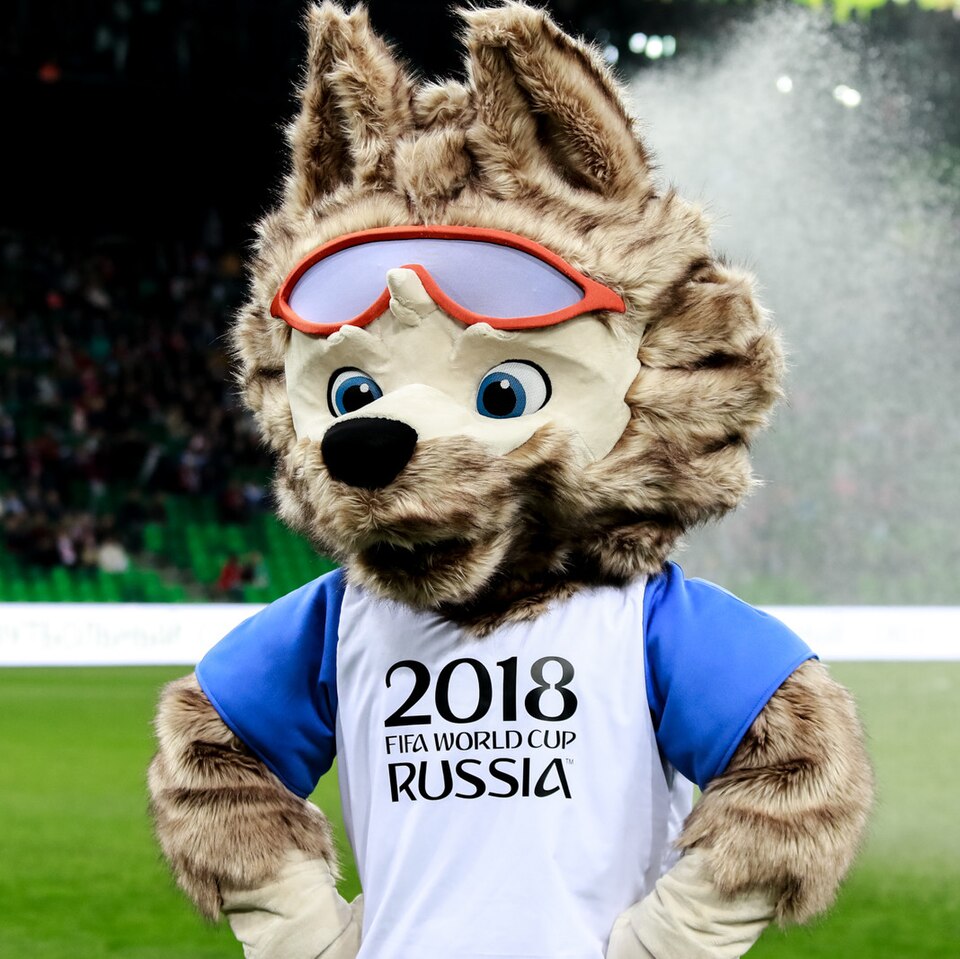
Correct: D, Zabivaka. The mascot of the 2018 tournament in Russia was an anthropomorphic Eurasian wolf in a shirt reading RUSSIA 2018 and orange sports goggles. The name comes from the Russian for one who strikes or scores, and it was picked by public internet vote in September 2016: the wolf took 53 per cent against a tiger on 27 and a cat on 20, from more than a million votes, on a design by a 22-year-old student, Ekaterina Bocharova. The tournament itself ran from 14 June to 15 July 2018, three months before this paper, and France beat Croatia 4–2 in the final.
Why the others are wrong
- (a)Fuleco: Fuleco was the mascot of the previous World Cup, Brazil 2014: a Brazilian three-banded armadillo in a white shirt reading Brasil 2014. The species was chosen because it is threatened and rolls into a ball, and the name fuses the Portuguese words for football and ecology.
- (b)Zakumi: Zakumi belongs to South Africa 2010: a leopard with green hair. The name joins ZA, the international code for South Africa, with kumi, meaning ten in several African languages, marking the year.
- (c)Pille: Pille was never a mascot at all. At Germany 2006 the mascot was Goleo VI, a lion, and Pille was the talking football that accompanied him: the word is colloquial German for a ball. The option is designed to catch anyone who half-remembers a German name from that tournament.
Concept
FIFA has commissioned a mascot for every World Cup since England 1966, when a lion called World Cup Willie appeared. The mascots are chosen to advertise the host (a wolf for Russia, a leopard for South Africa, an armadillo for Brazil, a lion for England and later for Germany) and their names almost always encode something about the host country or the year, which is why they can be reasoned about rather than merely memorised.
Three names in this list are genuine mascots and one is a bystander, and knowing that is a faster route than recalling all four. If a candidate remembers only that Fuleco is Brazilian and Zakumi South African, the answer narrows to Pille or Zabivaka, and Zabivaka is unmistakably a Russian word while Pille is German. For sports current affairs generally, the most economical revision is to hold the host, year, mascot and winner of a tournament together as one block rather than as four separate facts. As of the September 2018 exam, Zabivaka was the current mascot; two World Cups have since been held, with La'eeb for Qatar 2022.
Key facts
- Zabivaka, an anthropomorphic Eurasian wolf, was the official mascot of the 2018 FIFA World Cup in Russia.
- The mascot was selected by public internet vote in Russia in September 2016, the wolf winning 53 per cent of more than a million votes.
- Fuleco was the mascot of Brazil 2014 and Zakumi of South Africa 2010.
- At Germany 2006 the mascot was Goleo VI, a lion; Pille was his talking football, not a mascot in its own right.
- The 2018 tournament ran from 14 June to 15 July 2018 and was won by France, who beat Croatia 4–2 in the final.
Study next
Common traps
- Picking Fuleco because it is the most recently remembered mascot before the exam year; that one is Brazil 2014.
- Assuming every name in a mascot list is a mascot: Pille was an accessory character, not the mascot.
- Learning the mascot without the host and year, which makes the whole set impossible to keep apart.
Asked as a straight current-affairs recall of the mascot for the tournament held a few months before the exam.
Related PYQs
Which one of the following was the official mascot of Khelo India Youth Games, 2020?
- (a) Vijaya
- (b) Yaya
- (c) Rongmon
- (d) Ammu
Answer(a) Vijaya
The same question shape two years later, on an Indian event instead of a global one. NDA has asked for a mascot by name in several sessions, which is a good reason to learn hosts, years and mascots together rather than one at a time.
Practice
- practice, not a real PYQ
Fuleco, an armadillo, was the official mascot of the FIFA World Cup held in
- (a)South Africa in 2010
- (b)Brazil in 2014
- (c)Russia in 2018
- (d)Germany in 2006
Answer(b) Brazil in 2014: a Brazilian three-banded armadillo whose name fuses the Portuguese words for football and ecology. - practice, not a real PYQ
The 2018 FIFA World Cup final was won by
- (a)Croatia
- (b)Germany
- (c)France
- (d)Belgium
Answer(c) France, who beat Croatia 4–2 in the final on 15 July 2018 for their second World Cup.