
Zinc is used to protect iron from corrosion because zinc is
- (a)more electropositive than iron
- (b)cheaper than iron
- (c)a bluish white metal
- (d)a good conductor of heat and electricity
Answer
Why
Correct: A, more electropositive than iron. Zinc stands above iron in the reactivity series, which is another way of saying it gives up electrons more readily. When a zinc-coated iron object is exposed to moist air, it is the zinc that is oxidised in preference to the iron, so the iron is spared even at a scratch where the bare metal is exposed. NCERT puts the practical result plainly: galvanisation protects steel and iron by coating them with a thin layer of zinc, and the article stays protected even if the zinc coating is broken. That sacrificial behaviour is what a barrier of paint or grease cannot offer, since a break in a barrier exposes the iron at once.
Why the others are wrong
- (b)cheaper than iron: Zinc is in fact the dearer metal per kilogram, which is why only a thin coating is applied. Even if it were cheap, cheapness could not explain why the iron beneath a broken coating still does not rust.
- (c)a bluish white metal: Colour is a description, not a mechanism. It plays no part in whether one metal protects another from oxidation.
- (d)a good conductor of heat and electricity: Practically all metals conduct heat and electricity well, iron included, so this cannot single out zinc. Electrical contact between the two metals matters for the protection, but the property that decides it is the difference in their tendency to lose electrons.
Concept
Rusting is the oxidation of iron in the presence of both moisture and air, giving hydrated iron oxide, and it needs an electrochemical circuit to proceed. Galvanising sets up that circuit deliberately in the iron's favour. Because zinc is the more electropositive of the two, it becomes the anode and corrodes, while the iron becomes the cathode and is protected. This is called cathodic or sacrificial protection, and the same idea appears as blocks of magnesium or zinc bolted to ship hulls, underground pipelines and steel jetties.
It is worth separating the two ways a coating can help. Painting, greasing and electroplating with tin work as barriers: they keep air and water off, and stop working the moment they are pierced. Galvanising works as a barrier and also sacrificially, so it keeps working through a scratch. That difference explains a familiar contrast: a tin-plated food can rusts rapidly once it is dented, while a galvanised bucket does not. The reactivity order to remember is potassium, sodium, calcium, magnesium, aluminium, zinc, iron, lead, then hydrogen, then copper, mercury, silver and gold.
Key facts
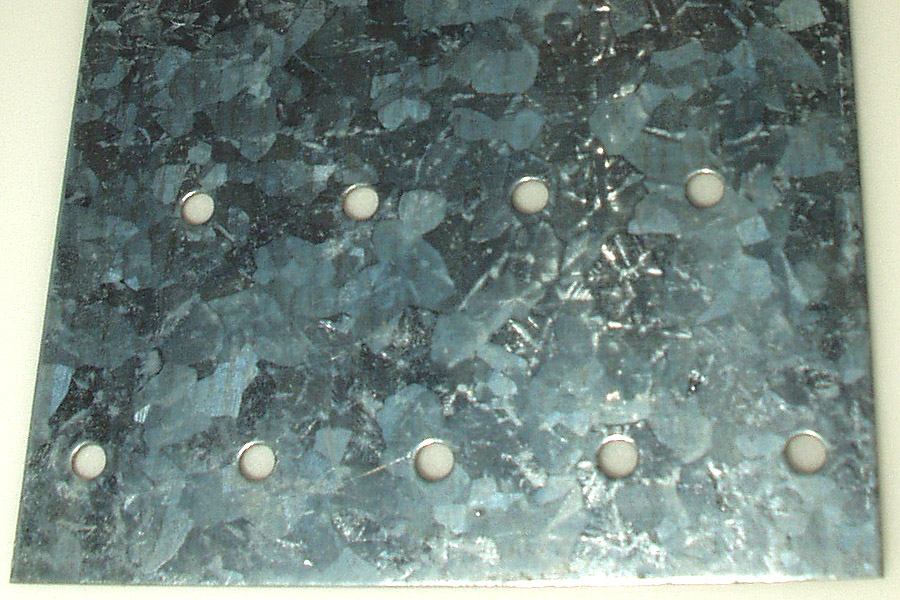
- Galvanisation coats iron or steel with a thin layer of zinc, and the article stays protected even when the coating is broken.
- Zinc lies above iron in the reactivity series, so it is oxidised in preference to iron and acts as a sacrificial anode.
- Rusting needs both air and moisture; the product is hydrated iron oxide.
- Blocks of zinc or magnesium attached to ships, pipelines and jetties give cathodic protection on the same principle.
- Tin plating, painting and greasing are barrier methods only and fail as soon as the coating is pierced.
Study next
Common traps
- Choosing cost as the reason; zinc is dearer than iron and only a thin layer is used.
- Confusing galvanising with tin plating; only the zinc coating protects sacrificially through a scratch.
- Treating a physical description like colour or conductivity as a chemical explanation.
NDA asks which metal is used to coat iron, what galvanisation means, or which metal in a list corrodes fastest.
Related PYQs
Aluminium surfaces are often “anodized”. This means the deposition of a layer of
- (a) chromium oxide
- (b) aluminium oxide
- (c) nickel oxide
- (d) zinc oxide
Answer(b) aluminium oxide
The other standard answer to corrosion (a thickened oxide barrier on aluminium) set against the sacrificial coating used on iron, so the two mechanisms can be told apart.
Galvanization is a method of protecting iron from rusting by coating with a thin layer of
- (a) Gallium
- (b) Aluminum
- (c) Zinc
- (d) Silver
Answer(c) Zinc
Names the process this question explains, so the two together give both the what and the why of zinc coating.
Which one of the following is the correct reactivity series with water?
- (a) Zinc > Iron > Lead > Copper
- (b) Copper > Lead > Zinc > Iron
- (c) Copper > Zinc > Iron > Lead
- (d) Zinc > Copper > Iron > Lead
Answer(a) Zinc > Iron > Lead > Copper
Gives the ordering that decides the answer here; zinc standing above iron is why it corrodes in the iron's place.
Practice
- practice, not a real PYQ
A block of magnesium bolted to the steel hull of a ship protects the hull because magnesium
- (a)is harder than steel
- (b)is more electropositive than iron and corrodes in its place
- (c)seals the pores of the steel
- (d)conducts heat away from the hull
Answer(b) is more electropositive than iron and corrodes in its place: the same sacrificial protection used in galvanising. - practice, not a real PYQ
Rusting of iron requires the presence of
- (a)air alone
- (b)moisture alone
- (c)both air and moisture
- (d)neither air nor moisture
Answer(c) both air and moisture: iron kept in dry air or in air-free water does not rust appreciably.