
Which one of the following microbes causes acidification and curding of milk ?
- (a)Lactic Acid Bacillus
- (b)Clostridium botulinum
- (c)Vibrio cholerae
- (d)Saccharomyces cerevisiae
Answer
Why
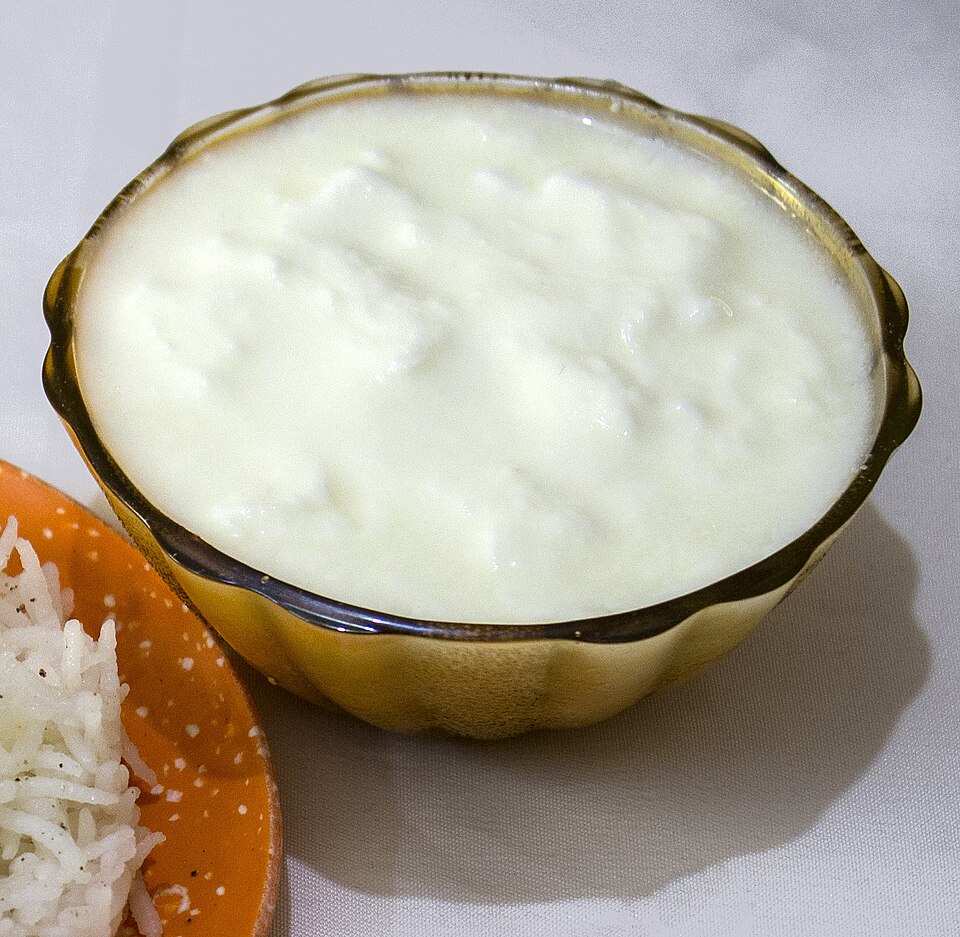
Correct: A, Lactic Acid Bacillus. Fermented milk products are made by letting Lactobacillus bacteria work on milk or whey. The bacteria ferment lactose, the sugar of milk, into lactic acid; the acid drops the pH, and at low pH the casein protein of milk coagulates. Acidification and curdling are therefore two stages of one process, which is exactly why a spoonful of old curd added to warm milk sets a fresh pot overnight.
Why the others are wrong
- (b)Clostridium botulinum: This anaerobic spore-forming bacterium produces the botulinum toxin and is a hazard in improperly processed canned and preserved food. It causes botulism, not the setting of curd.
- (c)Vibrio cholerae: Vibrio cholerae is the waterborne organism responsible for cholera. It is a pathogen of the human intestine and has no role in dairy fermentation.
- (d)Saccharomyces cerevisiae: This is baker's and brewer's yeast. Starved of oxygen it ferments sugar to ethanol and carbon dioxide, which raises bread and makes beer, but it does not acidify milk into curd.
Concept
Fermentation is the release of energy from sugar without oxygen, and different organisms end it at different products. Lactic acid bacteria stop at lactic acid, which is why they sour milk, cabbage and idli batter. Yeast goes on to ethanol and carbon dioxide, which is why it leavens dough and makes alcohol. In milk the lactic acid does a second job beyond flavour: casein micelles are stable only above a certain pH, so as acid accumulates they lose their charge, clump together and trap the liquid, and the milk sets.
Two everyday observations follow from the same chemistry. Curd should not be kept in a copper or brass vessel, because the lactic acid attacks the metal and yields compounds that are not safe to eat; stainless steel, glass and food-grade plastic are inert. And the souring of milk is the standard textbook example of a chemical change, because a new substance, lactic acid, is formed and the process cannot be reversed by cooling or warming. Note the printed option keeps the older informal name 'Lactic Acid Bacillus'; the organisms usually meant are Lactobacillus species, often working with Streptococcus thermophilus in commercial yoghurt.
Key facts
- Lactobacillus ferments lactose to lactic acid; the falling pH coagulates the casein of milk, which is what setting means.
- Curd should not be stored in copper or brass vessels because lactic acid reacts with those metals; steel, glass and plastic are safe.
- Souring of milk is a chemical change, since a new substance is formed and the change cannot be undone.
- Saccharomyces cerevisiae is the yeast of bread and beer, fermenting sugar to ethanol and carbon dioxide instead of to acid.
- Clostridium botulinum causes botulism through a toxin, and Vibrio cholerae causes cholera through contaminated water: neither is a dairy organism.
Study next
Common traps
- Choosing yeast because it is the fermentation organism most students meet first; yeast makes alcohol, not curd.
- Assuming any bacterium found in food is harmful: lactic acid bacteria are the useful kind.
- Treating the souring of milk as a physical change; it forms a new substance and is irreversible.
NDA pairs a microbe with the product or the disease it causes, or asks which organism is responsible for a named fermentation.
Related PYQs
Consider the following statements in respect of probiotics: 1. Probiotics are made of both bacteria and yeast. 2. The organisms in probiotics are found in foods we ingest but they do not naturally occur in our gut. 3. Probiotics help in the digestion of milk sugars. Which of the statements given above is/are correct?
- (a) 1 only
- (b) 2 only
- (c) 1 and 3
- (d) 2 and 3
Answer(c) 1 and 3
Its third statement is the same chemistry from the other side: lactobacilli act on the milk sugar lactose, which is precisely what sets curd.
Among the following, which is not the correct method for keeping the curd ?
- (a) Keeping in stainless steel vessel
- (b) Keeping in copper vessel
- (c) Keeping in plastic vessel
- (d) Keeping in glass vessel
Answer(b) Keeping in copper vessel
Follows directly from the acid this question is about: it is the lactic acid produced by the bacteria that rules out a copper vessel.
Practice
- practice, not a real PYQ
The acid formed when milk turns sour is
- (a)acetic acid
- (b)citric acid
- (c)lactic acid
- (d)tartaric acid
Answer(c) lactic acid: produced from lactose by Lactobacillus, and the reason the casein coagulates. - practice, not a real PYQ
Yeast used in the baking industry ferments sugar mainly to
- (a)lactic acid and water
- (b)ethanol and carbon dioxide
- (c)acetic acid and oxygen
- (d)methane and hydrogen
Answer(b) ethanol and carbon dioxide: the carbon dioxide is what makes bread rise.