
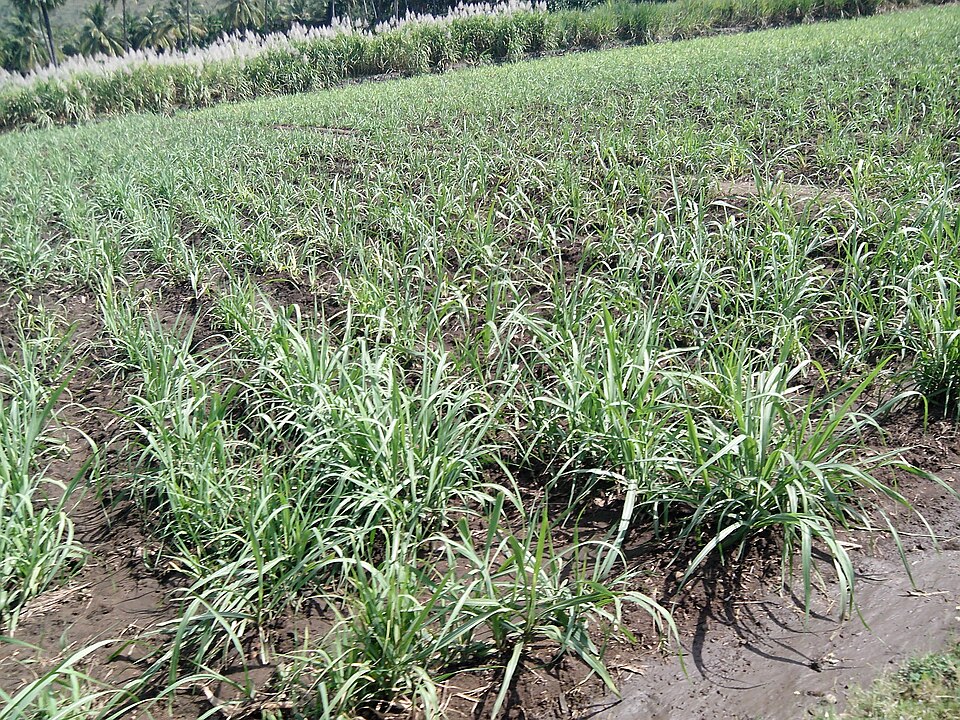
Sugarcane is one of the important cash crops in India. It is grown to obtain
- (a)Starch
- (b)Glucose
- (c)Fructose
- (d)Sucrose
Answer
Why
Correct — D, Sucrose. Sugarcane stores its food reserve as sucrose in the pith of its thick stem, and the crop is grown, harvested and crushed for exactly that. The extracted juice is clarified, concentrated and crystallised into the sucrose we buy as sugar, while the two chief by-products are molasses, the syrup left after the sugar crystallises out, and bagasse, the crushed fibre burnt in the mill's boilers. Sucrose itself is a disaccharide made of one glucose unit joined to one fructose unit.
Why the others are wrong
- (a)Starch — Starch is the storage carbohydrate of cereals, potatoes and other tubers, laid down as grains. Sugarcane stores a soluble sugar in its stem instead, which is why the stem can be crushed for juice.
- (b)Glucose — Glucose is a single-unit sugar and is present in cane juice only in small quantity. It is not what the crop is grown for, and the crystals a sugar mill produces are sucrose.
- (c)Fructose — Fructose is the other half of the sucrose molecule and is likewise present only in small amounts as free sugar in the juice. It is the chief sugar of honey and fruit, not of the sugar mill.
Concept
Sugars are classified by how many units they contain. Glucose and fructose are monosaccharides; sucrose, maltose and lactose are disaccharides; starch, glycogen and cellulose are polysaccharides. Sucrose is the transport and storage sugar of many plants, and sugarcane, a tall tropical grass, accumulates it in the parenchyma of the stem, which is why the cane is crushed rather than threshed. Sugar beet stores the same sucrose in a root, which is the other commercial source of table sugar.
The distractors here are all real carbohydrates, so the discrimination is about which one the plant actually stores and where. Two associations settle most such questions: cereals and tubers store starch, cane and beet store sucrose. Sugarcane is also India's classic cash crop of the Ganga plain and of Maharashtra, and its economics runs on the by-products as much as on sugar itself — molasses feeds the distillery and the ethanol blending programme, bagasse fires the boilers and can export power to the grid.
Key facts
- Sugarcane stores sucrose in its stem, and the crop is crushed to extract the juice from which sugar is crystallised.
- Sucrose is a disaccharide of one glucose unit and one fructose unit.
- Molasses, the syrup left after crystallisation, and bagasse, the crushed fibre used as boiler fuel, are the main by-products of a sugar mill.
- Sugar is also produced commercially from sugar beet, which stores sucrose in its root.
- Starch, by contrast, is the storage carbohydrate of cereals and tubers.
Study next
Common traps
- Choosing glucose or fructose, which are only the units sucrose is built from and are present in the juice in small amounts.
- Assuming every plant stores starch — cane and beet store a soluble sugar instead.
- Believing sugar can come only from sugarcane; sugar beet is the other commercial source.
NDA asks what a named crop is grown to obtain, or which sugar is a disaccharide and what it is made of.
Related PYQs
Consider the following statements: 1. Molasses is a by-product of sugar production process. 2. Bagasse obtained in the sugar mills is used as a fuel in the boilers to generate steam for the sugar factories. 3. Sugar can only be produced from sugarcane as the raw material. Which of these statements are correct?
- (a) 1 and 2
- (b) 2 and 3
- (c) 1 and 3
- (d) 1, 2 and 3
Answer(a) 1 and 2
Follows the same cane-to-sugar process one step further, into the by-products, and corrects the idea that cane is the only source of sucrose.
The major component of honey is
- (a) glucose
- (b) sucrose
- (c) maltose
- (d) fructose
Answer(d) fructose
Separates the same four sugars by source, and places fructose where it really dominates — honey, not the cane stem.
Practice
- practice — not a real PYQ
Sucrose is made up of
- (a)two glucose units
- (b)one glucose and one fructose unit
- (c)two fructose units
- (d)one glucose and one galactose unit
Answer(b) one glucose and one fructose unit — that is why hydrolysing sucrose gives an equal mixture of the two. - practice — not a real PYQ
Bagasse, a by-product of the sugar industry, is mainly used as
- (a)a fertiliser
- (b)a fuel in mill boilers
- (c)cattle feed only
- (d)a bleaching agent
Answer(b) a fuel in mill boilers — the crushed cane fibre is burnt to raise the steam the factory runs on.