
Colour vision in human eyes is the function of photoreceptor cells named
- (a)Rods
- (b)Cones
- (c)Blind spot
- (d)Fovea
Answer
Why
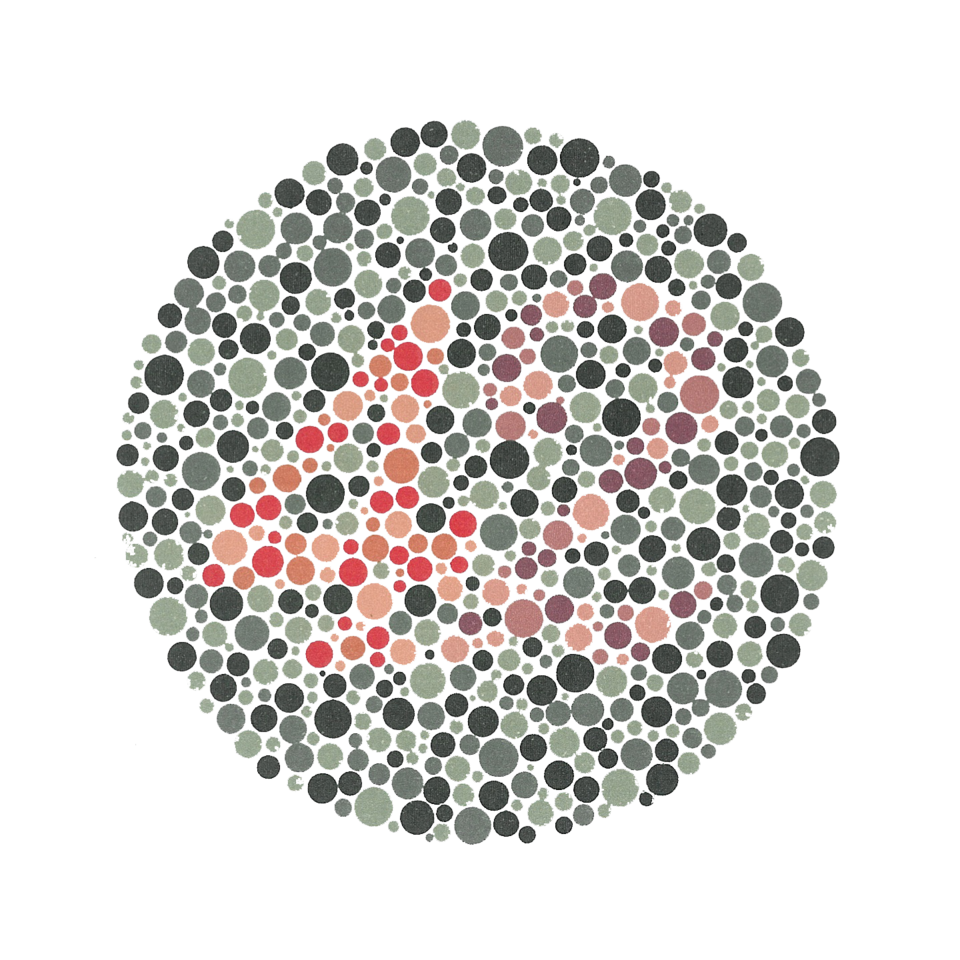
Correct — B, Cones. The retina carries two kinds of photoreceptor cells. Rods are sensitive to dim light and give vision in shades of grey; cones need brighter light and are the cells responsible for colour vision, because they come in kinds tuned to different parts of the visible spectrum and the brain reads colour from the relative response of those kinds. Colour blindness is the result of one kind of cone being defective or absent.
Why the others are wrong
- (a)Rods — Rods are the other photoreceptor, and they are the reason you can see at all in poor light — but they give no colour information, which is why everything looks grey by moonlight.
- (c)Blind spot — The blind spot is the point on the retina where the optic nerve leaves the eye. It carries no photoreceptors at all, so no image and no colour is registered there.
- (d)Fovea — The fovea is a small pit at the centre of the retina, densely packed with cones and responsible for the sharpest vision. It is a region of the retina, not a type of cell, and the question asks for the photoreceptor cell.
Concept
Light entering the eye passes the cornea, pupil and lens and is focused on the retina, the light-sensitive layer at the back. The retina's photoreceptors convert light into nerve impulses that the optic nerve carries to the brain. Rods hold the pigment rhodopsin, respond to very low light and are spread widely across the retina; cones are concentrated at the centre, need more light, and give both colour and fine detail. The pit called the fovea is the region richest in cones, and the optic disc, where the nerve exits, has none of either and forms the blind spot.
The question is really testing whether you can separate a cell type from a region of the retina, since the fovea is the distractor built for students who remember 'cones are packed in the fovea'. Two facts to carry beyond the item: night blindness follows from a deficiency of vitamin A, which the retina needs to make rhodopsin for the rods, and colour blindness follows from defective cones. That pairing — rods with dim light and vitamin A, cones with colour — answers most retina questions.
Key facts
- The retina carries two photoreceptor cell types, rods and cones.
- Cones are responsible for colour vision and for sharp detail, and they need bright light to work.
- Rods work in dim light and give vision without colour.
- The fovea is a cone-rich pit at the centre of the retina, and the blind spot is the optic disc, which has no photoreceptors.
Study next
Common traps
- Naming the fovea or the blind spot, which are regions of the retina rather than photoreceptor cells.
- Swapping the two receptors — rods for dim light, cones for colour.
- Assuming the blind spot is a defect of the eye; every normal eye has one where the optic nerve leaves.
NDA asks which part of the eye performs a stated function, or which cells or pigments are involved in dim-light and colour vision.
Related PYQs
The part of the human eye on which the image is formed is
- (a) pupil
- (b) cornea
- (c) retina
- (d) iris
Answer(c) retina
Places the layer that holds these photoreceptors, which is the step before asking which cells in it read colour.
Practice
- practice — not a real PYQ
The photoreceptor cells of the retina that function in dim light are
- (a)cones
- (b)rods
- (c)cells of the fovea
- (d)cells of the blind spot
Answer(b) rods — they are highly sensitive to low light but give no colour information. - practice — not a real PYQ
The blind spot of the human eye is the region where
- (a)cones are most densely packed
- (b)the optic nerve leaves the eye
- (c)the image is normally formed
- (d)the iris meets the lens
Answer(b) the optic nerve leaves the eye — that point of the retina carries no photoreceptors.