
Match List I with List II and select the correct answer using the code given below the Lists : List I (Noble gas) A. Argon B. Neon C. Krypton D. Xenon List II (Use) 1. In lights for advertising display 2. Airport landing lights and in light houses 3. Light in photographer's flash gun 4. In tungsten filament to last longer Code : A B C D
- (a)3 1 2 4
- (b)3 2 1 4
- (c)4 2 1 3
- (d)4 1 2 3
Answer
Why
Correct — D, the code 4 1 2 3. Argon is the filler gas of ordinary incandescent bulbs, where its chemical inertness stops the hot tungsten filament from burning away and so makes it last longer, giving item 4. Neon is the gas of the discharge tubes used for advertising and display signs, item 1 — the signs are named after it. Xenon is used in flash lamps for photography and stroboscopy, which is item 3, the photographer's flash gun. That leaves krypton with item 2, the airport landing lights and lighthouses; krypton's discharge is a bright, whitish light and it slows filament evaporation even more effectively than argon, which is why it is chosen for high-intensity lamps.
Why the others are wrong
- (a)3 1 2 4 — It gives argon the photographer's flash and xenon the tungsten filament. Bulbs are filled with the cheap, plentiful argon, while the brilliant short burst a camera flash needs comes from a xenon discharge.
- (b)3 2 1 4 — Besides the same argon-xenon reversal, it hands neon the airport lights and krypton the advertising signs. The glowing display tube is the one noble-gas use everybody has seen, and it is neon's.
- (c)4 2 1 3 — This one gets argon and xenon right but swaps the middle pair, putting neon in the airport lights and krypton in advertising signs.
Concept
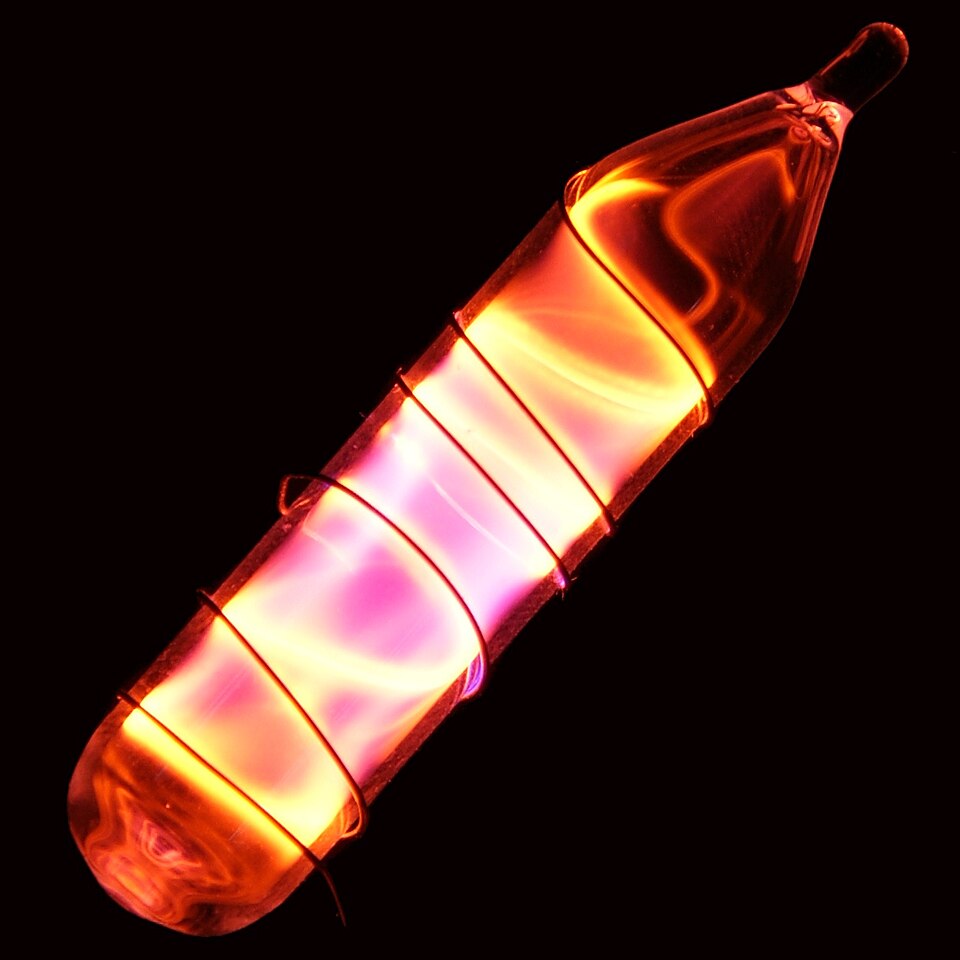
The noble gases of group 18 have complete outer electron shells, so they are chemically almost unreactive. Every one of these uses turns on that inertness or on the light their discharges emit. Argon fills incandescent bulbs because it will not attack the white-hot filament and its pressure slows the filament's evaporation. Neon in a low-pressure tube glows brightly when a current passes and is the classic sign-lighting gas. Krypton slows filament evaporation more strongly than argon and gives a whitish light, so it goes into high-performance lamps. Xenon's discharge produces an intense flash close to daylight, which suits photographic flash lamps and cinema projector arcs.
Work a four-pair noble-gas match by placing the pairs everyday life has already taught you. Neon signs and the argon-filled bulb are two of them, and the camera flash is the third, since xenon flash tubes sit behind almost every photographic flash. Only one item is then left for krypton, which is how this code is safely closed even if the airport-lighting association is the one pairing you have not met before. Do note that ordinary tungsten-filament bulbs have largely gone out of use since 2017, replaced by compact fluorescent and LED lamps, but the chemistry the question tests is unchanged.
Key facts
- Argon is used as the filler gas in incandescent light bulbs, protecting the tungsten filament.
- Neon is the gas of discharge lamps used for advertising and display, which are named neon lights after it.
- Xenon flash lamps are used in photographic flashes and stroboscopic lamps.
- Krypton reduces the rate of evaporation of a filament more than argon does, so it is used in high-performance lamps.
- All these gases belong to group 18 and are chemically almost inert because their outermost shells are complete.
Study next
Common traps
- Swapping neon and krypton, since both are used in lighting of different kinds.
- Giving the camera flash to argon; argon fills bulbs, and xenon makes the flash.
- Believing noble gases form no compounds at all — xenon does form fluorides and oxides.
NDA asks for the gas used in a named application, or sets the whole gas-to-use match in code form as here.
Related PYQs
Which one of the following is also called Stranger Gas?
- (a) Argon
- (b) Neon
- (c) Xenon
- (d) Nitrous oxide
Answer(c) Xenon
Tests the same four-gas family, and pins down xenon by name — the gas this match sends to the photographer's flash.
To help deep-sea divers breathe, they carry cylinders of oxygen mixed with
- (a) chlorine
- (b) helium
- (c) nitrogen
- (d) ozone
Answer(b) helium
Another noble gas chosen for exactly the property this question turns on, its chemical inertness.
Practice
- practice — not a real PYQ
The gas filled in ordinary incandescent electric bulbs to protect the filament is
- (a)oxygen
- (b)argon
- (c)carbon dioxide
- (d)hydrogen
Answer(b) argon — an inert gas that will not attack the hot tungsten filament and slows its evaporation. - practice — not a real PYQ
Which noble gas is used in flash lamps for photography?
- (a)Helium
- (b)Neon
- (c)Argon
- (d)Xenon
Answer(d) Xenon — a xenon discharge gives the brief, intense, daylight-like flash such lamps need.