
Which one of the following elements corrodes rapidly ?
- (a)Aluminium
- (b)Iron
- (c)Zinc
- (d)Silver
Answer
Why
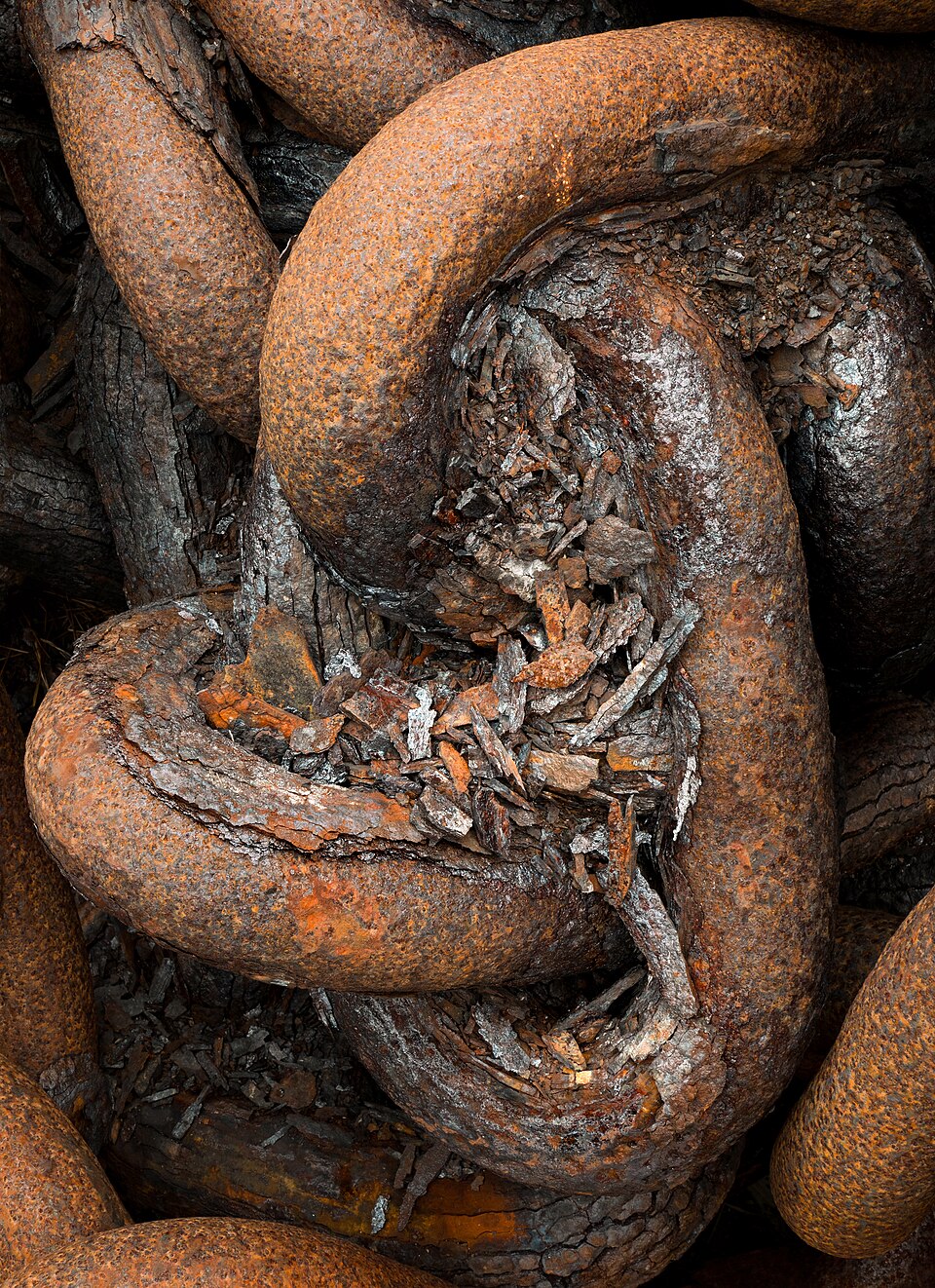
Correct — B, Iron. Iron is the metal in this list whose corrosion never stops. In damp air it forms hydrated iron(III) oxide — rust — which is flaky and porous, so it lifts off the surface and exposes fresh metal underneath to attack, and the object corrodes right through in time. The other three metals also react with oxygen, but each forms a thin, tightly adhering oxide layer that seals the surface and halts further attack, so their corrosion is limited to the outermost skin.
Why the others are wrong
- (a)Aluminium — Aluminium is chemically the more reactive metal, but it is protected by its own product: it forms an instant, very thin and adherent oxide film that keeps oxygen and moisture off the metal beneath. That passive film is why aluminium window frames and utensils last for decades in the open.
- (c)Zinc — Zinc forms an adherent coating of oxide and basic carbonate that protects the metal below. Its resistance is precisely why iron is coated with zinc in galvanisation, so a metal that corroded faster than iron would be useless for the job.
- (d)Silver — Silver is a noble metal that does not rust at all. It only tarnishes slowly, forming a surface film of silver sulphide from traces of sulphur compounds in the air, and the darkening can be polished away.
Concept
Corrosion is the slow eating away of a metal by the air, moisture and other substances around it. Whether it stops or continues depends less on how reactive the metal is than on what its own oxide does. Aluminium, zinc and chromium form oxide layers that are thin, dense and stuck fast to the surface, so the metal is passivated. Iron's oxide, rust, has a larger volume than the metal it came from, cracks and flakes away, and so gives no protection at all. Rusting also needs both air and moisture together, which is why iron does not rust in dry air or in air-free water.
The trap is to read the question as asking which metal is most reactive, in which case aluminium and zinc both stand above iron in the reactivity series. Read it instead as asking which metal keeps corroding, and the answer follows from the nature of the oxide layer. The practical remedies all follow the same logic — painting, greasing and galvanising all keep air and moisture off the iron, while galvanising adds a second line of defence, because zinc is more reactive than iron and corrodes in its place even if the coating is scratched.
Key facts
- Rust is hydrated iron(III) oxide, and its flaky, porous layer does not protect the metal underneath.
- Rusting requires both air and moisture; iron does not rust in dry air alone.
- Aluminium and zinc form thin adherent oxide layers that passivate the surface and stop further corrosion.
- Galvanisation is the coating of iron or steel with a thin layer of zinc to prevent rusting.
- Silver does not rust; it tarnishes, forming a film of silver sulphide.
Study next
Common traps
- Equating rapid corrosion with a high position in the reactivity series — aluminium is more reactive than iron yet corrodes far less.
- Thinking galvanised iron is protected only while the zinc layer is unbroken; zinc also protects the exposed iron because it corrodes preferentially.
- Calling the darkening of silver rust — that is tarnishing by sulphur compounds, a different process.
NDA asks which metal corrodes or does not corrode, what rust chemically is, or which metal is used for the protective coating in galvanisation.
Related PYQs
Galvanization is a method of protecting iron from rusting by coating with a thin layer of
- (a) Gallium
- (b) Aluminum
- (c) Zinc
- (d) Silver
Answer(c) Zinc
Turns the same fact into its practical remedy, and shows why zinc's own resistance to corrosion is what makes it the coating metal.
To protect steel and iron from rusting, a thin layer of which one of the following metals is applied?
- (a) Magnesium
- (b) Zinc
- (c) Aluminium
- (d) Lead
Answer(b) Zinc
Repeats the protection question from a different year, confirming which metals in this same list resist corrosion well enough to shield iron.
Practice
- practice — not a real PYQ
Rusting of iron requires the presence of
- (a)air only
- (b)moisture only
- (c)both air and moisture
- (d)neither air nor moisture
Answer(c) both air and moisture — iron kept in dry air or in boiled, air-free water does not rust. - practice — not a real PYQ
Aluminium articles resist corrosion in air because
- (a)aluminium is less reactive than iron
- (b)a thin adherent oxide layer forms on the surface
- (c)aluminium does not react with oxygen
- (d)aluminium is a noble metal
Answer(b) a thin adherent oxide layer forms on the surface — this passive film seals the metal beneath.