
Temporary hardness in water is due to which one of the following of Calcium and Magnesium ?
- (a)Hydrogencarbonates
- (b)Carbonates
- (c)Chlorides
- (d)Sulphates
Answer
Why
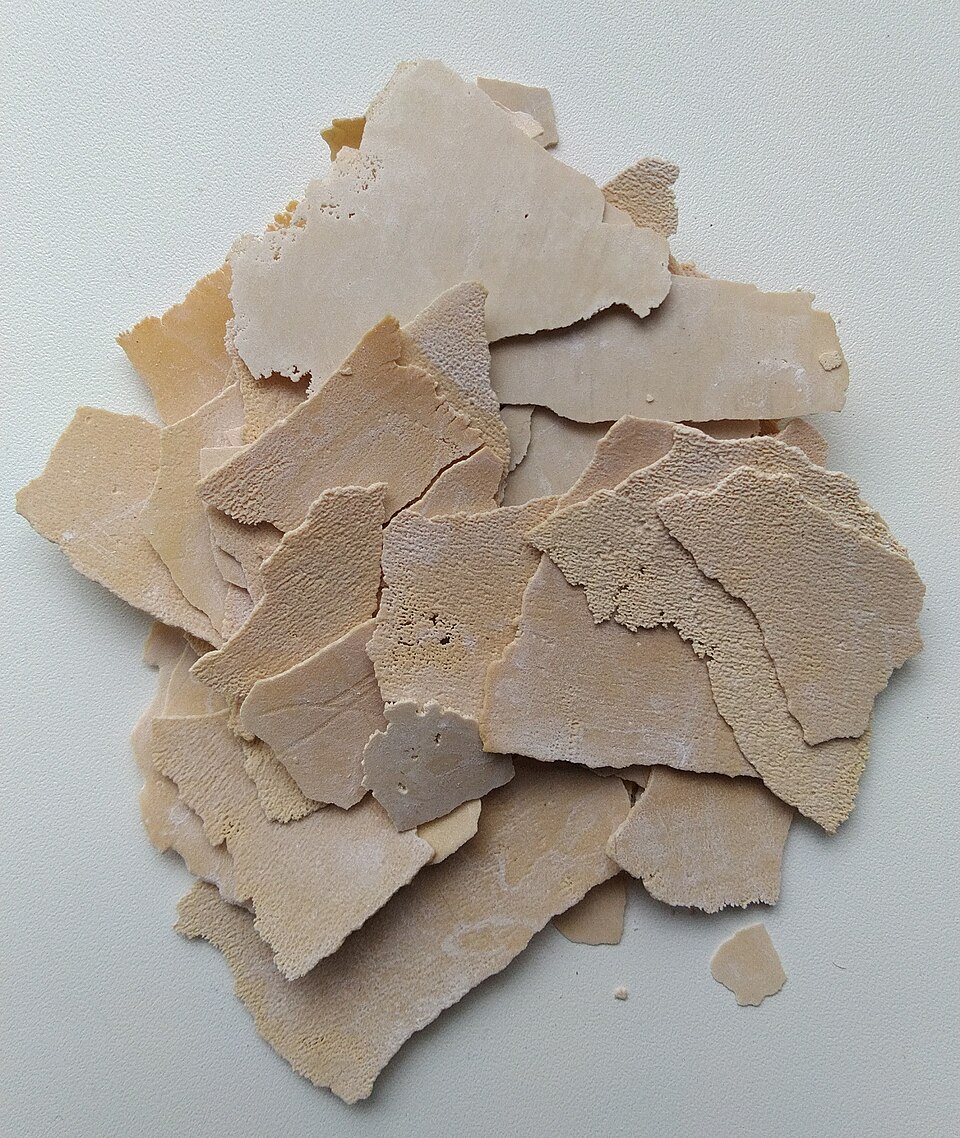
Correct — A, Hydrogencarbonates. Temporary hardness is the hardness that boiling removes, and it is caused by the dissolved hydrogencarbonates — the bicarbonates — of calcium and magnesium. These get into the water on the way to your tap. Rain dissolves carbon dioxide from the air and turns slightly acidic, and when that water percolates through limestone the insoluble calcium carbonate is converted into soluble calcium hydrogencarbonate, which travels with the water. Boiling reverses the process — the hydrogencarbonate decomposes, carbon dioxide escapes and the calcium comes out again as insoluble carbonate, the chalky scale you see in a kettle. Because a few minutes of boiling is enough to take the hardness out, this variety is called temporary.
Why the others are wrong
- (b)Carbonates — Calcium carbonate and magnesium carbonate are almost insoluble in water, so they cannot dissolve to make the water hard in the first place. They are in fact the product of removing temporary hardness — the solid scale that separates out when the water is boiled.
- (c)Chlorides — Dissolved calcium and magnesium chlorides do make water hard, but they are stable to heat and stay in solution however long you boil the water. They therefore cause permanent hardness, which needs washing soda, a zeolite or an ion-exchange resin to remove.
- (d)Sulphates — Sulphates of calcium and magnesium behave like the chlorides — they survive boiling and so account for permanent hardness rather than temporary hardness.
Concept
Hard water is water carrying dissolved salts of calcium and magnesium, which stop soap from lathering because they precipitate the soap as an insoluble scum. Hardness is classified by how it is removed. Temporary hardness comes from hydrogencarbonates and goes on boiling or by adding a calculated quantity of slaked lime, the method named after Clark. Permanent hardness comes from chlorides and sulphates and needs washing soda or ion exchange.
The distinction to hold on to is chemical, not a matter of degree — 'temporary' and 'permanent' describe which anion is present and therefore whether heat can drive it off, not how hard the water is. A neat memory hook is the kettle. The white crust inside a kettle is proof that the water had temporary hardness, because the carbonate could only appear if a hydrogencarbonate had decomposed. The same chemistry, running the other way in a limestone cave, dissolves rock to form caverns and then re-deposits it as stalactites and stalagmites.
Key facts
- Temporary hardness is due to dissolved calcium and magnesium hydrogencarbonates and is removed by boiling.
- Permanent hardness is due to the chlorides and sulphates of calcium and magnesium and survives boiling.
- Boiling decomposes the hydrogencarbonate to the insoluble carbonate, which appears as scale in kettles and boilers.
- Clark's method removes temporary hardness by adding a calculated amount of slaked lime.
- Hard water wastes soap because calcium and magnesium form an insoluble scum with it, while synthetic detergents still lather because their calcium and magnesium salts are soluble.
Study next
Common traps
- Reading 'temporary' as 'slightly hard'; it names the type of salt, not the degree of hardness.
- Choosing carbonates because scale is a carbonate — the carbonate is the product of removal, not the cause.
- Assuming hard water is unfit to drink; the real objections are wasted soap and scaled boilers.
NDA and UPSC ask which salts cause which type of hardness, or which method removes which type, or why detergents lather in hard water when soap does not.
Related PYQs
Consider the following statements: Hard water is not suitable for I. Drinking. II. Washing clothes with soap. III. Use in boilers. IV. Irrigating crops. Which of these statements are correct?
- (a) I and III
- (b) II and III
- (c) I, II and IV
- (d) I, II, III and IV
Answer(b) II and III
Takes the same calcium and magnesium salts to their consequences — wasted soap and scaled boilers, the scale being exactly what temporary hardness leaves behind.
Assertion (A): Synthetic detergents can lather well in hard water. Reason (R): Synthetic detergents form soluble calcium and magnesium salts with hard water.
- (a) Both A and R are individually true and R is the correct explanation of A
- (b) Both A and R are individually true but R is not a correct explanation of A
- (c) A is true but R is false
- (d) A is false but R is true
Answer(a) Both A and R are individually true and R is the correct explanation of A
Explains why hardness matters at all — it is the calcium and magnesium ions of hard water that ruin soap's lather, whichever anion brought them into solution.
Practice
- practice — not a real PYQ
Temporary hardness of water can be removed by
- (a)filtration through sand
- (b)boiling the water
- (c)adding common salt
- (d)adding dilute hydrochloric acid
Answer(b) boiling the water — boiling decomposes the dissolved hydrogencarbonates into insoluble carbonates that settle out as scale. - practice — not a real PYQ
Permanent hardness of water is caused mainly by the
- (a)hydrogencarbonates of calcium and magnesium
- (b)chlorides and sulphates of calcium and magnesium
- (c)nitrates of sodium and potassium
- (d)oxides of iron and aluminium
Answer(b) chlorides and sulphates of calcium and magnesium — these are stable to heat, so boiling does not remove them.