
Malarial parasite is a
- (a)bacteria
- (b)protozoa
- (c)virus
- (d)fungus
Answer
Why
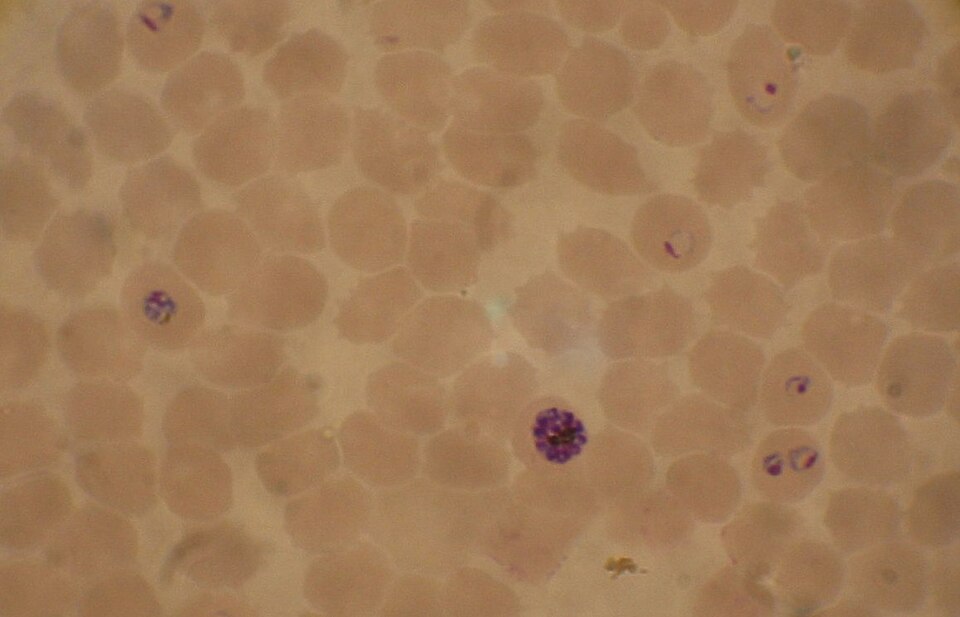
Correct: B, protozoa. Malaria is caused by Plasmodium, a single-celled organism with a true nucleus (that is, a eukaryote) and single-celled eukaryotes of this kind are protozoa. Four species of Plasmodium regularly infect people, of which falciparum and vivax matter most in India, and all of them are carried from person to person by the bite of an infected female Anopheles mosquito. The parasite spends part of its life cycle in the liver and part inside red blood cells, which it destroys in synchronised waves; that is what produces malaria's characteristic cycles of fever and chills. Two names worth attaching to this: Charles Laveran first saw the parasite in a patient's blood in 1880, and Ronald Ross, working at Secunderabad in 1897, showed that the mosquito carried it. Both received Nobel Prizes for it.
Why the others are wrong
- (a)bacteria: Bacteria are prokaryotes, without a true nucleus, and Plasmodium plainly has one. The practical consequence is that ordinary antibacterial antibiotics do not cure malaria; the disease needs antimalarial drugs such as chloroquine or artemisinin-based combinations, which act on quite different targets.
- (c)virus: A virus is not a cell at all and can reproduce only by taking over a host cell's machinery. Plasmodium is a complete cell with its own metabolism, and it has a complex life cycle split between a mosquito and a human host.
- (d)fungus: Fungi are eukaryotes too, but they have cell walls of chitin and absorb nutrients from outside their bodies. Plasmodium has no cell wall and lives inside host cells, which is characteristically protozoan.
Concept
Diseases are grouped by the kind of organism that causes them, and the four common categories are bacteria, viruses, fungi and protozoa. Protozoa are single-celled eukaryotes, and besides malaria they cause amoebic dysentery, kala-azar and sleeping sickness. Malaria's agent, Plasmodium, needs two hosts to complete its life cycle: it reproduces sexually in the female Anopheles mosquito and asexually in the human liver and blood.
The reliable way to answer any 'what kind of organism causes this' question is to hold a short mental table of the standard diseases against their agents: tuberculosis, cholera and typhoid are bacterial; polio, measles, dengue and AIDS are viral; ringworm and athlete's foot are fungal; malaria, amoebiasis and kala-azar are protozoan. UPSC has set exactly this table as a matching question. Anchoring to the exam, 2016 was the year India adopted its National Framework for Malaria Elimination for 2016 to 2030; the reported burden has fallen substantially since, and the World Health Organization has more recently recommended malaria vaccines for children in high-transmission regions.
Key facts
- Malaria is caused by protozoa of the genus Plasmodium, single-celled organisms with a true nucleus.
- The parasite is transmitted by the bite of an infected female Anopheles mosquito.
- Charles Laveran identified the parasite in 1880 and Ronald Ross demonstrated mosquito transmission at Secunderabad in 1897.
- Plasmodium falciparum and Plasmodium vivax account for most Indian cases.
- Because the cause is not bacterial, antibacterial antibiotics do not cure malaria; antimalarials such as chloroquine and artemisinin-based combinations are used.
Study next
Common traps
- Confusing the parasite with its vector: Anopheles is the mosquito that carries Plasmodium, not the cause of the disease.
- Assuming any infectious disease can be treated with antibiotics.
Disease-and-causative-organism items appear in nearly every NDA GAT paper, sometimes as a single question and sometimes as a four-way match, so learn the standard list as a block.
Related PYQs
Match List I with List II and select the correct answer using the codes given below the lists: List I (Disease) I. Malaria II. Poliomyelitis III. Tuberculosis IV. Ringworm List II (Organism) A. Fungi B. Bacteria C. Virus D. Protozoan Codes:
- (a) I-D, II-C, III-B, IV-A
- (b) I-D, II-C, III-A, IV-B
- (c) I-C, II-D, III-A, IV-B
- (d) I-C, II-D, III-B, IV-A
Answer(a) I-D, II-C, III-B, IV-A
The full four-way table this question takes one row from: malaria to protozoan, polio to virus, tuberculosis to bacterium and ringworm to fungus.
Which one of the following is a bacterium that causes disease in the human body?
- (a) Varicella zoster
- (b) Trypanosoma gambiense
- (c) Salmonella typhi
- (d) Plasmodium falciparum
Answer(c) Salmonella typhi
Tests the same table from the other side, and offers Plasmodium falciparum as the trap for anyone who thinks the malarial parasite is a bacterium.
Practice
- practice, not a real PYQ
Malaria is transmitted to human beings by the bite of
- (a)the male Anopheles mosquito
- (b)the female Anopheles mosquito
- (c)the female Culex mosquito
- (d)the female Aedes mosquito
Answer(b) the female Anopheles mosquito: only the female takes a blood meal, and Anopheles is the genus that carries Plasmodium. - practice, not a real PYQ
Which one of the following diseases is caused by a protozoan?
- (a)Typhoid
- (b)Kala-azar
- (c)Ringworm
- (d)Measles
Answer(b) Kala-azar: caused by Leishmania, a protozoan; typhoid is bacterial, ringworm fungal and measles viral.