
Which one of the following is a bacterium that causes disease in the human body?
- (a)Varicella zoster
- (b)Trypanosoma gambiense
- (c)Salmonella typhi
- (d)Plasmodium falciparum
Answer
Why
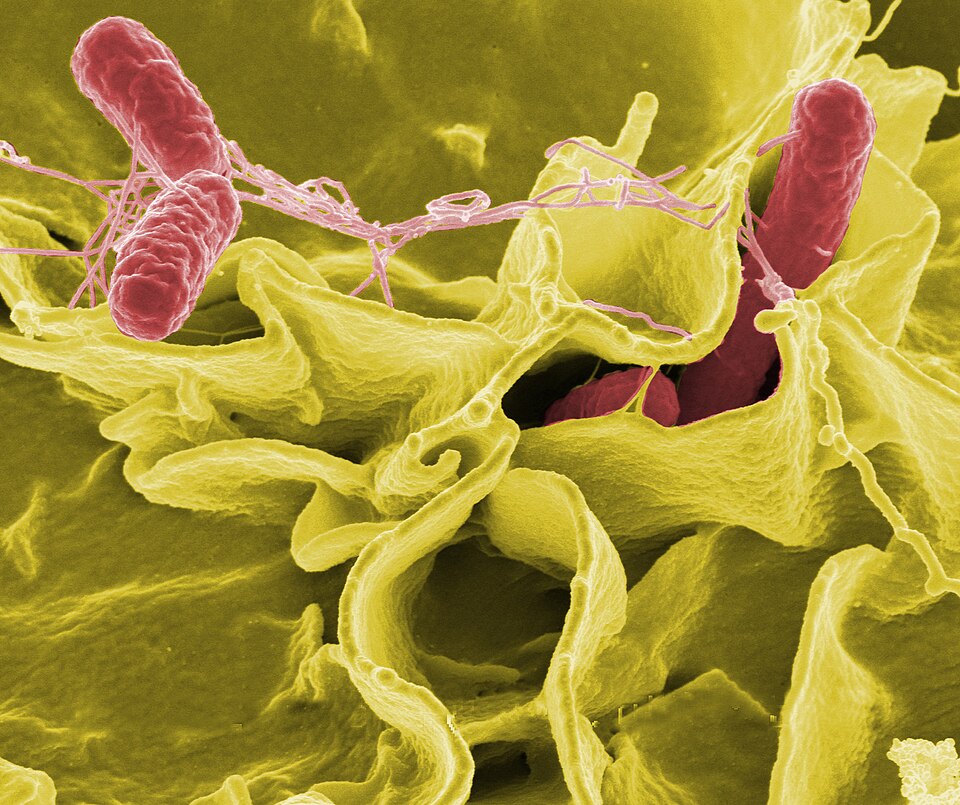
Correct — C, Salmonella typhi. Salmonella typhi (Salmonella enterica serovar Typhi) is a rod-shaped BACTERIUM that causes typhoid fever, a food- and water-borne illness marked by sustained high fever and abdominal symptoms. Of the four options it is the only bacterium; the others are a virus and two protozoan parasites.
Why the others are wrong
- (a)Varicella zoster — Varicella zoster is a VIRUS, not a bacterium - it causes chickenpox (and shingles when it reactivates).
- (b)Trypanosoma gambiense — Trypanosoma is a PROTOZOAN (a flagellated parasite) that causes African sleeping sickness, spread by the tsetse fly - not a bacterium.
- (d)Plasmodium falciparum — Plasmodium is a PROTOZOAN parasite that causes malaria, spread by the female Anopheles mosquito - not a bacterium.
Concept
Human diseases are caused by different classes of pathogens - bacteria, viruses, protozoa, fungi and worms. This question tests whether you can classify the causative organism. Salmonella typhi is a bacterium; the distractors are drawn from other pathogen classes to tempt you.
Recognise each name by its class. Varicella is a well-known virus; Trypanosoma and Plasmodium are classic protozoan parasites causing sleeping sickness and malaria. That leaves Salmonella typhi as the only bacterium - the answer.
Key facts
- Salmonella typhi (a bacterium) causes typhoid fever, spread through contaminated food and water.
- Varicella zoster is a virus (chickenpox and shingles).
- Trypanosoma gambiense (a protozoan) causes sleeping sickness; its vector is the tsetse fly.
- Plasmodium falciparum (a protozoan) causes the most severe malaria; its vector is the female Anopheles mosquito.
Study next
Common traps
- Assuming any Latin-named microbe is a bacterium - Plasmodium and Trypanosoma are protozoa, and Varicella is a virus.
- Confusing the disease with the organism that causes it.
Disease questions ask you to classify the causative organism (bacterium / virus / protozoan) or to match a disease to its pathogen.
Related PYQs
Match List I (Disease) with List II (Organism): I. Malaria, II. Poliomyelitis, III. Tuberculosis, IV. Ringworm; A. Fungi, B. Bacteria, C. Virus, D. Protozoan.
- (a) I-D, II-C, III-B, IV-A
- (b) I-D, II-C, III-A, IV-B
- (c) I-C, II-D, III-A, IV-B
- (d) I-C, II-D, III-B, IV-A
Answer(a) I-D, II-C, III-B, IV-A - malaria (protozoan), polio (virus), TB (bacterium), ringworm (fungus).
UPSC 1998 tests the same skill - classifying which class of organism (bacterium, virus, protozoan, fungus) causes each disease.
Bacterial DNA is referred to as naked because it is not associated with:
- (a) any scaffold
- (b) proteins
- (c) ribozymes
- (d) plasmid
Answer(b) proteins
Another NDA GAT item on bacteria - here their cell biology rather than the disease they cause.
Practice
- practice — not a real PYQ
Typhoid fever in humans is caused by
- (a)a virus
- (b)a protozoan
- (c)a bacterium
- (d)a fungus
Answer(c) a bacterium - Salmonella typhi. - practice — not a real PYQ
Which one of the following diseases is caused by a protozoan?
- (a)Typhoid
- (b)Chickenpox
- (c)Malaria
- (d)Tuberculosis
Answer(c) Malaria - caused by the protozoan Plasmodium.