
Match List I with List II List-I List-II Places in Ancient India Presently in which State a) Karnasuvarna 1) Maharashtra b) Pragjyotish 2) Gujarat c) Girnar 3) West Bengal d) Pratishthan 4) Assam Select the correct answer using the codes given below : a b c d
- (a)4 3 1 2
- (b)3 4 2 1
- (c)3 2 4 1
- (d)4 2 1 3
Answer
Why
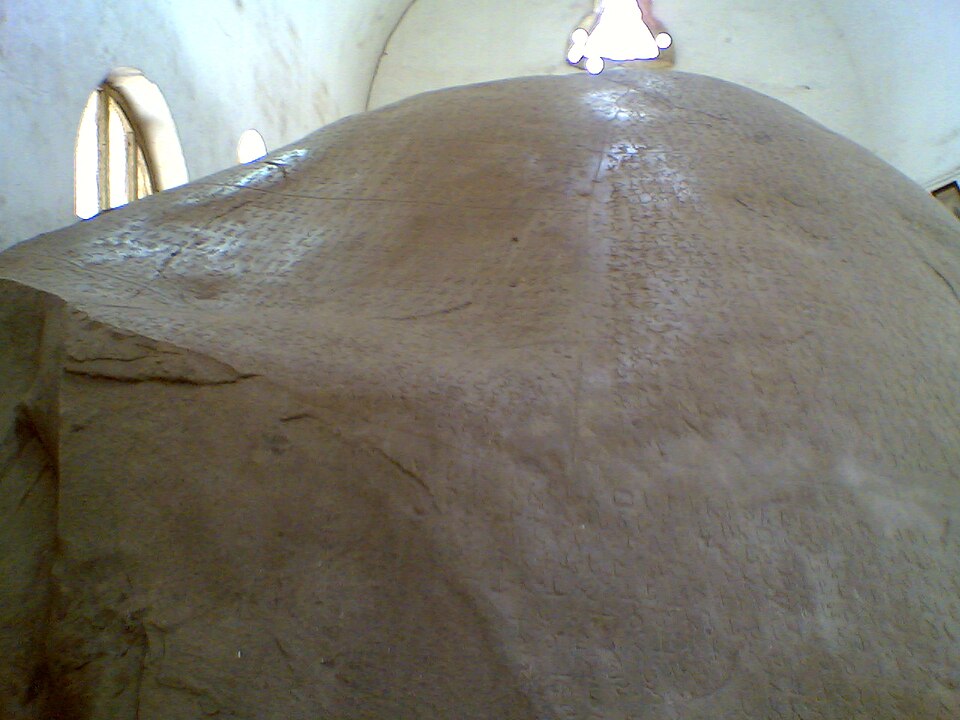
Correct — B, 3 4 2 1. A match-list is four separate questions wearing one code, so settle each row on its own evidence before you look at the options. (a) Karnasuvarna → 3, West Bengal. Karnasuvarna, the Bengali Kansona or 'gold of the ear', was the capital of the Gauda kingdom under Shashanka, the first major king of ancient Bengal, in the early seventh century CE. Its ruins stand at Kansona and Rangamati about 9.6 km south-west of Berhampore in Murshidabad district, West Bengal, and the mounds locally called Raja Karna's Palace at Rangamati are on the ASI's list of Monuments of National Importance. Xuanzang recorded a great Vajrayana establishment beside it, Lo-to-mo-chi or Raktamrittika Mahavihara, identified with the excavated site of Rajbaridanga on the Bhagirathi. (b) Pragjyotish → 4, Assam. Pragjyotisha is the older name of the kingdom later called Kamarupa, and its capital Pragjyotishpura is identified with modern Guwahati. Kamarupa enters datable history in Samudragupta's Allahabad Pillar inscription, which lists it among the frontier kingdoms that paid tribute to the Gupta emperor; its best-known ruler, Bhaskaravarman of the Varman line (c. 600–650 CE), allied with Harshavardhana against Shashanka and received Xuanzang at his court around 643 CE. (c) Girnar → 2, Gujarat. Girnar is the hill immediately east of Junagadh in the Saurashtra peninsula of Gujarat, and the granite boulder at its foot is one of the densest historical documents in India: it carries Ashoka's Major Rock Edicts, the Junagadh inscription of the Western Satrap Rudradaman I from shortly after 150 CE — twenty lines of prose, the first long record in more or less standard Sanskrit — and, above them, an inscription of the Gupta emperor Skandagupta. (d) Pratishthan → 1, Maharashtra. Pratishthana is modern Paithan on the north bank of the Godavari in Chhatrapati Sambhajinagar (Aurangabad) district, Maharashtra, capital of the Satavahanas from the second century BCE to the second century CE, and one of the very few inland Indian towns named in the first-century Greek Periplus of the Erythraean Sea. So a-3, b-4, c-2, d-1 — which is exactly the code printed against option (b).
Why the others are wrong
- (a)4 3 1 2 — Inverts the whole table: Karnasuvarna to Assam, Pragjyotish to West Bengal, Girnar to Maharashtra, Pratishthan to Gujarat — every pair wrong. The east–east swap has a real historical hook behind it, because after Shashanka's death Bhaskaravarman of Kamarupa did make Karnasuvarna his jayaskandhavara or victory camp, and issued the Nidhanpur copper plates from there. A candidate who half-remembers that link swaps the two names.
- (c)3 2 4 1 — The dangerous one, because it agrees with the key on two of the four rows. It reads Karnasuvarna to West Bengal and Pratishthan to Maharashtra correctly, then swaps the middle pair — Pragjyotish to Gujarat and Girnar to Assam. Anyone who is sure of the Bengal and Deccan rows but hazy on the other two picks between (b) and (c) on a coin toss; one fact, Girnar being the Junagadh hill in Gujarat, is the whole difference.
- (d)4 2 1 3 — Scores zero: Karnasuvarna to Assam, Pragjyotish to Gujarat, Girnar to Maharashtra, Pratishthan to West Bengal. The last pair is the giveaway — there is no Bengal town called Pratishthana. The homonym worth knowing is elsewhere: Pratishthanpur, modern Jhusi across the Ganga from Prayagraj, lies in Uttar Pradesh, and it is not the Satavahana capital the examiner means.
Concept
Ancient Indian geography was written in the vocabulary of janapadas, kingdoms and capitals, not of states, and each of the four names in List-I is the label of a distinct regional polity that modern administrative maps have since renamed. Karnasuvarna stands for Gauda, the seventh-century power of the lower Ganga delta whose king Shashanka fought Harshavardhana. Pragjyotisha stands for Kamarupa, the Brahmaputra valley kingdom of the Varmans that the epics already knew as the country of Naraka and Bhagadatta. Girnar stands for Surashtra-Anarta, the Kathiawar peninsula that the Mauryas, the Western Satraps and the Guptas each governed in turn and each recorded on the same rock. Pratishthana stands for Dakshinapatha, the Deccan of the Satavahanas, the first great post-Mauryan power south of the Vindhyas. Read that way the exercise is not four isolated place names but four regions — Bengal, Assam, Gujarat, Maharashtra — and the names survive in living form: Kansona, Kamrup district, Girnar hill and Paithan town all still exist under those names today, which is exactly why the examiner can ask 'presently in which State'.
The efficient route through this question is elimination on the code, not four separate recalls. Look down the first column of the four codes: every option gives Karnasuvarna either 3 or 4, that is West Bengal or Assam, so the examiner has already conceded that Karnasuvarna is eastern and is only asking which east. Shashanka's Gauda capital in Murshidabad settles it as West Bengal, and that single fact kills (a) and (d) in one stroke, because both open with 4. You are now choosing between (b) 3-4-2-1 and (c) 3-2-4-1, and those two codes are identical in the first and last positions — both give Pratishthan to Maharashtra. The entire question has collapsed onto one row: is Girnar in Gujarat or in Assam? Girnar is the hill above Junagadh in Saurashtra where Ashoka's Major Rock Edicts are cut, so (b) stands. The single discriminating fact is therefore Girnar–Junagadh–Gujarat, and the trap is that a candidate who never scans the codes first will try to recall all four pairings under time pressure and guess. The other standing hazard is the homonym: Pratishthanpur near Prayagraj in Uttar Pradesh is a different place from the Satavahana Pratishthana, and a candidate who fixes on the northern one has no way of reaching Maharashtra at all.
Key facts
- Karnasuvarna was the capital of the Gauda kingdom under Shashanka in the early 7th century CE; its ruins lie at Kansona and Rangamati about 9.6 km south-west of Berhampore in Murshidabad district, West Bengal, and the mounds called Raja Karna's Palace are ASI Monuments of National Importance.
- Xuanzang's Lo-to-mo-chi, the Raktamrittika Mahavihara near Karnasuvarna, has been identified with Rajbaridanga on the Bhagirathi, first excavated in 1962 by the University of Calcutta's Department of Archaeology under S. R. Das, which recovered a monastic sealing reading Shri Rakta-mrittika.
- Pragjyotisha is the earlier name of Kamarupa, capital Pragjyotishpura, identified with modern Guwahati in Assam; Kamarupa is named in Samudragupta's Allahabad Pillar inscription among the frontier kingdoms paying tribute, and Bhaskaravarman (c. 600–650 CE) issued the Dubi and Nidhanpur copper plates and hosted Xuanzang about 643 CE.
- The rock at the foot of Girnar, east of Junagadh in Gujarat, carries three inscriptions in sequence: Ashoka's Major Rock Edicts, Rudradaman I's twenty-line Junagadh prasasti of shortly after 150 CE — first edited and translated by James Prinsep in April 1838 and the earliest long inscription in near-classical Sanskrit — and an inscription of Skandagupta.
- Pratishthana is Paithan, on the Godavari about 56 km south of Chhatrapati Sambhajinagar (Aurangabad) in Maharashtra, capital of the Satavahanas from the 2nd century BCE to the 2nd century CE, and one of the few inland towns named in the 1st-century Periplus of the Erythraean Sea.
Study next
Common traps
- Confusing Karnasuvarna with Kamarupa because both are eastern and because Bhaskaravarman of Kamarupa actually camped at Karnasuvarna after Shashanka's death — the capital itself is in West Bengal
- Taking Pratishthana for Pratishthanpur, modern Jhusi opposite Prayagraj in Uttar Pradesh; the Satavahana capital of that name is Paithan in Maharashtra
- Solving a match-list row by row from the top instead of scanning the codes first — here the four codes already restrict Karnasuvarna to two states and make Pratishthan-Maharashtra common to the two survivors
BPSC sets this as a closed four-by-four table with all four codes fully specified, so a single confident row can strike two options and the marks come from elimination speed rather than complete recall. UPSC almost never gives you a code to exploit: it prints the same content as 'Famous Place — Present State' pairs and asks which are correctly matched, as in 2020, so you must judge each pair independently and a wrong pair costs you the mark even when you know the other three.
Related PYQs
With reference to the history of India, consider the following pairs: Famous Place — Present State 1. Bhilsa — Madhya Pradesh 2. Dwarasamudra — Maharashtra 3. Girinagar — Gujarat 4. Sthanesvara — Uttar Pradesh Which of the pairs given above are correctly matched?
- (a) 1 and 3 only
- (b) 1 and 4 only
- (c) 2 and 3 only
- (d) 2 and 4 only
Answer(a) 1 and 3 only
The same exercise under a different heading — old place name to present-day State — and it contains the identical pairing this BPSC question turns on, Girinagar (Girnar) with Gujarat; the other pairs teach Bhilsa as Vidisha in Madhya Pradesh, Dwarasamudra as Halebidu in Karnataka and Sthanesvara as Thanesar in Haryana.
Which one of the following pairs is correctly matched?
- (a) Vikramsila Monastery : Uttar Pradesh
- (b) Hemkund Gurudwara : Himachal Pradesh
- (c) Udayagiri Caves : Maharashtra
- (d) Amaravati Buddhist Stupa : Andhra Pradesh
Answer(d) Amaravati Buddhist Stupa : Andhra Pradesh
Tests exactly the same skill of placing an ancient site inside a modern State, and its three wrong pairs are built the same way as this BPSC question's — Vikramshila is in Bhagalpur district of Bihar, Hemkund Sahib in Chamoli district of Uttarakhand and the best-known Udayagiri caves in Madhya Pradesh.
Practice
- practice — not a real PYQ
The ancient city of Pratishthana, capital of the Satavahana dynasty, stood on the banks of which river?
- (a)Krishna
- (b)Godavari
- (c)Tapti
- (d)Bhima
Answer(b) Godavari — Pratishthana, modern Paithan in Chhatrapati Sambhajinagar (Aurangabad) district of Maharashtra, stands on the north bank of the Godavari and was the Satavahana capital; the Periplus of the Erythraean Sea names it as a great inland market town. - practice — not a real PYQ
The Junagadh rock inscription of Rudradaman I is important in Indian history mainly because it
- (a)is the first long inscription written in more or less standard Sanskrit
- (b)is the earliest inscription to use the Kharoshthi script
- (c)records the coronation of Chandragupta Maurya
- (d)contains the first known reference to the Kushana rulers
Answer(a) is the first long inscription written in more or less standard Sanskrit — Rudradaman I's twenty-line prasasti of shortly after 150 CE, on the same Girnar rock as Ashoka's edicts, marks the shift of epigraphic language from Prakrit to Sanskrit and records repairs to the Sudarshana lake.