
Which day is observed as Holocaust Memorial Day?
- (a)January 15
- (b)January 27
- (c)February 10
- (d)More than one of the above
Answer
Why
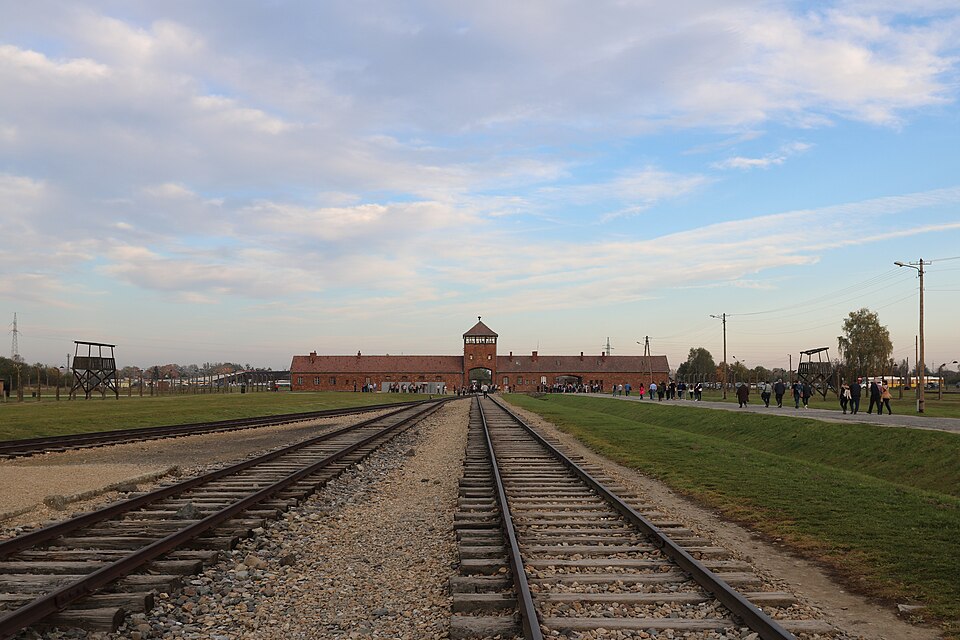
Correct — B, January 27. The day the question names is fixed by the United Nations as the International Day of Commemoration in Memory of the Victims of the Holocaust, and the General Assembly chose 27 January for exactly one reason: it is the anniversary of the liberation of the Auschwitz-Birkenau camp complex in German-occupied Poland by advancing Soviet troops on 27 January 1945, who found roughly seven thousand surviving prisoners still alive there. The designation came through General Assembly resolution 60/7, adopted by consensus on 1 November 2005 — the sixtieth anniversary year both of the liberation and of the United Nations itself. That single resolution did three things at once: it fixed the annual observance, it rejected any denial of the Holocaust as a historical event, and it created the Holocaust and the United Nations Outreach Programme, which is why the day carries a standing education mandate and not merely a commemorative one. The shorter name used in the question — 'Holocaust Memorial Day' — is the title the United Kingdom gives its own national observance, first held on 27 January 2001 after the Stockholm International Forum on the Holocaust of January 2000; it falls on the identical date, so the UN's long title and the British short title point to one and the same 27 January. Auschwitz itself, where about 1.1 million people were murdered, roughly a million of them Jews, was inscribed on the UNESCO World Heritage List in 1979 and is preserved as a state memorial and museum at Oświęcim. Anchor the date to the liberation and you never have to memorise it as a bare number.
Why the others are wrong
- (a)January 15 — Fifteen January carries no Holocaust observance anywhere in the international calendar. In India it is Army Day, which marks 15 January 1949 — the day Field Marshal K. M. Cariappa took over as the first Indian Commander-in-Chief of the Indian Army from General Sir Francis Bucher. It is set here purely as a same-month decoy for a candidate who has retained 'some day in January' but not which day, and an Indian candidate is doubly exposed, because the date really is familiar and the familiarity gets mis-filed.
- (c)February 10 — Wrong month, and the date is already taken by something unrelated: 10 February is World Pulses Day, designated by the General Assembly in December 2018 and led by the FAO, an observance about protein-rich food crops with no connection whatever to the Holocaust. It also catches anyone who half-remembers a '10' from the post-war human-rights calendar — but that 10 is 10 December, Human Rights Day, the anniversary of the adoption of the Universal Declaration of Human Rights in 1948, not 10 February.
- (d)More than one of the above — Only one of the three dates is a Holocaust observance at all, so no combination can stand. This option deserves to be read calmly rather than selected defensively: 'More than one of the above' is offered on 44 of the 150 questions in this paper, yet the official final key marks it correct on only 6 of them — roughly one in seven. Treating it as a safe hedge on a plain date question, in a paper that deducts one-third of a mark for a wrong answer, is a reliably losing habit.
Concept
The Holocaust was the systematic, state-organised persecution and murder of about six million European Jews — some two-thirds of the Jewish population of Europe — by Nazi Germany and its collaborators between 1933 and 1945, carried out alongside the mass killing of Roma and Sinti, disabled people under the 'euthanasia' programme, Soviet prisoners of war, Polish civilians and political prisoners. Auschwitz-Birkenau, built from 1940 near Oświęcim in occupied Poland, was the largest of the Nazi camp complexes and combined a concentration camp, a slave-labour camp attached to the IG Farben works at Monowitz, and the gas chambers of Birkenau; about 1.1 million people died there, which makes it the single deadliest site of the genocide. Its liberation on 27 January 1945 is the moment on which the world's commemorative calendar now turns. What the 2005 General Assembly resolution did was convert what had until then been Jewish and national remembrance into a universal United Nations observance, and tie it to two forward-looking purposes — Holocaust education, and the prevention of future genocide. That second purpose connects the day directly to the Convention on the Prevention and Punishment of the Crime of Genocide, adopted on 9 December 1948 largely on the initiative of the Polish-Jewish jurist Raphael Lemkin, who had coined the word 'genocide' in 1944.
Do not memorise this date as a bare number; derive it. The observance was built on the liberation of Auschwitz, and Auschwitz was liberated in the last week of January 1945 as the Red Army pushed west across Poland ahead of the final assault on Germany. Once the anchor is the liberation, 10 February falls away on the month alone, and 15 January falls away because nothing in the Auschwitz timeline sits there. The single discriminating fact in the whole question is therefore the liberation date — 27 January 1945; everything else on the page is decoration. Two confusions are worth pre-empting, because each produces a wrong date rather than merely a vague answer. The first is Yom HaShoah, Israel's own Holocaust and Heroism Remembrance Day, which the Knesset fixed on 27 Nisan in the Hebrew calendar; because that calendar is lunisolar, Yom HaShoah drifts through April and May in Gregorian terms and is never 27 January. The second is the end of the war in Europe on 8 May 1945 — the day Germany surrendered, which is more than three months after Auschwitz was freed; a candidate who reasons 'the camps were opened when the war ended' has fused two events that are a season apart. Note finally that the question uses the British short title while the UN's own title is much longer. The wording differs; the date does not.
Key facts
- 27 January is the United Nations' International Day of Commemoration in Memory of the Victims of the Holocaust, designated by General Assembly resolution 60/7, adopted by consensus on 1 November 2005.
- The date marks the liberation of the Auschwitz-Birkenau camp complex at Oświęcim in occupied Poland by Soviet forces on 27 January 1945, where about 7,000 prisoners were found still alive.
- Resolution 60/7 also rejected any denial of the Holocaust as a historical event and established the Holocaust and the United Nations Outreach Programme, giving the day a permanent education mandate.
- Auschwitz-Birkenau, where roughly 1.1 million people were murdered — about a million of them Jews — was inscribed on the UNESCO World Heritage List in 1979 and survives as a state memorial and museum.
- Two look-alikes to keep apart: Israel's Yom HaShoah is fixed on 27 Nisan of the lunisolar Hebrew calendar and therefore moves through April–May, while the United Kingdom's national Holocaust Memorial Day, first held in 2001, does share 27 January.
Study next
Common traps
- Confusing Holocaust Memorial Day, fixed at 27 January, with Yom HaShoah, which is set on 27 Nisan in the Hebrew calendar and moves every year
- Assuming the day marks the end of the war in Europe (8 May 1945) rather than the liberation of Auschwitz on 27 January 1945
- Reflexively choosing 'More than one of the above' — it appears on 44 of this paper's 150 questions and is the key on only 6 of them
BPSC asks the date flat — three near-miss dates plus a combination option, one mark, ten seconds — and it recycles important-days questions every cycle, so a dated list of UN observances pays for itself directly. UPSC almost never asks a bare date standing alone: in 2001 it hid four days inside a List-I / List-II matching set, and its modern habit, as with Constitution Day in 2023, is a Statement-I / Statement-II pair that concedes the date and instead tests whether you know the event behind it. Learn the day, the event that anchors it and the resolution that created it as one unit, and both formats collapse into the same fact.
Related PYQs
Match List I with List II and select the correct answer using the codes given below the Lists: List I (Important Day) I. World Environment Day II. World Forestry Day III. World Habitat Day IV. World Ozone Day List II (Date) A) March 20 B) June 5 C) September 16 D) October 3 E) December 10
- (a) I-B, II-A, III-D, IV-E
- (b) I-A, II-B, III-D, IV-C
- (c) I-A, II-B, III-C, IV-D
- (d) I-B, II-A, III-D, IV-C
Answer(d) I-B, II-A, III-D, IV-C
The same concept in UPSC's preferred packaging — an internationally designated 'important day' has to be matched to its exact date, and the distractor dates are all real observances rather than invented ones, exactly as 15 January and 10 February are in the BPSC item.
Consider the following statements in respect of the Constitution Day : Statement-I : The Constitution Day is celebrated on 26th November every year to promote constitutional values among citizens. Statement-II : On 26th November, 1949, the Constituent Assembly of India set up a Drafting Committee under the Chairmanship of Dr. B. R. Ambedkar to prepare a Draft Constitution of India. Which one of the following is correct in respect of the above statements?
- (a) Both Statement-I and Statement-II are correct and Statement-II is the correct explanation for Statement-I
- (b) Both Statement-I and Statement-II are correct and Statement-II is not the correct explanation for Statement-I
- (c) Statement-I is correct but Statement-II is incorrect
- (d) Statement-I is incorrect but Statement-II is correct
Answer(c) Statement-I is correct but Statement-II is incorrect
The identical underlying idea one level deeper — a commemorative day is defined by the historical event its date is drawn from, and UPSC tests precisely whether the candidate has attached the right event to the date, which is the same reasoning that turns 27 January from a number into the liberation of Auschwitz.
Practice
- practice — not a real PYQ
The date chosen for the International Day of Commemoration in Memory of the Victims of the Holocaust marks the anniversary of
- (a)The signing of the Genocide Convention
- (b)The liberation of the Auschwitz-Birkenau camp
- (c)Germany's surrender in the Second World War
- (d)The opening of the Nuremberg Trials
Answer(b) The liberation of the Auschwitz-Birkenau camp — Soviet forces reached it on 27 January 1945, which is why the observance falls on 27 January. The Genocide Convention was adopted on 9 December 1948 and Germany surrendered on 8 May 1945. - practice — not a real PYQ
Which one of the following pairs of an observance and its date is correctly matched?
- (a)World Pulses Day — 27 January
- (b)Human Rights Day — 10 February
- (c)International Holocaust Remembrance Day — 27 January
- (d)Army Day (India) — 27 January
Answer(c) International Holocaust Remembrance Day — 27 January. World Pulses Day is 10 February, Human Rights Day is 10 December, and India's Army Day is 15 January.